

Maddy summaryAB 889 establishes the Wisconsin Climate Corps program to create climate-focused job opportunities for workers aged 16-30, with at least 50% from underserved communities. The program funds projects like restoring natural lands, weatherizing homes for energy efficiency, and building community gardens, administered by a board overseeing contracts with nonprofit managers. Key requirements include paying workers $15/hour, providing housing stipends ($100/week), and gold-level health insurance. Sponsors (local governments, tribes, or nonprofits) must submit annual reports, and completed projects require permanent plaques identifying them as Wisconsin Climate Corps initiatives. The bill appropriates state funds for grants to approved projects under this framework.
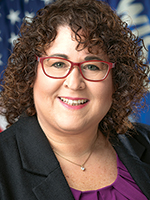
Rep. Lisa Subeck
Sponsored bills
Maddy summaryAB 888 creates a new state-funded program providing $1.5 million annually in grants to public or private organizations for training workers in green jobs. Green jobs are defined as roles in renewable energy (like solar/wind) or environmental services that conserve resources or benefit the environment. Organizations receiving grants must provide matching funds, and the Department of Workforce Development will track outcomes like employment rates and wage changes for participants. The funding comes from the state's workforce development budget and requires annual reporting on program impact.
Maddy summaryAB 891 eliminates the "personal conviction" exemption from school immunization requirements in Wisconsin. It directly affects students attending public or private schools, child care centers, and nurseries, as well as their parents or guardians. The bill amends statutes (49.155 and 252.04) to restrict immunization waivers solely to health or religious reasons, removing the option for parents to cite personal beliefs as a justification. Schools must now inform families of this limited waiver process when notifying them about immunization requirements. This is a concrete policy change to narrow exemptions, not a procedural or commemorative measure.
Maddy summaryAJR 130 is a ceremonial resolution recognizing January 27, 2026, as International Holocaust Remembrance Day in Wisconsin. It formally acknowledges the 82nd anniversary of the liberation of Auschwitz and commemorates the six million Jewish victims and millions of others persecuted during the Holocaust. The resolution encourages Wisconsin residents to engage in educational activities about the Holocaust and the ongoing fight against antisemitism, hatred, and discrimination. It reaffirms the state's commitment to honoring Holocaust survivors and ensuring their legacy endures for future generations. (Note: This is a procedural resolution with no binding policy changes.)
Maddy summaryAB 879 creates grants for cities, towns, nonprofits (501(c)(3) organizations), and tribes to plant and maintain trees in urban areas to reduce "urban heat islands" (warmer city zones). It provides up to $100,000 per project for tree planting, maintenance, and replacement, with no cost-sharing required for recipients. The bill also adds $500,000 in funding for 2025-26 and includes separate grants for tree recovery after storm damage in declared emergency areas. These grants cover full project costs without requiring applicants to pay any portion upfront.
Maddy summaryThis bill requires courts to automatically seal personal details (like names or photos) of child victims and witnesses in human trafficking cases. It prohibits public disclosure of this information unless a court holds a hearing considering the child's safety and decides disclosure serves justice. Courts must also provide necessary support services - such as private testimony rooms or emotional support - to protect the child's well-being during proceedings. These changes directly protect children involved in trafficking cases from potential harm while ensuring fair legal processes.
Maddy summaryAB 830 requires the state transportation department to include specific goals in its long-range transportation plan, directly affecting how the department develops statewide infrastructure strategies. The bill mandates inclusion of a vision for low-carbon public transit, transportation electrification, cost-effective charging infrastructure, equitable clean transportation incentives, and solutions for underserved rural, low-income, and minority communities. The department must also submit a report within six months detailing progress on these requirements and future plans for implementation. This legislation sets concrete policy standards for sustainable and equitable transportation planning without specifying funding or enforcement mechanisms.
Maddy summaryAB 821 creates a $2.5 million biennial grant program to help health care facilities recruit and retain staff who perform forensic exams on crime victims. It requires facilities to establish new positions, recruitment programs, or training for providers conducting exams related to domestic abuse or strangulation cases. The bill also revises reimbursement rules to ensure health care providers receive payment for exam costs (including STD testing/treatment) regardless of whether victims cooperate with law enforcement. This directly affects health care facilities and providers who conduct these forensic examinations for victims of specific offenses.
Maddy summaryAB 815 creates a "blue envelope" program to improve communication between law enforcement and individuals with invisible disabilities during traffic stops. The program provides free blue envelopes containing vehicle registration/insurance copies, safety information for recipients, and interaction guidelines for officers. Eligible individuals (including those covered by the ADA or needing accommodations) can request an envelope by declaring their disability on a form. The state will fund this initiative through general fund appropriations and develop training materials for law enforcement under the program.
Maddy summaryAB 873 increases annual funding for crime victim services by $17,101,350 for both fiscal years 2025-26 and 2026-27, totaling $34.2 million over two years. It specifically allocates $4,025,800 to convert 17 existing full-time positions (FED) to permanent positions (GPR) within the Department of Justice. This funding directly supports state-run crime victim services programs that assist individuals impacted by crime. The bill makes no changes to eligibility or service scope - only increases the budget for existing programs.