

Maddy summaryAB 604 would require Wisconsin's Department of Health Services to request a federal Medicaid waiver to provide pre-release medical coverage for incarcerated individuals eligible for Medicaid. It specifically covers case management, medication-assisted treatment for substance use disorders, and a 30-day supply of prescription medications for up to 90 days before release. This bill directly affects incarcerated people who qualify for Medicaid, aiming to improve continuity of care upon reentry. The waiver request must be submitted by January 1, 2027, to allow state and federal reimbursement for these services. The bill focuses on concrete policy changes to expand healthcare access during a critical transition period.
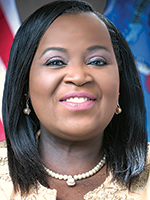
Rep. Shelia Stubbs
Sponsored bills
Maddy summaryThis bill requires state and local government agencies to prioritize purchasing materials manufactured in the United States when all other factors are equal, unless federal law or international agreements prohibit it. It mandates that contracts for public works projects include provisions requiring contractors to use domestically manufactured materials, while exempting purchases intended for commercial resale, stationery, and cases where foreign suppliers do not reciprocate in their own government procurement. The legislation also restricts municipalities from using bidding methods that favor bidders based on geographic location, except when using the United States manufacturing preference. These changes directly affect state departments, municipalities, and contractors bidding on public projects by establishing a preference for American-made goods in government procurement.
Maddy summaryThis bill establishes a program to eliminate medical debt for eligible Wisconsin residents by creating a $10 million annual appropriation for the Department of Health Services to purchase and cancel outstanding medical bills. To qualify, residents must either have household income at or below 400 percent of the federal poverty line or owe medical debt equal to at least 5 percent of their annual household income. The department will identify eligible individuals, negotiate with healthcare providers and debt collectors to buy their outstanding balances, and then formally abolish the debt while minimizing tax consequences for recipients. The program prioritizes purchasing debt from providers serving low-income populations and those in areas disproportionately affected by medical debt, with annual reporting required to track the number of debts eliminated and demographic information of affected residents.
Maddy summaryThis bill creates a new state program called WisEARNS designed to help workers in Wisconsin who do not have access to employer-sponsored retirement plans save for their future. The legislation establishes a WisEARNS board with members representing investors, small business owners, employees, employers, and financial experts to oversee the program's implementation. The program would automatically enroll eligible employees who work in Wisconsin and lack retirement savings options into a state-managed retirement savings account, with the board responsible for selecting a vendor to administer the plan. The bill also authorizes the state treasurer to make rules for the program and includes an appropriation to fund its initial operations.
Maddy summaryAB 916 creates a state-funded home repair program to address habitability issues and improve energy efficiency in affordable housing. It provides grants of up to $25,000 per unit to eligible homeowners (income ≤100% of area median income who own or occupy their homes) and interest-free loans of up to $25,000 to eligible landlords (owning ≤5 properties/15 units of affordable housing). The program prioritizes repairs for homes with health/safety hazards, energy efficiency upgrades, and accessibility improvements for individuals with disabilities or young children. Properties must be between 10 and 40 years old to qualify, and funds are administered by the state authority or contracted counties/nonprofits with strict reporting requirements.
Maddy summaryAB 984 sets new standards for community-based residential facilities that use the "memory care" designation in their name, advertising, or communications. It requires these facilities to serve only individuals with irreversible dementia (like Alzheimer’s) and to provide mandatory staff training on dementia care. The training must cover dementia basics, person-centered care, communication techniques, non-drug behavioral interventions, and supporting residents’ independence - both for initial hiring and annually thereafter. These requirements take effect July 1, 2027, with existing facilities needing compliance by that date to continue using the designation.
Maddy summaryAB 1044 creates a state grant program allocating $300,000 for the 2025-26 fiscal year to help adult family homes, community-based residential facilities, nursing homes, and residential care apartment complexes purchase patient lift devices. These devices must be state-approved, allow independent or staff-assisted operation, and mechanically lift a person. Facilities receiving grants must report usage data, with up to $100,000 of the appropriation reserved for collecting and analyzing this information.
Maddy summaryAB 722 imposes annual fees on large energy customers in Wisconsin based on their peak electricity demand, starting at $2 million for those using 100-250 megawatts and increasing by $1 million for each additional 250-megawatt increment. Fifty percent of these fees will fund the Green Innovation Fund, managed by the Wisconsin Economic Development Corporation. The bill also requires data centers to report annual water usage to local governments, certify adherence to sustainable building standards (like LEED or BREEAM) within three years of operation, and pay workers the prevailing wage rate for large-scale construction projects exceeding $250 million in cost. These provisions directly affect large energy users, data center operators, and local governments managing water reporting.
Maddy summaryAB 785 establishes a program to cap electricity and gas costs at 2% of a household's annual income for energy burdened households (spending 2-4% of income on utilities) and severely energy burdened households (spending 4% or more, or having no income with utility bills). It prohibits utility disconnections for residential customers with income up to 300% of the federal poverty level due to nonpayment and creates an "energy burden relief fund" to finance the program. The bill requires automatic enrollment for eligible households, an online application portal, and annual reporting by the Public Service Commission on program administration and barriers to participation.
Maddy summaryThis bill establishes a state grant program to help school districts pay student teachers an hourly wage of at least $15 for their teaching hours during the 2026-27 school year and beyond. The funding comes from a state appropriation, with the Department of Public Instruction calculating and distributing payments to school boards based on the number of hours each student teacher worked in their district. The legislation also gives the department authority to create rules for administering the program and defines student teachers as individuals enrolled in approved teacher preparation programs who are completing their student teaching component.