

Maddy summaryAB 775 limits out-of-pocket costs for epinephrine delivery systems (like EpiPens) under specific health insurance plans. It caps cost-sharing at $60 for two doses of these devices, applying to disability insurance policies and self-insured health plans covering government entities (such as state agencies, schools, or local governments). Insurers cannot charge more than $60 per two-dose supply regardless of the device type, though they may charge less. The law takes effect for plan years beginning after its publication date.
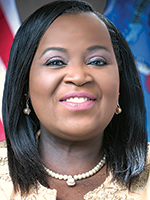
Rep. Shelia Stubbs
Sponsored bills
Maddy summaryAB 755 requires health insurance plans to cover sterilization procedures and related patient education/counseling services, just like other contraceptive benefits. This directly affects health insurers and patients seeking these specific reproductive health services. The bill amends existing law to explicitly include sterilization procedures and counseling under the same coverage requirements applied to other contraceptive services. It applies to new policy years beginning after the effective date, with some exceptions for collective bargaining agreements.
Maddy summaryAB 776 allocates $5 million in state funds to expand veterans' access to mental health services. It requires the Department of Veterans Affairs to promote community-based mental health care and provide grants to organizations offering these services to veterans, including emergency crisis support. The bill streamlines implementation by allowing the department to issue emergency rules without standard public notice requirements. This directly affects veterans seeking mental health care and the community organizations delivering these services. The legislation creates new statutory provisions (45.49) to formalize this program.
Maddy summaryAJR 3 is a symbolic resolution that officially recognizes January 2025 as "Human Trafficking Awareness and Prevention Month" in Wisconsin. It does not create new laws or allocate funding but aims to raise public awareness about human trafficking, highlighting its prevalence across all 72 Wisconsin counties and its impact on vulnerable groups like youth and individuals with disabilities. The resolution aligns with broader state and national efforts to combat trafficking through education and community engagement. As a procedural resolution, it focuses solely on designation and awareness, with no direct policy changes or obligations for state agencies.
Maddy summaryAB 20 allows married individuals living apart due to domestic abuse (as defined in state law) to claim the Earned Income Tax Credit (EITC) when filing a separate state tax return, rather than being required to file jointly. It establishes a state tax credit equal to 4%, 11%, or 34% of the federal EITC amount they’d qualify for if unmarried, depending on having one, two, or three or more qualifying children living with them. The bill directly affects survivors of domestic abuse who cannot file jointly with their spouse and are already eligible for the federal EITC but lose state credit access under current rules. It amends state tax code to create this exception, effective for tax years beginning after December 31, 2024.
Maddy summaryAB 62 establishes a Prescription Drug Affordability Review Board to address prescription drug costs. The board, with members representing pharmaceutical companies, health insurers, healthcare providers, and the public, must meet quarterly and avoid conflicts of interest. Key provisions include creating a $500,000 annual grant program for healthcare providers to develop tools showing patients the cost of prescriptions (Section 601.415), launching a diabetes medication pilot project (Section 601.41), and repealing a section requiring copayments for certain Medicaid services (Section 7). This bill directly affects insurers, pharmacies, drug manufacturers, and healthcare providers who must disclose drug costs to patients.
Maddy summaryAB 48 creates a state program to reimburse public and private schools for the cost of providing free meals to all students, including lunch and breakfast. Schools must participate in federal meal programs and offer free meals to every student without charge. The state will pay schools an amount equal to the federal reimbursement rate for free meals (minus any federal funds received), based on meals served in the prior school year. This applies to public, private, charter, tribal, and specialized schools meeting eligibility requirements.
Maddy summaryAB 52 expands the homestead income tax credit for homeowners with low to moderate income. It establishes new income-based limits: households earning $8,060 or less get credit covering 80% of property taxes, while higher earners get credit on taxes exceeding 5.614% of income over $8,060. The credit is unavailable if household income exceeds $35,000. The law also adds automatic inflation adjustments to these thresholds starting in 2026.
Maddy summaryAB 125 designates February 18 as a special observance day in Wisconsin public schools to honor Vel R. Phillips' birthday. The bill adds this date to school calendar requirements, directing schools to recognize Vel R. Phillips' contributions during the school year following the law's effective date. This applies directly to all Wisconsin public schools.
Maddy summaryAJR 15 is a symbolic resolution proclaiming March 26, 2025, as "Purple Day for epilepsy" in Wisconsin. It asks Wisconsinites to wear purple and encourages communities, schools, government agencies, and businesses to promote epilepsy awareness through education. The resolution highlights that epilepsy affects hundreds of thousands of people and aims to improve public understanding of the condition. This is a ceremonial gesture with no new legal requirements, focused solely on raising awareness.