

Maddy summaryAJR 38 is a ceremonial resolution that proclaims 2025 as the "Year of the Snake" in Wisconsin. It recognizes the cultural significance of the Lunar New Year and the snake symbol in Asian traditions, specifically honoring Asian American communities across the state. The resolution does not create new laws or policies; it is a symbolic gesture to celebrate cultural diversity and community connections. It directly acknowledges Wisconsin's Asian American populations, including long-time residents and recent immigrants, without imposing any requirements or changes.
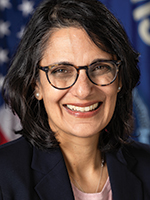
Rep. Renuka Mayadev
Sponsored bills
Maddy summaryAB 324 amends Wisconsin law to require a 48-hour waiting period after a background check approval before a handgun can be purchased. It specifically states that a firearm dealer must wait 48 hours from the time they receive confirmation of a clean background check from the Department of Justice. For cases where the background check is unclear, the bill mandates that the Department must resolve the issue and notify the dealer within 5 working days. This bill directly affects handgun buyers and firearms dealers by changing the timing rules for firearm sales.
Maddy summaryAB 319 creates a new grant program to fund law enforcement training on extreme risk protection orders (ERPOs), allocating $700,000 annually for this purpose. It expands background check requirements for firearm purchases to include checks for temporary restraining orders or injunctions under Section 813.124. The bill amends statutes to clarify how courts and law enforcement must verify firearm prohibitions, including checking for ERPO-related orders during background checks. These changes directly affect law enforcement agencies, courts, and individuals seeking to purchase firearms in Wisconsin.
Maddy summaryAJR 90 is a ceremonial resolution recognizing August 2025 as Immunization Awareness Month in Wisconsin. It does not create new laws or policies but formally acknowledges the importance of vaccines through the state legislature's public recognition. The resolution cites Wisconsin's school immunization requirements and global vaccine impact statistics as context for this symbolic observance. It directly affects the Wisconsin Legislature by authorizing its members to publicly honor this awareness month. This is a procedural resolution with no binding policy changes or direct impact on residents.
Maddy summaryAB 340 increases state reimbursement for school medical services in Wisconsin from 60% to 100% of the federal share for eligible school districts, cooperative agencies, and specialized programs like the Wisconsin Center for the Blind and Visually Impaired. It also raises reimbursement for administrative costs from 90% to 100% of the federal share, using time studies to calculate these costs. The bill explicitly includes common carrier transportation costs as part of reimbursable school medical services, unless federal policy changes prohibit it. School districts and agencies must still comply with federal health department requirements to receive these reimbursements.
Maddy summaryAB 23 establishes a 22-member Palliative Care Council within the Department of Health Services to advise on palliative care policy. The council includes physicians, nurses, patient advocates, insurers, and legislators, with specific requirements for geographic and program-type representation (e.g., community-based vs. hospital-based care). It will evaluate palliative care programs, advise on reimbursement mechanisms, and report biennially to the legislature on access and impact. The bill explicitly excludes physician-assisted suicide and similar topics from the council’s advisory scope. This bill directly affects palliative care providers, patients, insurers, and state health agencies through structured policy guidance.
Maddy summaryAB 321 prohibits the possession, sale, or manufacture of undetectable firearms - those not detectable by standard metal detectors or security scanners - and requires serial numbers on firearm frames or receivers. It directly affects individuals who own or handle such firearms or unmarked firearm components, with specific exemptions for law enforcement, military personnel, and pre-1968 firearms. Violations carry penalties of Class G felony (possession of undetectable firearms), Class H felony (possession of manufacturing plans), or Class I felony (unmarked frames/receivers). The law aims to enhance public safety by making firearms more detectable during security screenings.
Maddy summaryAB 332 requires drivers to stop for pedestrians in crosswalks at intersections with traffic signals or when pedestrians have begun crossing on a green signal. It applies to all vehicles, including those turning, and affects pedestrians, bicyclists, and riders of e-scooters or mobility devices. The bill clarifies that drivers must yield and remain stopped until the pedestrian or device has safely crossed, whether at signaled intersections or unmarked crosswalks. It also specifies that pedestrians may not suddenly enter a vehicle's path, and drivers must yield to all crossing users during turns on red signals.
Maddy summaryAB 435 restructures funding and governance for Wisconsin's Warren Knowles-Gaylord Nelson Stewardship 2000 conservation program. It establishes a new Knowles-Nelson Stewardship Board with specific member appointments (including assembly/senate representatives, environmental groups, tribal representatives, and outdoor recreation stakeholders) and creates two new grant programs: one for nonprofit conservation organizations ($5 million annually) and a tribal co-management program ($3 million annually). The bill also adjusts debt limits for the program and modifies how funds are allocated from the capital improvement fund to support state parks, local recreation, and boating facilities. This directly affects conservation organizations, tribal governments, local municipalities, and outdoor recreation businesses receiving program funding.
Maddy summaryAB 444 prohibits state agencies, local governments, and county sheriffs from using public facilities (including jails) to detain people solely based on immigration status. It also bans state or local funding for immigrant detention facilities. The bill directly affects all state and local entities that operate facilities or manage public funds, preventing them from participating in immigration enforcement through detention or financial support. The law creates a clear legal barrier to state involvement in immigration detention systems, effective upon enactment.