

Maddy summaryAB 289 bans the Department of Natural Resources from using neonicotinoid insecticides on state-owned lands it acquires and maintains. The bill directly affects the department’s land management practices, prohibiting these specific insecticides on properties covered under section 23.09(2)(d) of the statutes. Exceptions include existing cooperative farming agreements entered before the law's effective date and insecticide use for forest pest control on state forests, nurseries, or infested zones. The law creates a clear policy change for pesticide use on public lands while maintaining necessary exemptions for forestry and agriculture partnerships.
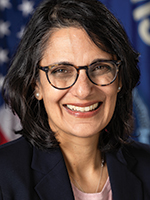
Rep. Renuka Mayadev
Sponsored bills
Maddy summaryAB 287 creates a new section of state law allowing local governments (like cities or counties) to regulate pesticides specifically to protect pollinators, such as bees and butterflies. The bill defines "pollinator" as insects that pollinate flowers and establishes a legal basis for local ordinances restricting pesticide use in ways that safeguard these insects and their habitats. This legislation directly affects local governments, enabling them to develop their own pesticide rules without overriding state law, while focusing on concrete protection for pollinators rather than imposing new statewide restrictions.
Maddy summaryAB 305 designates the rusty patched bumble bee (*Bombus affinis*) as Wisconsin's official state native insect. The bill amends Wisconsin statutes to add this designation to the list of state symbols included in the Wisconsin Blue Book. This is a symbolic, non-regulatory change that does not alter any policies or regulations affecting the public or environment. The bill creates a new statutory section (1.10 (3) (w)) and updates a reference in another section to include "native insect" in the Blue Book's listings.
Maddy summaryThis resolution designates June 2025 as Pollinator Awareness Month in Wisconsin. It recognizes the ecological and economic importance of pollinators (like bees and butterflies) to agriculture and ecosystems, citing their role in producing food and supporting Wisconsin's $230 million in pollinator-dependent crops. The resolution has no regulatory effect - it is purely ceremonial, aiming to raise public awareness through existing community efforts like "No Mow May" rather than creating new policies or programs.
Maddy summaryAB 291 requires all state agencies to prioritize using native prairie and forage plants in their projects to support native bees, butterflies, and other pollinators. This law directly affects state agencies, including departments and boards, by mandating they favor native plant species over non-native alternatives where appropriate. The Department of Natural Resources must provide requested information to help agencies implement this requirement. The bill creates a new statute section defining state agencies and establishing this preference without altering existing environmental protections.
Maddy summaryAB 227 prohibits offering anything of value exceeding $1 (or $5 for recall and nomination petitions) to influence whether someone signs or refrains from signing specific election-related petitions. The bill defines "election period" as key time frames before spring elections (starting December 1), general elections (starting April 15), and special or recall elections. It specifically targets inducements for petitions about candidate nominations, recall efforts, or ballot measures on political/social issues during these periods. The law applies to all such transactions, including at candidate nomination meetings, to prevent undue influence on voter participation.
Maddy summaryAB 246 requires certain health insurance plans - including those covering government employees (state, county, city, town, village, or school district) and disability insurance - to cover asthma medications and related supplies like inhalers. It limits out-of-pocket costs to $25 per month for each asthma medication and $50 total for all related supplies, with no deductibles applied. The law applies specifically to these government-backed plans and self-insured employer plans, not all health insurance. It ensures asthma treatment remains affordable without requiring patients to meet deductibles first.
Maddy summaryAJR 72 is a ceremonial resolution that officially recognizes June 19, 2025, as Juneteenth Day in Wisconsin. It does not create new laws or policies but formally declares this date to honor the historical significance of Juneteenth, which commemorates the end of slavery in the United States following Union troops' arrival in Galveston, Texas, on June 19, 1865. The resolution acknowledges Wisconsin’s longstanding Juneteenth observance, including Milwaukee’s celebration beginning in 1971. As a symbolic gesture, it has no legal effect beyond promoting awareness of this historical milestone.
Maddy summaryAB 317 creates the Child Care Quality Improvement Program to provide monthly payments to certified child care providers, including licensed centers and school-based programs. It allocates $221 million for fiscal year 2025-26 and $220 million for 2026-27 from the Department of Children and Families budget. The program grants the department rule-making authority to set eligibility, payment amounts, and usage requirements for recipients. The bill repeals outdated sections of existing law and updates funding allocations for quality improvement activities.
Maddy summaryThis joint resolution (AJR 70) formally proclaims June 2025 as "Immigrant Heritage Month" in Wisconsin. It recognizes the historical and ongoing contributions of immigrants to Wisconsin's culture, economy, and communities, citing statistics such as 308,000 immigrants in the state and their $13.5 billion in annual household income. The resolution does not create new laws or policies; it is a ceremonial declaration urging Wisconsinites to celebrate immigrant contributions and reject prejudice. It directly affects the public by designating a month for community recognition, with no specific groups or programs being altered or funded.