

Maddy summaryAB 250 allocates $9 million annually from the Veterans Affairs budget to fund war memorials in populous counties. Memorial boards must provide a full matching contribution to request funds, which can cover operations, maintenance, construction, or facility improvements. Boards must report annually to the legislature on fund usage and remaining balances. The bill creates a formal process for memorial boards to access state funding while requiring transparency in how funds are spent.
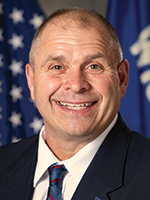
Rep. Duke Tucker
Sponsored bills
Maddy summaryAB 161 prohibits state agencies and local governments from restricting the sale, use, or purchase of motor vehicles or other devices based on their energy source (e.g., electric, gasoline, hydrogen). It specifically allows governments to set their own purchasing policies for their own fleets but bans restrictions on consumer or commercial use. The bill directly affects state/local governments, businesses selling vehicles/devices, and residents using such products. It creates a clear rule that energy source cannot be a factor in regulatory decisions.
Maddy summaryThis joint resolution recognizes October 7, 2025, as National Propane Day in Wisconsin. It highlights propane as a clean-burning, low-carbon fuel that supports 278,175 Wisconsin homes, 1,360 jobs, and over $1 billion in annual economic activity. The resolution emphasizes propane’s role in meeting energy needs while improving air quality and supporting Wisconsin’s energy security. As a symbolic gesture, it does not create new laws or obligations but formally acknowledges the industry’s contributions.
Maddy summaryAB 181 modifies grant eligibility for county forest programs by allowing counties to receive funding for one professional forester in a county forest administrator or assistant role. The bill specifies that grants cover up to 50% of the forester’s salary and up to 40% of fringe benefits (capped at 40% of salary), using funds from a designated appropriation. It defines a qualifying "county forest administrator" as someone with a forestry degree (or equivalent), natural resources degree with 3+ years’ experience, or an associate degree in forestry with 3+ years’ experience managing county forests - excluding department employees. The changes apply retroactively to grant applications submitted on or after the bill’s effective date (January 1, 2025). This bill directly affects counties managing forest programs seeking state funding for their designated forest administration staff.
Maddy summaryAB 34 prevents courts from allowing criminal complaints against law enforcement officers in officer-involved deaths when a district attorney has already determined there is no basis for prosecution. The bill requires that courts and judges cannot issue complaints unless "new or unused evidence" is presented, effectively barring judicial override of a district attorney's initial decision. This directly affects law enforcement officers involved in such deaths and the legal process for pursuing criminal charges against them. The law applies to cases defined under statute 175.47 (1) (c), limiting judicial action based on a district attorney's prior assessment.
Maddy summaryAB 609 modifies firearm regulations in the state by reducing the restricted distance near schools and hospitals from 1,700 to 1,200 feet for hunting. It removes restrictions on loading firearms in vehicles and discharging weapons within 50 feet of roadways for certain individuals. The bill clarifies that law enforcement officers, qualified out-of-state officers, and former officers are exempt from specific firearm restrictions while acting in their official duties. These changes primarily affect law enforcement personnel and their operational procedures, not general public carry rights. The bill does not create new carry permits or alter concealed weapon licensing requirements.
Maddy summaryAJR 112 proposes a constitutional amendment to Article I, Section 25, explicitly defining the right to keep and bear arms as applying to security, defense, hunting, recreation, and any other lawful purpose. It states this right is "fundamental" and requires any government restriction to undergo "strict scrutiny." The amendment would directly affect all residents by altering the state constitution's firearm rights protections. If approved by voters, it would become part of the constitution, requiring future laws restricting firearms to meet the strict scrutiny standard. The bill is currently in committee after its October 2025 introduction.
Maddy summaryAB 560 prohibits municipalities from using physical drop boxes or other physical receptacles to collect voted absentee ballots in any election. Instead, the bill requires all absentee ballots to be returned exclusively by mail. This directly affects local governments that currently operate drop boxes for voter convenience. The law would eliminate a common method for returning absentee ballots, requiring voters to mail their completed ballots instead.
Maddy summaryAB 630 requires sex offenders on parole or extended supervision who cannot provide a stable address to notify the state department within 24 hours of losing that ability. If they cannot provide an address, the state department must use passive positioning tracking (like GPS) to monitor their location. This applies specifically to individuals under supervision who are unable to meet standard address reporting requirements under existing law. The bill updates registration rules to ensure continuous oversight when address information is unavailable.
Maddy summaryAB 327 increases the empty weight limit for utility terrain vehicles (UTVs) from 3,000 pounds to 3,500 pounds under Wisconsin law. This change directly affects UTV operators and manufacturers by expanding the regulatory threshold for vehicles classified as UTVs (excluding golf carts, dune buggies, and tracked vehicles). The bill amends two sections of statutes to reflect this updated weight limit, which applies to vehicles originally manufactured with that weight capacity and designed primarily for off-highway use. The bill passed committee recommendations in November 2025 and is currently pending further legislative action.