

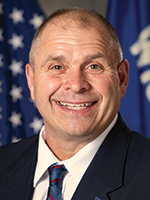
Photo of Duke Tucker
R Wisconsin House · District 75 On the 2026 ballot

Rep. Duke Tucker

Compare
Total votes
245
all sessions
Attendance
100%
of floor votes
Near the chamber average
With party
100%
of cast votes
Near the chamber average
Bipartisan score
0%
crosses aisle rarely
Near the chamber average
Sponsored
77
bills & resolutions
Near the chamber average
Committees
5
assignments
77 bills and resolutions

Sponsored bills

Total
77
Primary
77
Co-sponsor
0
This page
77
matching current filters
Primary AB 308
Vetoed · Wisconsin House · Lead sponsor
Relating to: prohibiting funding for health services for unlawfully present individuals. (FE)

Maddy summaryAB 308 prohibits Wisconsin state and local government funds from being used to pay for health services for individuals without legal immigration status. The bill directly affects undocumented residents by blocking state/local funding for their healthcare. Key provisions ban state/local funds for such services (except where federal law requires payment or where applying the ban would cause loss of federal funds). The law does not restrict federal healthcare programs or funding. This is a policy change affecting state budget allocations, not a procedural measure.

Vetoed May 13, 2026 0 co-sponsors
Primary AB 1199
Failed · Wisconsin House · Lead sponsor
Relating to: fee for the inland waters trout stamp. (FE)

Maddy summaryThis bill proposes changing the fee for the inland waters trout stamp from $9.75 to $15.75. It directly affects anglers who purchase this stamp to fish for trout in inland waters. The change is made by amending the relevant section of the state statutes. The bill was introduced in 2026 but failed to pass during the legislative session.

Failed Apr 9, 2026 0 co-sponsors
Primary AB 957
Signed into law · Wisconsin House · Lead sponsor
Relating to: Internet crimes against children law enforcement and making an appropriation. (FE)

Maddy summaryAB 957 increases funding by $400,000 for each of the 2025-26 and 2026-27 fiscal years to support internet crimes against children law enforcement within the Department of Justice. This is a budget adjustment that directly affects the Department of Justice's resources for investigating and prosecuting online crimes targeting minors. The bill does not create new laws or change existing legal standards - it solely allocates additional state funds for enforcement efforts.

Signed into law Apr 9, 2026 0 co-sponsors
Primary AB 958
Signed into law · Wisconsin House · Lead sponsor
Relating to: position authorizations for Internet crimes against children law enforcement. (FE)

Maddy summaryAB 958 authorizes the Department of Justice to add three new positions specifically for its Internet Crimes Against Children (ICAC) unit: two criminal analyst roles, one outreach specialist, and one digital evidence examiner. These positions are funded through existing appropriations under section 20.455(2)(a). The bill directly affects the ICAC unit’s staffing capacity to investigate and respond to online crimes involving children. It does not create new laws or policies but adjusts personnel authorizations to support existing law enforcement efforts. The bill was introduced in the 2026 Legislature and referred to the Criminal Justice and Public Safety Committee.

Signed into law Apr 9, 2026 0 co-sponsors
Primary AB 604
Signed into law · Wisconsin House · Lead sponsor
Relating to: coverage under the Medical Assistance program for incarcerated individuals. (FE)

Maddy summaryAB 604 would require Wisconsin's Department of Health Services to request a federal Medicaid waiver to provide pre-release medical coverage for incarcerated individuals eligible for Medicaid. It specifically covers case management, medication-assisted treatment for substance use disorders, and a 30-day supply of prescription medications for up to 90 days before release. This bill directly affects incarcerated people who qualify for Medicaid, aiming to improve continuity of care upon reentry. The waiver request must be submitted by January 1, 2027, to allow state and federal reimbursement for these services. The bill focuses on concrete policy changes to expand healthcare access during a critical transition period.

Signed into law Apr 9, 2026 0 co-sponsors
Primary AB 992
Failed · Wisconsin House · Lead sponsor
Relating to: requirements for proposed administrative rules that impose costs. (FE)

Maddy summaryAB 992 revises cost thresholds for administrative rule reviews, lowering the trigger point from $10 million to $4 million in projected costs for businesses, local governments, and individuals over two years. It prohibits agencies from splitting a single rule into multiple rules to avoid this cost analysis requirement. Agencies must halt rulemaking if costs exceed the threshold unless they modify the rule to reduce costs, then re-evaluate. This directly affects state agencies creating regulations and entities bearing compliance costs.

Failed Apr 6, 2026 0 co-sponsors
Primary AB 131
Signed into law · Wisconsin House · Lead sponsor
Relating to: programs and requirements to address PFAS.

Maddy summaryAB 131 establishes a municipal grant program to test for PFAS (perfluoroalkyl and polyfluoroalkyl substances) in public water systems and fund source reduction measures. It allows water utilities to use customer service fees to cover up to half the cost of PFAS source reduction for connected customers, if cheaper than facility upgrades. The bill also creates eligibility rules for disadvantaged communities extending service due to PFAS contamination and directs PFAS contamination claims to an existing landowner grant program. These provisions directly affect municipal water systems, public utilities, and communities addressing PFAS in drinking water.

Signed into law Apr 6, 2026 0 co-sponsors
Primary AB 130
Signed into law · Wisconsin House · Lead sponsor
Relating to: exempting certain persons from PFAS enforcement actions under the spills law. (FE)

Maddy summaryAB 130 exempts specific groups from certain PFAS enforcement actions under Wisconsin's spills law if they allow the state to clean up contaminated land at no cost to them. It directly affects landowners, fire departments, airports, wastewater spreaders, and waste facilities that handled PFAS-contaminated materials legally. The bill creates exemptions for those who spread permitted biosolids, owned land where such spreading occurred, used PFAS in emergency response (per federal rules), accepted PFAS waste, or own property not responsible for the contamination origin. This applies only to enforcement sections related to PFAS contamination under the spills law, not all PFAS regulations.

Signed into law Apr 6, 2026 0 co-sponsors
Primary AB 905
Signed into law · Wisconsin House · Lead sponsor
Relating to: threats to health care providers and providing a penalty.

Maddy summaryAB 905 creates a new penalty for threatening healthcare providers, staff, or their family members when the threat is related to their work. It specifically targets threats made knowing the victim is a healthcare worker (current or former) or a family member, and the threat occurs in response to actions taken at a healthcare facility or by a provider acting in their official capacity. The bill defines "health care facility" and "health care provider" using existing statutory terms to clarify the scope of protection. This law directly affects healthcare workers and their families by establishing criminal penalties for targeted threats connected to their professional roles.

Signed into law Apr 3, 2026 0 co-sponsors
Primary AB 619
Signed into law · Wisconsin House · Lead sponsor
Relating to: a tax credit for aviation biofuel manufacturing, authorizing the state to contract public debt for an aviation biofuel project grant, and making an appropriation. (FE)

Maddy summaryAB 619 creates a $150 million grant program to fund aviation biofuel manufacturing projects in Wisconsin, funded through state public debt issuance. The bill requires grantees to use facilities exclusively for aviation biofuel production (with limited exceptions for other biofuels if 80% of output is aviation fuel), source 80% of biomass locally, and invest at least $1.5 billion in aviation biofuel manufacturing within five years. It directly affects companies building such facilities and the Department of Natural Resources, which administers the grants. The program aims to support the state's forest products industry and create jobs, with strict repayment terms if grantees fail to meet requirements.

Signed into law Apr 2, 2026 0 co-sponsors
Showing 11 to 20 of 77 bills
Previous 1 2 3 8 Next