

Maddy summaryAB 635 requires the state environmental department to notify county health departments, tribal health departments, and county land conservation departments within 7 business days whenever groundwater protection standards or PFAS standards are exceeded. The bill creates a formal notification system to alert affected local governments and adjacent counties that might face negative impacts, with notices available for public review under state law. This law directly affects local health and land management agencies in counties where water contamination breaches are confirmed, ensuring timely public awareness of groundwater safety issues.
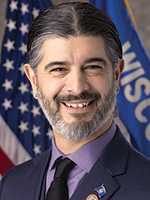
Rep. Vinnie Miresse
Sponsored bills
Maddy summaryAB 656 eliminates a legal exception that previously protected spouses from prosecution for sex crimes against child spouses. It amends statutes 948.09 (sexual intercourse with a child age 16+) and 948.093 (underage sexual activity) to remove the provision stating these laws "do not apply if the child is the defendant’s spouse." This change directly affects individuals in marriages where one spouse was a minor at the time of marriage, making spousal relationships no longer a defense for sex crimes against children. The bill also updates marriage-related provisions, including allowing minors under 18 to file for divorce (767.185) and clarifying consent requirements for minors seeking marriage licenses.
Maddy summaryAB 607 creates new programs and modifies existing ones to address housing, homelessness, and related services in Wisconsin. It establishes a lead service line replacement program for water systems, creates an annual review process for homelessness services, and funds emergency rental assistance for households earning under 80% of county median income. The bill allocates $43 million for indigent civil legal services, $5 million for emergency rental assistance (2026-27), and $2.5 million for housing grants. These provisions directly affect low-income residents, homeless individuals, and service providers by expanding access to housing support, legal aid, and water infrastructure improvements.
Maddy summaryAB 158 modifies Wisconsin's worker's compensation rules for mental injuries (specifically PTSD) among certain public safety professionals. It adds emergency medical responders, emergency medical services practitioners, correctional officers, emergency dispatchers, coroners, medical examiners, and medicolegal investigation staff to the list of workers eligible for mental injury claims. The bill requires these claims to meet additional conditions to be compensable, specifically for mental injuries not accompanied by physical harm. This change affects how these essential public safety workers access benefits for work-related PTSD under Wisconsin's worker's compensation system.
Maddy summaryAJR 117 is a non-binding Wisconsin legislative resolution calling on the federal government to immediately resolve the U.S.-China trade war. It specifically highlights harm to Wisconsin’s soybean industry, noting that 16,000 farmers and a $1.3 billion sector face lost access to China - the world’s top soybean buyer - while Argentina now supplies China instead due to federal trade actions. The resolution argues that current federal priorities, including a $20 billion Argentina bailout, undermine Wisconsin farmers without addressing the trade war. As a symbolic measure, it does not change laws but urges federal action to protect the state’s agricultural economy.
Maddy summaryThis joint resolution formally designates October 2025 and October 2026 as "Cybersecurity Awareness Month" in Wisconsin. It does not create new laws or programs but makes an official state proclamation to highlight the importance of cybersecurity education. The resolution cites rising online threats like phishing scams and identity theft as reasons to promote public awareness. It directly affects all Wisconsin residents by encouraging broader attention to online safety practices during those months.
Maddy summaryThis Assembly Joint Resolution (AJR) 119 is a ceremonial resolution recognizing the Stevens Point Area Senior High (SPASH) boys cross country team for winning the 2025 Wisconsin Interscholastic Athletic Association (WIAA) State Cross Country Championship. It specifically honors their undefeated season, fourth consecutive state title, 15th overall championship in program history, and academic achievements. The resolution does not create new laws or affect any policies - it serves solely as a formal expression of legislative praise from the Wisconsin Legislature to the team and community.
Maddy summaryAB 97 extends health coverage under Wisconsin's Medicaid program (Medical Assistance) for postpartum women from 60 days to 365 days after pregnancy, directly affecting pregnant and postpartum women who qualify for the program. The bill changes eligibility rules to ensure coverage continues without regard to income changes during this extended period. It also adds a provision allowing women with family incomes above 300% of the poverty line to qualify if their income is spent on medical care or health insurance premiums. This policy update aims to provide longer-term health coverage for new mothers during a critical postpartum period.
Maddy summaryAB 263 requires disability insurance policies and self-insured health plans to cover diagnostic breast examinations and supplemental screenings for individuals at increased breast cancer risk, as defined by National Comprehensive Cancer Network guidelines or breast density (per American College of Radiology standards). It mandates coverage without copays or deductibles for these specific screenings, including diagnostic exams for abnormalities and supplemental screenings for high-risk patients. The bill applies to all affected plans, ensuring coverage regardless of symptoms and prohibiting cost-sharing for these services. This directly impacts patients with dense breast tissue, family history, or other risk factors, as well as the insurers and employers offering these health plans.
Maddy summaryAB 476 creates a new legal right for employees to sue employers or co-workers for creating an "abusive work environment" that causes physical or psychological harm. It defines "abusive conduct" as repeated verbal abuse, threats, sabotage of work, or exploitation of health conditions - excluding single incidents unless exceptionally severe. Employees can seek remedies like medical costs, back pay, or front pay through a civil lawsuit filed within one year of the abusive conduct, while also prohibiting retaliation for reporting abuse or participating in investigations. The law directly affects employees experiencing such conduct and employers/co-workers who engage in it, with specific procedures requiring notification to the department for certain claims.