

Maddy summaryAB 224 requires that referendum questions on ballots - whether for constitutional amendments or other measures - be written in plain, clear language. It prohibits wording that would force voters to cast a "negative vote" to approve a proposal or an "affirmative vote" to reject one. For constitutional amendment questions, the ballot must also specify if any part of the amendment is already in existing state law. This rule applies to all public votes on measures submitted to voters, aiming to make ballot initiatives easier for the public to understand. The bill directly affects voters and election officials who draft and administer referendum questions.
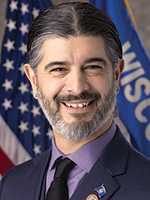
Rep. Vinnie Miresse
Sponsored bills
Maddy summaryAB 159 creates a grant program to support rural creative economy development in Wisconsin. It provides competitive grants of up to $50,000 to eligible applicants - including rural cities, tribes, nonprofits, and economic development organizations - for projects like renovating public spaces, supporting public arts, and promoting local creative businesses. Applicants must secure matching funds from nonstate sources (with no more than 25% in-kind), and grants must directly benefit rural areas defined as populations under 10,000 or non-urbanized regions. The Wisconsin Economic Development Corporation must report on the program's effectiveness by May 2027.
Maddy summaryAB 36 allows retired law enforcement officers and firefighters in Wisconsin to opt out of rejoining the state retirement system if they return to work for a local government employer. It specifically applies to those who retire and later get rehired by a participating employer (like a city or county fire department). The bill requires three conditions: the retiree must not have a prior agreement to return to that employer, must not have a pending employment contract, and must actively choose not to rejoin the retirement system using a department-provided form. This prevents automatic re-enrollment in the retirement system for these specific retirees who choose to opt out.
Maddy summaryAJR 61 is a symbolic resolution, not a law, that formally designates June 6, 2025, as "Gun Violence Awareness Day" in Wisconsin. It does not create new legal requirements or affect any specific group; instead, it serves as a ceremonial recognition of gun violence impacts. The resolution cites Wisconsin's statistics on gun-related deaths and injuries to frame the awareness day, but it contains no policy changes or funding mechanisms. This procedural action aims to highlight the issue through official proclamation, consistent with similar resolutions in other states.
Maddy summaryAB 177 exempts diapers and feminine hygiene products from state sales tax. The bill defines "diapers" as absorbent garments for people with incontinence and "feminine hygiene products" to include tampons, pads, menstrual cups, and similar items (excluding grooming products like soap or toothpaste). It adds these categories to the list of tax-exempt items under Wisconsin’s sales tax code (77.54(75)), directly affecting consumers who purchase these essential products. The exemption applies to both retail sales and use of these items, removing a tax burden on these daily necessities.
Maddy summaryAJR 64 designates June 2025 as Myasthenia Gravis (MG) Awareness Month in Wisconsin. This symbolic resolution recognizes MG, an autoimmune neuromuscular disease causing muscle weakness that affects vision, speech, and breathing, and aligns with the national observance of MG Awareness Month held every June. The bill does not create new laws, funding, or services; it is a formal acknowledgment to raise public awareness about MG, which impacts approximately 10-20 people per 100,000 Americans.
Maddy summaryAB 40 establishes a competitive grant program to fund school safety improvements and security training for school personnel. It allocates $30 million for the 2025-26 fiscal year to public, private, and tribal schools, with a maximum grant of $20,000 per school. The program prioritizes schools that have not previously received similar grants under Section 165.88 and requires annual reports to the Joint Committee on Finance. Grants must be awarded by June 30, 2027, after which no new funding will be issued.
Maddy summaryAB 231 creates a 25% tax credit for film production companies in Wisconsin covering eligible expenses (like wages, equipment, and location costs) and capital investments for accredited productions. It directly affects film production companies operating in Wisconsin that meet minimum spending thresholds ($50,000 or $100,000 depending on production length) and excludes news, sports, or corporate content. The bill establishes a State Film Office to administer the program, requiring accredited productions to include a state acknowledgment in the final film and mandating annual reports on credit allocations. It caps annual tax credits at $10 million statewide and $1 million per company, with strict eligibility rules and third-party audit requirements to ensure compliance.
Maddy summaryAB 205 creates a new statute (97.19) requiring that any product labeled as "maple syrup" served in public eating places must be made entirely of maple syrup. It directly affects restaurants and food service establishments that serve items marketed as maple syrup. The bill prohibits serving products identified as maple syrup unless they contain 100% maple syrup, while allowing non-maple syrup products to be served if they aren't labeled as maple syrup. This clarifies labeling standards for consumers and aligns with federal definitions for maple syrup.
Maddy summaryAB 289 bans the Department of Natural Resources from using neonicotinoid insecticides on state-owned lands it acquires and maintains. The bill directly affects the department’s land management practices, prohibiting these specific insecticides on properties covered under section 23.09(2)(d) of the statutes. Exceptions include existing cooperative farming agreements entered before the law's effective date and insecticide use for forest pest control on state forests, nurseries, or infested zones. The law creates a clear policy change for pesticide use on public lands while maintaining necessary exemptions for forestry and agriculture partnerships.