

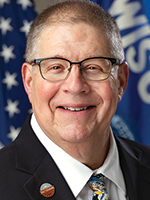
Photo of Dave Armstrong
R Wisconsin House · District 67 On the 2026 ballot

Rep. Dave Armstrong

Compare
Total votes
569
all sessions
Attendance
98%
14 missed
Near the chamber average
With party
99%
of cast votes
Near the chamber average
Bipartisan score
0%
crosses aisle rarely
Near the chamber average
Sponsored
797
bills & resolutions
Near the chamber average
Committees
7
assignments
797 bills and resolutions

Sponsored bills

Total
797
Primary
797
Co-sponsor
0
This page
797
matching current filters
Primary AB 992
Failed · Wisconsin House · Lead sponsor
Relating to: requirements for proposed administrative rules that impose costs. (FE)

Maddy summaryAB 992 revises cost thresholds for administrative rule reviews, lowering the trigger point from $10 million to $4 million in projected costs for businesses, local governments, and individuals over two years. It prohibits agencies from splitting a single rule into multiple rules to avoid this cost analysis requirement. Agencies must halt rulemaking if costs exceed the threshold unless they modify the rule to reduce costs, then re-evaluate. This directly affects state agencies creating regulations and entities bearing compliance costs.

Failed Apr 6, 2026 0 co-sponsors
Primary AB 131
Signed into law · Wisconsin House · Lead sponsor
Relating to: programs and requirements to address PFAS.

Maddy summaryAB 131 establishes a municipal grant program to test for PFAS (perfluoroalkyl and polyfluoroalkyl substances) in public water systems and fund source reduction measures. It allows water utilities to use customer service fees to cover up to half the cost of PFAS source reduction for connected customers, if cheaper than facility upgrades. The bill also creates eligibility rules for disadvantaged communities extending service due to PFAS contamination and directs PFAS contamination claims to an existing landowner grant program. These provisions directly affect municipal water systems, public utilities, and communities addressing PFAS in drinking water.

Signed into law Apr 6, 2026 0 co-sponsors
Primary AB 130
Signed into law · Wisconsin House · Lead sponsor
Relating to: exempting certain persons from PFAS enforcement actions under the spills law. (FE)

Maddy summaryAB 130 exempts specific groups from certain PFAS enforcement actions under Wisconsin's spills law if they allow the state to clean up contaminated land at no cost to them. It directly affects landowners, fire departments, airports, wastewater spreaders, and waste facilities that handled PFAS-contaminated materials legally. The bill creates exemptions for those who spread permitted biosolids, owned land where such spreading occurred, used PFAS in emergency response (per federal rules), accepted PFAS waste, or own property not responsible for the contamination origin. This applies only to enforcement sections related to PFAS contamination under the spills law, not all PFAS regulations.

Signed into law Apr 6, 2026 0 co-sponsors
Primary AB 907
Signed into law · Wisconsin House · Lead sponsor
Relating to: requirements for state lottery drawings. (FE)

Maddy summaryAB 907 updates state lottery drawing procedures by requiring all drawings to use random selection methods (via mechanical, electrical, or computerized systems) and mandating annual independent audits. The bill repeals outdated rules and creates new requirements for the lottery department to ensure drawing randomness and security. These changes directly affect the state lottery operations, requiring them to verify processes through external audits each year. The law focuses on transparency and technical safeguards without altering lottery prizes or participation rules.

Signed into law Apr 3, 2026 0 co-sponsors
Primary AB 320
Signed into law · Wisconsin House · Lead sponsor
Relating to: increasing certain court fees and surcharges and indexing those amounts for inflation. (FE)

Maddy summaryAB 320 increases multiple court filing fees and requires these fees to be adjusted for inflation starting in 2030. It raises specific fees, such as the civil filing fee from $75 to $190 and the criminal case fee from $163 to $239, with future adjustments tied to the U.S. consumer price index. These changes directly affect individuals filing court cases (e.g., defendants in criminal matters, plaintiffs in civil or family cases) who pay these fees. The bill mandates that fee amounts be recalculated every five years based on inflation data, rounded up to the nearest dollar, and posted online by the state courts director. The adjustments apply to over 20 specific fee categories across criminal, civil, and family court proceedings.

Signed into law Apr 3, 2026 0 co-sponsors
Primary AB 217
Signed into law · Wisconsin House · Lead sponsor
Relating to: local government competitive bidding thresholds. (FE)

Maddy summaryAB 217 raises competitive bidding thresholds for local government contracts in the state. It increases the general public work bidding threshold from $25,000 to $50,000 and the notice threshold from $5,000 to $10,000. For highway contracts specifically, it sets a $25,000 bidding threshold and $5,000 notice threshold. The bill also requires these thresholds to automatically adjust every five years based on inflation, using the U.S. Consumer Price Index. This directly affects towns and local governments when contracting for public projects above these new dollar amounts.

Signed into law Apr 3, 2026 0 co-sponsors
Primary AB 676
Signed into law · Wisconsin House · Lead sponsor
Relating to: creating a tax credit for insurers for certain investments in community development entities. (FE)

Maddy summaryAB 676 creates a tax credit for Wisconsin insurers who invest in community development entities (CDEs) that fund qualifying low-income community businesses. Insurers can claim a 10% credit (after an initial 0% period) against certain insurance regulatory fees for investments in CDEs that deploy capital to businesses with principal operations in Wisconsin - $125 million allocated for rural counties and $125 million for metro counties. The credit applies to investments meeting specific criteria, such as funding businesses with at least 60% of operations in Wisconsin and excluding those deriving significant income from real estate. This policy directly affects insurers and CDEs by incentivizing capital deployment to underserved communities through a structured, state-funded tax credit mechanism.

Signed into law Apr 3, 2026 0 co-sponsors
Primary AB 670
Signed into law · Wisconsin House · Lead sponsor
Relating to: exempting persons engaged in certain contract research services from the sales and use tax. (FE)

Maddy summaryAB 670 exempts businesses providing certain contract research services from state sales and use tax. It defines "contract research services" as research conducted for a client that would qualify as "qualified research" if done by the client’s own employees. The bill specifically includes research funded between companies in the same corporate group and research covered under federal tax rules for "contract research expenses." This exemption directly benefits research service providers in the state, reducing their tax burden for qualifying work. The bill aligns state tax treatment with federal research credit definitions under the Internal Revenue Code.

Signed into law Apr 3, 2026 0 co-sponsors
Primary AB 1167
Failed · Wisconsin House · Lead sponsor
Relating to: prohibiting recovery of a rate of return on retired electric generating facilities; an exemption from certificate requirements for constructing a large electric generating facility; and a permit dashboard for applications for certificates of public convenience and necessity. (FE)

Maddy summaryThis bill addresses three main areas of electric utility regulation. First, it prevents electric companies from charging customers for the profits they made on power plants that have already been retired. Second, it creates a public online dashboard to track the status of applications for permits needed to build large electric generating facilities. Third, it adds requirements for new large power facilities to show they will use at least 70% of their electricity for manufacturing or mining at the same location, and to agree to pay for connecting to the public power grid. These changes directly affect electric utilities, customers who pay utility rates, and developers seeking to build new power generation projects.

Failed Apr 2, 2026 0 co-sponsors
Primary AB 813
Signed into law · Wisconsin House · Lead sponsor
Relating to: the opportunity attraction and promotion program administered by the Wisconsin Economic Development Corporation.

Maddy summaryAB 813 amends Wisconsin's Opportunity Attraction and Promotion Program, which provides grants through the Wisconsin Economic Development Corporation (WEDC), to allow funding for non-public events that attract national exposure or boost economic growth - such as private conferences or industry gatherings - under specific conditions. The bill creates a new provision (3)(cm) limiting such non-public event funding to 25% of annual program funds, requiring WEDC to prioritize events during tourist off-seasons or economic downturns, and banning funding for regularly scheduled events. It also mandates that applicants secure non-state matching funds equal to the grant amount and requires WEDC to submit annual reports detailing all funded projects and their projected economic impact. This directly affects event organizers and businesses applying for WEDC grants to attract major opportunities to Wisconsin.

Signed into law Apr 2, 2026 0 co-sponsors
Showing 31 to 40 of 797 bills
Previous 1 3 4 5 80 Next