

Maddy summaryWisconsin's AB 162 establishes standardized metrics to track the success of state-funded workforce programs, such as job training and employment services. It requires state agencies operating these programs to report specific outcomes, including the percentage of participants working without government support two and four quarters after program completion, median earnings, and credential attainment. Agencies must publish this data on a single state website and submit annual reports to the legislature, while exempting data involving minors or violating federal confidentiality rules. The bill directly affects all state agencies managing workforce development initiatives, including programs like corrections reentry and Wisconsin Works.
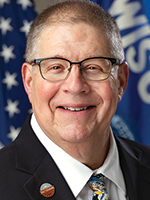
Rep. Dave Armstrong
Sponsored bills
Maddy summaryAB 326 creates a program providing grants to small local governments (populations under 7,500) to cover costs for grant writing and compliance assistance services. Grants up to $5,000 can be used for securing funding related to public works, transportation infrastructure, public safety, utility costs, or cybersecurity projects. The program requires a simple application listing only basic details (project purpose, contact info, and estimated costs) and prioritizes first-time applicants. A report evaluating the program must be submitted by December 2028.
Maddy summaryAB 211 creates a new exemption in Wisconsin law allowing "tobacco bars" to operate without adhering to the state's public smoking ban. To qualify, these establishments must have opened after June 4, 2009, allow only cigar and pipe smoking (not cigarettes), not be classified as food establishments, display clear signage about smoking, prohibit minors under 21 from entering, require employee acknowledgment of secondhand smoke exposure, and demonstrate adequate air filtration in licensing applications. The bill directly affects tobacco bars meeting these specific criteria, enabling them to operate with smoking permitted while imposing strict operational requirements. It does not change the general public smoking ban but establishes a defined exception for this narrow category of businesses.
Maddy summaryAB 518 allows private schools participating in state parental choice programs (like voucher systems) to hire substitute teachers who hold a state-issued substitute teaching permit. Currently, these schools must employ teachers with full teaching licenses or bachelor's degrees. The bill creates a specific exception to that requirement for substitute permit holders at eligible schools. This directly affects private schools in choice programs and substitute teachers seeking positions in those settings.
Maddy summaryAB 614 clarifies teachers' authority to manage classrooms and addresses student behavior incidents. It defines key terms like "disruptive behavior" and "violent incident," requiring teachers to immediately notify school principals when removing a student for safety concerns or classroom disruptions. The bill mandates that students can only return to a classroom after removal if a behavior intervention plan is in place for serious incidents, and it prohibits school districts from retaliating against teachers who enforce classroom rules or report disruptive behavior. This directly affects teachers (by protecting their actions), students (through new placement rules), and school administrators (by requiring specific procedures for student removals). The bill passed the Assembly on November 19, 2025, with 54 votes in favor.
Maddy summaryAB 385 requires political committees and parties to collect a credit card's verification code and a U.S. billing address when accepting online credit card donations. It allows exceptions for U.S. citizens living abroad, who must instead provide their U.S. voter registration address. Financial institutions processing such payments without these verifications face fines equal to the total amount of the unverified contributions. The bill directly affects political groups and payment processors handling campaign donations.
Maddy summaryAB 595 updates Wisconsin's voter registration system to better comply with federal voting laws. It requires the Elections Commission to verify U.S. citizenship for all voters by matching registration data with state databases from the Department of Transportation, State Registrar, and Department of Corrections. Municipal clerks must report monthly on voter status changes, including removals due to citizenship issues, and share audit results with election officials. The bill directly affects election administrators, state agencies handling voter data, and voters whose eligibility is verified through these new processes.
Maddy summaryAB 966 requires the Department of Justice to create and run a public awareness campaign focused on children's online safety. The campaign must use digital platforms (like the department’s website and social media) and print materials to educate families about internet risks and prevention steps for children. It specifically mandates that the Department provide free educational materials to schools (as defined in statute 118.257(1)(d)) upon request. The bill directly affects children and schools by promoting accessible resources to help prevent exposure to harmful online content.
Maddy summaryAB 957 increases funding by $400,000 for each of the 2025-26 and 2026-27 fiscal years to support internet crimes against children law enforcement within the Department of Justice. This is a budget adjustment that directly affects the Department of Justice's resources for investigating and prosecuting online crimes targeting minors. The bill does not create new laws or change existing legal standards - it solely allocates additional state funds for enforcement efforts.
Maddy summaryAB 958 authorizes the Department of Justice to add three new positions specifically for its Internet Crimes Against Children (ICAC) unit: two criminal analyst roles, one outreach specialist, and one digital evidence examiner. These positions are funded through existing appropriations under section 20.455(2)(a). The bill directly affects the ICAC unit’s staffing capacity to investigate and respond to online crimes involving children. It does not create new laws or policies but adjusts personnel authorizations to support existing law enforcement efforts. The bill was introduced in the 2026 Legislature and referred to the Criminal Justice and Public Safety Committee.