

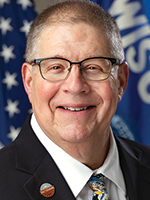
Photo of Dave Armstrong
R Wisconsin Assembly · District 67 On the 2026 ballot

Rep. Dave Armstrong

Compare
Total votes
569
all sessions
Attendance
98%
14 missed
Near the chamber average
With party
99%
of cast votes
Near the chamber average
Bipartisan score
0%
crosses aisle rarely
Near the chamber average
Sponsored
797
bills & resolutions
Near the chamber average
Committees
7
assignments
797 bills and resolutions

Sponsored bills

Total
797
Primary
797
Co-sponsor
0
This page
797
matching current filters
Primary AB 397
Failed · Wisconsin Assembly · Lead sponsor
Relating to: reporting requirements for recipients of economic development grants and loans.

Maddy summaryAB 397 requires businesses and organizations receiving state economic development grants or loans to submit annual reports detailing how funds were used. It directly affects grant and loan recipients by mandating transparency in fund allocation and project outcomes. The key provision establishes standardized reporting templates and deadlines for these entities to submit to the state. The bill, currently in the Assembly Jobs and Economy Committee, aims to improve accountability without changing grant eligibility or funding levels. (Note: An amendment was offered on October 30, 2025, but specific changes are not detailed in the provided context.)

Failed Mar 23, 2026 0 co-sponsors
Primary AB 556
Failed · Wisconsin Assembly · Lead sponsor
Relating to: zero-based biennial budget requests by executive branch agencies. (FE)

Maddy summaryAB 556 requires most state executive agencies to submit biennial budget requests using zero-based budgeting starting in 2027. This means agencies must justify each program's funding needs from scratch, not just build on previous budgets, and analyze whether each appropriation met its intended goal. The bill mandates that 20% of agencies use this method each biennium, with every agency required to submit at least one zero-based budget every five years. Agencies must also publicly post these reports on their websites.

Failed Mar 23, 2026 0 co-sponsors
Primary AB 519
Failed · Wisconsin Assembly · Lead sponsor
Relating to: the appointment of a guardian ad litem in a proceeding to grant reasonable visitation rights to a nonparent. (FE)

Maddy summaryAB 519 requires courts to appoint a court-appointed advocate (guardian ad litem) for a minor child in any family court case where a nonparent (such as a grandparent or close family friend) petitions for reasonable visitation rights under statute 767.43 and has legally established standing to file the petition. This mandate applies specifically to cases involving nonparent visitation requests, ensuring the child’s best interests are represented by an independent advocate. The bill takes effect for all such petitions filed on or after its effective date, creating a new procedural requirement in family court proceedings.

Failed Mar 23, 2026 0 co-sponsors
Primary AB 283
Failed · Wisconsin Assembly · Lead sponsor
Relating to: making certain child care expenditures eligible for the business development tax credit. (FE)

Maddy summaryAB 283 expands Wisconsin's business development tax credit to include specific child care costs incurred by employers for their employees. It allows businesses to claim a tax credit covering up to 15% of eligible expenses, such as capital costs to start a child care program, operational costs, reimbursements for employee child care, purchased child care slots, and contributions to dependent care flexible spending accounts. This directly affects businesses operating in Wisconsin that provide child care benefits to employees, making these costs deductible under the existing tax credit program. The bill modifies tax code sections to define these eligible expenses and sets the effective date for taxable years beginning after December 31, 2024.

Failed Mar 23, 2026 0 co-sponsors
Primary AB 327
Failed · Wisconsin Assembly · Lead sponsor
Relating to: the weight limit for utility terrain vehicles.

Maddy summaryAB 327 increases the empty weight limit for utility terrain vehicles (UTVs) from 3,000 pounds to 3,500 pounds under Wisconsin law. This change directly affects UTV operators and manufacturers by expanding the regulatory threshold for vehicles classified as UTVs (excluding golf carts, dune buggies, and tracked vehicles). The bill amends two sections of statutes to reflect this updated weight limit, which applies to vehicles originally manufactured with that weight capacity and designed primarily for off-highway use. The bill passed committee recommendations in November 2025 and is currently pending further legislative action.

Failed Mar 23, 2026 0 co-sponsors
Primary AB 222
Failed · Wisconsin Assembly · Lead sponsor
Relating to: a sustainable aviation fuel production tax credit. (FE)

Maddy summaryAB 222 establishes a $1.50 per gallon tax credit for producers of sustainable aviation fuel (SAF) in the state. The credit applies to SAF meeting a 90% renewable source requirement (from synthetic, renewable, and nonpetroleum sources like energy crops grown in the U.S.) and is available for taxable years beginning after December 31, 2027. Producers can claim the credit against state tax liability, but partnerships and similar entities cannot claim it directly - they must distribute credit eligibility to owners based on ownership shares. The bill also clarifies administrative rules and integrates the credit into existing tax code sections for consistency.

Failed Mar 23, 2026 0 co-sponsors
Primary AB 546
Failed · Wisconsin Assembly · Lead sponsor
Relating to: limitations on the definition of abortion.

Maddy summaryAB 546 redefines "abortion" in state statutes to exclude specific medical procedures performed to save a pregnant woman's life when doctors make reasonable efforts to preserve both the mother's and unborn child's life. It clarifies that procedures like emergency cesareans, early inductions, or removal of dead embryos/fetuses - especially during ectopic, anembryonic, or molar pregnancies - do not count as abortion. The bill creates consistent definitions across multiple statutes (including 20.927, 48.375, and 69.01) to ensure these medical exceptions apply uniformly. It directly affects healthcare providers by clarifying legal boundaries for life-saving treatments during complex pregnancies. The bill does not restrict access to these procedures but explicitly defines them as non-abortion under the law.

Failed Mar 23, 2026 0 co-sponsors
Primary AB 410
Failed · Wisconsin Assembly · Lead sponsor
Relating to: grants for falls prevention awareness and initiatives and making an appropriation. (FE)

Maddy summaryAB 410 provides state funding through grants to community organizations for falls prevention awareness programs and initiatives. It directly affects local health agencies, senior service providers, and community groups working with at-risk populations, particularly older adults. The bill establishes a specific appropriation from the state budget to support these prevention efforts. This is a funding measure, not a regulatory change, and focuses on allocating resources for education and outreach programs.

Failed Mar 23, 2026 0 co-sponsors
Primary AB 245
Failed · Wisconsin Assembly · Lead sponsor
Relating to: modifying the sales and use tax exemption for qualified data centers. (FE)

Maddy summaryAB 245 modifies the state's sales and use tax exemption for businesses operating qualified data centers. It defines a "qualified data center" as buildings (or connected buildings) owned, leased, or operated by a single business entity, designed to house server computers for processing, storing, or managing data. The bill adds provisions allowing data centers to offer rental space, utilities, and infrastructure services to tenants, while explicitly excluding cryptocurrency-related facilities from the tax exemption. This directly affects data center operators and their tenants by clarifying eligibility for tax benefits and expanding allowable services.

Failed Mar 23, 2026 0 co-sponsors
Primary AB 200
Failed · Wisconsin Assembly · Lead sponsor
Relating to: applying the motor vehicle fuel tax supplier’s administrative allowance to diesel fuel, a motor vehicle fuel tax refund for evaporation losses, and making an appropriation. (FE)

Maddy summaryAB 200 creates a refund program for retail fuel sellers (like gas stations) who experience fuel loss from evaporation or shrinkage. It allows retailers to claim a 0.5% refund on the motor vehicle fuel tax they paid when purchasing fuel, based on their tax-paid amount. Retailers must submit detailed invoices showing the tax amount separately, and file claims within 12 months of purchase. The refund applies to all motor vehicle fuels, including diesel, and requires suppliers to provide specific purchase documentation.

Failed Mar 23, 2026 0 co-sponsors
Showing 141 to 150 of 797 bills
Previous 1 … 14 15 16 … 80 Next