

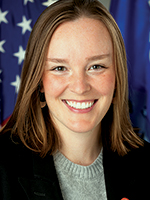
Photo of Greta Neubauer
D Wisconsin Assembly · District 66 On the 2026 ballot

Rep. Greta Neubauer

Compare
Total votes
714
all sessions
Attendance
98%
13 missed
Near the chamber average
With party
98%
of cast votes
Near the chamber average
Bipartisan score
1%
crosses aisle rarely
Near the chamber average
Sponsored
943
bills & resolutions
Near the chamber average
Committees
7
assignments
943 bills and resolutions

Sponsored bills

Total
943
Primary
943
Co-sponsor
0
This page
943
matching current filters
Primary AB 868
Failed · Wisconsin Assembly · Lead sponsor
Relating to: Focus on Energy inclusion of programs promoting energy efficiency and renewable energy measures for low-income households and granting rule-making authority. (FE)

Maddy summaryAB 868 requires Wisconsin's energy utility programs to dedicate at least 25% of annual energy efficiency funding toward initiatives specifically serving low-income households. The bill defines "low-income household" using an existing state definition and mandates programs that reduce energy costs and improve efficiency for these households. It also requires the Public Service Commission to evaluate these programs every four years, setting goals to prioritize reducing energy burdens and environmental impacts for low-income residents. The law directly affects low-income households by ensuring their energy needs are addressed through utility-funded programs.

Failed Mar 23, 2026 0 co-sponsors
Primary AB 877
Failed · Wisconsin Assembly · Lead sponsor
Relating to: report on environmental impacts to vulnerable communities and granting rule-making authority. (FE)

Maddy summaryAB 877 requires environmental permits for facilities in defined "vulnerable communities" to include reports assessing combined pollution effects, health impacts, and unavoidable harms. It mandates public hearings with 30 days' notice and 21-day newspaper notices in the affected community before permits are issued. The department must deny permits if cumulative pollution from the facility creates an unreasonable health or environmental risk to the community, considering public feedback. This directly affects businesses seeking permits for facilities in census areas with high poverty rates (50%+ low-income households) plus significant minority populations or limited English proficiency.

Failed Mar 23, 2026 0 co-sponsors
Primary AB 869
Failed · Wisconsin Assembly · Lead sponsor
Relating to: increasing the Focus on Energy rate and including residential energy storage in Focus on Energy. (FE)

Maddy summaryAB 869 increases the required funding for Wisconsin's Focus on Energy program from 1.2% to 2.4% of energy utilities' annual retail sales revenue. It specifically adds residential energy storage systems (like home battery systems) to the list of eligible programs under the "energy efficiency program" definition. This means utilities must now dedicate more funding toward programs that help residential customers adopt energy storage, alongside traditional efficiency measures. The bill directly affects energy utilities (requiring higher spending) and residential customers (expanding access to storage incentives).

Failed Mar 23, 2026 0 co-sponsors
Primary AB 876
Failed · Wisconsin Assembly · Lead sponsor
Relating to: an energy efficiency grant program for school districts, granting rule-making authority, and making an appropriation. (FE)

Maddy summaryAB 876 creates a new $10 million annual grant program for Wisconsin school districts to fund energy efficiency projects in school buildings, starting in the 2025-2026 school year. The program prioritizes projects focused on heating, ventilation, and air conditioning (HVAC) systems for schools. The Department of Public Instruction will administer the grants and may develop rules to implement the program. This directly affects public school districts seeking funding for building upgrades to reduce energy costs.

Failed Mar 23, 2026 0 co-sponsors
Primary AB 893
Failed · Wisconsin Assembly · Lead sponsor
Relating to: grants for regional biodigesters, granting rule-making authority, and making an appropriation. (FE)

Maddy summaryAB 893 creates a $250,000 annual grant program from the environmental fund to support planning for regional biodigesters. These facilities convert organic waste (like food scraps or farm byproducts) into energy, primarily benefiting agricultural and waste management projects. The bill authorizes the Department of Agriculture to administer the grants and develop rules for their use. It does not fund construction but focuses on initial planning phases for new biodigester facilities.

Failed Mar 23, 2026 0 co-sponsors
Primary AB 889
Failed · Wisconsin Assembly · Lead sponsor
Relating to: creating the Wisconsin Climate Corps program, granting rule-making authority, and making an appropriation. (FE)

Maddy summaryAB 889 establishes the Wisconsin Climate Corps program to create climate-focused job opportunities for workers aged 16-30, with at least 50% from underserved communities. The program funds projects like restoring natural lands, weatherizing homes for energy efficiency, and building community gardens, administered by a board overseeing contracts with nonprofit managers. Key requirements include paying workers $15/hour, providing housing stipends ($100/week), and gold-level health insurance. Sponsors (local governments, tribes, or nonprofits) must submit annual reports, and completed projects require permanent plaques identifying them as Wisconsin Climate Corps initiatives. The bill appropriates state funds for grants to approved projects under this framework.

Failed Mar 23, 2026 0 co-sponsors
Primary AB 895
Failed · Wisconsin Assembly · Lead sponsor
Relating to: sentencing for crimes committed by a person who is under the age of 18.

Maddy summaryAB 895 modifies sentencing and parole procedures for individuals under 18 convicted of crimes. It requires courts to consider youth-specific mitigating factors and relevant information when determining eligibility for release to extended supervision or parole. The bill creates new provisions (e.g., § 302.114(5)(cs), § 304.06(1)(bc)) that apply specifically to "youthful offenders" as defined in § 973.014(3)(a). These changes directly affect minors in the state’s criminal justice system by mandating more individualized review of their cases during sentencing and parole decisions.

Failed Mar 23, 2026 0 co-sponsors
Primary AB 888
Failed · Wisconsin Assembly · Lead sponsor
Relating to: green jobs training program grants, providing an exemption from emergency rule procedures, and making an appropriation.

Maddy summaryAB 888 creates a new state-funded program providing $1.5 million annually in grants to public or private organizations for training workers in green jobs. Green jobs are defined as roles in renewable energy (like solar/wind) or environmental services that conserve resources or benefit the environment. Organizations receiving grants must provide matching funds, and the Department of Workforce Development will track outcomes like employment rates and wage changes for participants. The funding comes from the state's workforce development budget and requires annual reporting on program impact.

Failed Mar 23, 2026 0 co-sponsors
Primary AB 879
Failed · Wisconsin Assembly · Lead sponsor
Relating to: grants for planting trees to address urban heat islands, eligible recipients for urban forestry grants, providing an exemption from emergency rule procedures, and making an appropriation. (FE)

Maddy summaryAB 879 creates grants for cities, towns, nonprofits (501(c)(3) organizations), and tribes to plant and maintain trees in urban areas to reduce "urban heat islands" (warmer city zones). It provides up to $100,000 per project for tree planting, maintenance, and replacement, with no cost-sharing required for recipients. The bill also adds $500,000 in funding for 2025-26 and includes separate grants for tree recovery after storm damage in declared emergency areas. These grants cover full project costs without requiring applicants to pay any portion upfront.

Failed Mar 23, 2026 0 co-sponsors
Primary AB 830
Failed · Wisconsin Assembly · Lead sponsor
Relating to: required inclusions in the long-range statewide transportation plan. (FE)

Maddy summaryAB 830 requires the state transportation department to include specific goals in its long-range transportation plan, directly affecting how the department develops statewide infrastructure strategies. The bill mandates inclusion of a vision for low-carbon public transit, transportation electrification, cost-effective charging infrastructure, equitable clean transportation incentives, and solutions for underserved rural, low-income, and minority communities. The department must also submit a report within six months detailing progress on these requirements and future plans for implementation. This legislation sets concrete policy standards for sustainable and equitable transportation planning without specifying funding or enforcement mechanisms.

Failed Mar 23, 2026 0 co-sponsors
Showing 71 to 80 of 943 bills
Previous 1 … 7 8 9 … 95 Next