

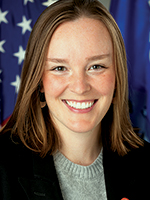
Photo of Greta Neubauer
D Wisconsin Assembly · District 66 On the 2026 ballot

Rep. Greta Neubauer

Compare
Total votes
714
all sessions
Attendance
98%
13 missed
Near the chamber average
With party
98%
of cast votes
Near the chamber average
Bipartisan score
1%
crosses aisle rarely
Near the chamber average
Sponsored
943
bills & resolutions
Near the chamber average
Committees
7
assignments
943 bills and resolutions

Sponsored bills

Total
943
Primary
943
Co-sponsor
0
This page
943
matching current filters
Primary AJR 144
Failed · Wisconsin Assembly · Lead sponsor
Relating to: congratulating the U.S. Olympic Women’s Ice Hockey Team on winning the Olympic gold medal.

Maddy summaryThis bill congratulates the U.S. Olympic Women's Ice Hockey Team for winning the gold medal at the 2026 Winter Olympics. It specifically recognizes the team's achievements and highlights the contributions of Wisconsin athletes and staff who were part of the squad. The resolution expresses appreciation from the Wisconsin State Legislature to the players, coaches, and support staff for their success. As a ceremonial measure, the bill does not create new laws or policies but serves to honor the team's accomplishment.

Failed Mar 23, 2026 0 co-sponsors
Primary AB 1110
Failed · Wisconsin Assembly · Lead sponsor
Relating to: fertility treatment rights, reimbursement of fertility treatments under the Medical Assistance program, and requiring insurance coverage for fertility treatments. (FE)

Maddy summaryThis bill establishes statutory rights for individuals, healthcare providers, insurance companies, and manufacturers to access and provide fertility treatments without interference, while also creating a legal mechanism for enforcement through private lawsuits. It defines fertility treatment broadly to include procedures like in vitro fertilization, egg and sperm preservation, genetic testing, and related medications, requiring that services follow widely accepted medical standards. The legislation mandates that health insurance issuers cover fertility treatments and allows the state to seek federal waivers to reimburse these services through the Medical Assistance program if necessary. Additionally, it grants individuals the right to make decisions about their reproductive genetic material and establishes legal protections for providers to continue treatments they have already begun.

Failed Mar 23, 2026 0 co-sponsors
Primary AB 1157
Failed · Wisconsin Assembly · Lead sponsor
Relating to: pupil discrimination and private schools participating in a parental choice program or the Special Needs Scholarship Program, discrimination based on gender identity or gender expression, and providing a penalty.

Maddy summaryThis bill prohibits discrimination based on gender identity and gender expression in Wisconsin public schools and private schools that receive state funding through parental choice or scholarship programs. It requires these schools to adopt written policies for handling discrimination complaints and mandates that schools admitting only one sex must still allow students whose gender identity aligns with that sex. The legislation also adds gender identity and gender expression to the list of protected characteristics for hiring teachers and administrative staff, while allowing religious schools to decline instruction in religions other than their own. Additionally, the bill establishes penalties of up to $1,000 for officials who intentionally discriminate against students or staff in violation of these provisions.

Failed Mar 23, 2026 0 co-sponsors
Primary AB 1161
Failed · Wisconsin Assembly · Lead sponsor
Relating to: online services accessed by minors, minors’ personal data, and granting rule-making authority.

Maddy summaryThis bill creates a new section in state statutes to regulate how online services collect and use personal data from minors under 18 years old. It applies to businesses that operate online services in the state, earn most of their revenue from those services, and are likely to be accessed by minors. The law requires covered businesses to implement age-appropriate design features, restrict the collection of sensitive data like biometric and genetic information from minors, and prevent compulsive use patterns that disrupt a minor's daily activities. The bill also grants the state rule-making authority to establish specific standards for how these protections should be implemented and enforced.

Failed Mar 23, 2026 0 co-sponsors
Primary AB 1152
Failed · Wisconsin Assembly · Lead sponsor
Relating to: entering into an agreement among the states to elect the president and vice president of the United States by means of a national popular vote.

Maddy summaryThis bill would authorize Wisconsin to join an interstate compact that implements a national popular vote system for electing the president and vice president, but it only takes effect once enough states have joined to control a majority of electoral votes. Under the agreement, member states would still hold traditional statewide elections, but they would award all their electoral votes to the presidential candidate who wins the most total votes nationwide rather than the winner of their individual state. The bill also includes provisions for handling ties, certifying results, and allowing states to withdraw from the compact with certain restrictions. This legislation does not change the current Electoral College system itself but creates a legal framework for states to participate in an alternative election method if sufficient states agree to join the compact.

Failed Mar 23, 2026 0 co-sponsors
Primary AB 1128
Failed · Wisconsin Assembly · Lead sponsor
Relating to: insurer claims denial practices and auditing, creating the Office of the Public Intervenor, granting rule-making authority, and making an appropriation. (FE)

Maddy summaryThis bill creates a new Office of the Public Intervenor within the state insurance commissioner's office to help individuals with insurance claims, policies, and appeals for medical procedures and medications. It establishes rules requiring insurers to process disability insurance claims within reasonable timeframes, provide detailed explanations for claim denials, and disclose when artificial intelligence is used in claim decisions. The office can levy assessments on insurers based on their premium volume to fund its operations and conduct audits of claims denial practices. Additionally, the bill prohibits specific insurer practices such as using vague policy terms, stalling claim reviews, or allowing non-physician personnel to determine medical necessity.

Failed Mar 23, 2026 0 co-sponsors
Primary AB 1176
Failed · Wisconsin Assembly · Lead sponsor
Relating to: general equalization aids, the reimbursement rate for special education costs, excluding special education reimbursement from certain per pupil payments, and making an appropriation. (FE)

Maddy summaryThis bill adjusts how Wisconsin calculates and distributes state funding for special education costs and general school aid. It modifies the reimbursement rate for special education expenses, allowing the state to distribute up to 100 percent of eligible costs rather than a lower fixed percentage. The legislation also increases the general school aid appropriation for the 2026-27 fiscal year by approximately $446 million to support public school districts. These changes directly affect school districts and the state Department of Public Instruction by altering how funds are allocated and calculated for educational programs.

Failed Mar 23, 2026 0 co-sponsors
Primary AB 1131
Failed · Wisconsin Assembly · Lead sponsor
Relating to: penalties for certain offenses related to operating a motor vehicle while intoxicated, restrictions related to ignition interlock devices, and providing a penalty. (FE)

Maddy summaryThis bill amends Wisconsin statutes to increase penalties for repeat offenders convicted of operating a motor vehicle while intoxicated. It directly affects individuals with two or more prior DWI convictions within a 10-year period, as well as those with a lifetime history of alcohol-related driving offenses. The key changes include mandating longer license revocations ranging from one to two years, adjusting fine amounts, and establishing specific eligibility timelines for obtaining occupational licenses after revocation periods. The legislation also clarifies how prior convictions and suspensions are counted toward triggering these enhanced penalties, while allowing counties to offer reduced minimum jail sentences if offenders successfully complete alcohol and drug treatment programs.

Failed Mar 23, 2026 0 co-sponsors
Primary AB 1178
Failed · Wisconsin Assembly · Lead sponsor
Relating to: regional transit authorities and making an appropriation. (FE)

Maddy summaryAB 1178 amends Wisconsin statutes to update definitions and procedures for regional transit authorities, ensuring they are recognized as eligible entities for various state programs including highway relocation orders, right-of-way applications, and employer classifications for employee benefits. The bill creates new funding mechanisms by establishing appropriation accounts to collect and distribute taxes imposed by transit authorities that choose to levy them, with a portion of those revenues retained for administrative costs. Additionally, the legislation clarifies which organizations qualify as municipalities and employers under existing laws, explicitly including transit authorities created under the specified chapter while excluding cultural arts districts from certain employer definitions. This bill does not mandate tax collection but provides the legal framework for transit authorities to adopt resolutions imposing taxes if they choose to do so.

Failed Mar 23, 2026 0 co-sponsors
Primary AB 1008
Failed · Wisconsin Assembly · Lead sponsor
Relating to: references to like-kin under the Wisconsin Shares program.

Maddy summaryAB 1008 clarifies eligibility for Wisconsin's child care subsidy program (Wisconsin Shares) by expanding "relative" definitions to include "like-kin" caregivers. It allows non-relatives who provide care as family (e.g., close family friends) to qualify for subsidies if they meet specific criteria, such as having a court order and receiving payments under certain statutes. The bill also adjusts income calculations for eligibility, including court-ordered support payments exceeding $1,250 monthly. This directly affects caregivers of children under 13 (or 19 if disabled) who seek child care assistance through Wisconsin Shares.

Failed Mar 23, 2026 0 co-sponsors
Showing 31 to 40 of 943 bills
Previous 1 … 3 4 5 … 95 Next