

Maddy summaryAssembly Joint Resolution 52 proclaims April 20 to 26, 2025, as National Infertility Awareness Week in Wisconsin. The resolution formally affirms the legal right of patients in Wisconsin to undergo in vitro fertilization (IVF) and other fertility treatments. It also rejects the notion of embryonic or fetal "personhood," aiming to support individuals seeking various family-building options.
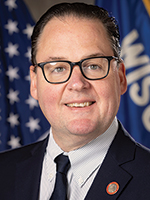
Rep. Ben DeSmidt
Sponsored bills
Maddy summaryAssembly Joint Resolution 58 officially designates the month of May as Older Americans Month in Wisconsin. This resolution aims to recognize the significant contributions of older Americans in the state and underscore the importance of supporting programs that help them maintain health and independence.
Maddy summaryAB 224 requires that referendum questions on ballots - whether for constitutional amendments or other measures - be written in plain, clear language. It prohibits wording that would force voters to cast a "negative vote" to approve a proposal or an "affirmative vote" to reject one. For constitutional amendment questions, the ballot must also specify if any part of the amendment is already in existing state law. This rule applies to all public votes on measures submitted to voters, aiming to make ballot initiatives easier for the public to understand. The bill directly affects voters and election officials who draft and administer referendum questions.
Maddy summaryAJR 61 is a symbolic resolution, not a law, that formally designates June 6, 2025, as "Gun Violence Awareness Day" in Wisconsin. It does not create new legal requirements or affect any specific group; instead, it serves as a ceremonial recognition of gun violence impacts. The resolution cites Wisconsin's statistics on gun-related deaths and injuries to frame the awareness day, but it contains no policy changes or funding mechanisms. This procedural action aims to highlight the issue through official proclamation, consistent with similar resolutions in other states.
Maddy summaryAJR 64 designates June 2025 as Myasthenia Gravis (MG) Awareness Month in Wisconsin. This symbolic resolution recognizes MG, an autoimmune neuromuscular disease causing muscle weakness that affects vision, speech, and breathing, and aligns with the national observance of MG Awareness Month held every June. The bill does not create new laws, funding, or services; it is a formal acknowledgment to raise public awareness about MG, which impacts approximately 10-20 people per 100,000 Americans.
Maddy summaryAB 205 creates a new statute (97.19) requiring that any product labeled as "maple syrup" served in public eating places must be made entirely of maple syrup. It directly affects restaurants and food service establishments that serve items marketed as maple syrup. The bill prohibits serving products identified as maple syrup unless they contain 100% maple syrup, while allowing non-maple syrup products to be served if they aren't labeled as maple syrup. This clarifies labeling standards for consumers and aligns with federal definitions for maple syrup.
Maddy summaryAB 289 bans the Department of Natural Resources from using neonicotinoid insecticides on state-owned lands it acquires and maintains. The bill directly affects the department’s land management practices, prohibiting these specific insecticides on properties covered under section 23.09(2)(d) of the statutes. Exceptions include existing cooperative farming agreements entered before the law's effective date and insecticide use for forest pest control on state forests, nurseries, or infested zones. The law creates a clear policy change for pesticide use on public lands while maintaining necessary exemptions for forestry and agriculture partnerships.
Maddy summaryAB 287 creates a new section of state law allowing local governments (like cities or counties) to regulate pesticides specifically to protect pollinators, such as bees and butterflies. The bill defines "pollinator" as insects that pollinate flowers and establishes a legal basis for local ordinances restricting pesticide use in ways that safeguard these insects and their habitats. This legislation directly affects local governments, enabling them to develop their own pesticide rules without overriding state law, while focusing on concrete protection for pollinators rather than imposing new statewide restrictions.
Maddy summaryAB 305 designates the rusty patched bumble bee (*Bombus affinis*) as Wisconsin's official state native insect. The bill amends Wisconsin statutes to add this designation to the list of state symbols included in the Wisconsin Blue Book. This is a symbolic, non-regulatory change that does not alter any policies or regulations affecting the public or environment. The bill creates a new statutory section (1.10 (3) (w)) and updates a reference in another section to include "native insect" in the Blue Book's listings.
Maddy summaryThis resolution designates June 2025 as Pollinator Awareness Month in Wisconsin. It recognizes the ecological and economic importance of pollinators (like bees and butterflies) to agriculture and ecosystems, citing their role in producing food and supporting Wisconsin's $230 million in pollinator-dependent crops. The resolution has no regulatory effect - it is purely ceremonial, aiming to raise public awareness through existing community efforts like "No Mow May" rather than creating new policies or programs.