

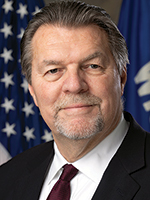
Photo of Bob Wittke
R Wisconsin Assembly · District 63 On the 2026 ballot

Rep. Bob Wittke

Compare
Total votes
689
all sessions
Attendance
99%
9 missed
Near the chamber average
With party
100%
of cast votes
Near the chamber average
Bipartisan score
0%
crosses aisle rarely
Near the chamber average
Sponsored
314
bills & resolutions
Near the chamber average
Committees
4
assignments
314 bills and resolutions

Sponsored bills

Total
314
Primary
314
Co-sponsor
0
This page
314
matching current filters
Primary AB 196
Failed · Wisconsin Assembly · Lead sponsor
Relating to: rehired annuitants in the Wisconsin Retirement System. (FE)

Maddy summaryThis bill changes Wisconsin's retirement system rules for state retirees who return to work. It allows retirees who rejoin state employment (after a 75-day separation) to choose whether to keep their retirement annuity for up to 60 months, instead of having it automatically suspended. If they elect to keep the annuity, their new employer must pay equivalent retirement contributions to the system. The policy directly affects state retirees returning to jobs where they work at least two-thirds full-time, while ensuring retirement fund contributions remain intact.

Failed Mar 23, 2026 0 co-sponsors
Primary AB 408
Failed · Wisconsin Assembly · Lead sponsor
Relating to: designating the bacterium Lactococcus lactis as the Wisconsin state microbe.

Maddy summaryAB 408 designates the bacterium *Lactococcus lactis* as Wisconsin's official state microbe. This ceremonial bill has no regulatory or policy impact; it solely recognizes a specific microbe for symbolic representation. The bill passed committee recommendation with unanimous support and is now pending before the Rules committee. (Note: As a purely symbolic designation, it directly affects no individuals or entities through policy changes.)

Failed Mar 23, 2026 0 co-sponsors
Primary AB 525
Failed · Wisconsin Assembly · Lead sponsor
Relating to: repeal of obsolete tax credits and tax provisions. (FE)

Maddy summaryAB 525 repeals 138 outdated tax credit and tax provision sections in the state's tax code. This directly affects taxpayers and state tax administrators by removing obsolete rules that no longer serve their intended purpose. The bill targets specific sections, such as expired credits and redundant requirements, without creating new tax policies. This action simplifies the tax code by eliminating provisions that have been deemed obsolete.

Failed Mar 23, 2026 0 co-sponsors
Primary AB 419
Failed · Wisconsin Assembly · Lead sponsor
Relating to: a sales and use tax exemption for ski lifts. (FE)

Maddy summaryAB 419 creates a sales and use tax exemption for ski lifts and related equipment used exclusively to operate them. The bill exempts the purchase price of ski lifts, machines, equipment, accessories, and parts specifically for ski lift operations from state sales and use taxes. This directly affects ski resort operators and businesses that buy or maintain ski lift infrastructure. The exemption applies to the equipment itself, not the lift services or user fees, and takes effect three months after publication. The bill is procedural, focusing solely on modifying tax law to remove this tax burden for qualifying equipment.

Failed Mar 23, 2026 0 co-sponsors
Primary AB 606
Failed · Wisconsin Assembly · Lead sponsor
Relating to: regulation of hemp-derived cannabinoid products, renaming the Division of Alcohol Beverages as the Division of Intoxicating Products, creating an occupational tax on hemp-derived cannabinoid products, alcohol beverage warehouses and production arrangements, granting rule-making authority, and providing a penalty. (FE)

Maddy summaryAB 606 regulates hemp-derived cannabinoid products by creating an occupational tax on businesses selling these products, alcohol warehouses, and production facilities. It renames the state's "Division of Alcohol Beverages" to the "Division of Intoxicating Products" and grants this new division rule-making authority to enforce regulations. The bill also establishes penalties for violations of the new rules. This directly affects hemp product businesses, alcohol warehouse operators, and the state agency responsible for oversight.

Failed Mar 23, 2026 0 co-sponsors
Primary AB 566
Passed · Wisconsin Assembly · Lead sponsor
Relating to: qualifying investments for purposes of claiming the early stage seed investment and angel investment credits. (FE)

Maddy summaryAB 566 clarifies what qualifies as an investment for Wisconsin's early-stage seed and angel investment tax credits. It defines "investment" to include equity purchases, convertible notes, or similar instruments, as determined by the Wisconsin Economic Development Corporation (WEDC). This standardizes eligibility for investors and businesses seeking these credits, applying to taxable years beginning January 1, 2025. The bill directly affects investors claiming credits and businesses receiving qualifying early-stage funding.

Passed Mar 23, 2026 0 co-sponsors
Primary AB 494
Failed · Wisconsin Assembly · Lead sponsor
Relating to: increasing the carryover period of the research income tax credit. (FE)

Maddy summaryAB 494 extends Wisconsin's research income tax credit carryover period from 15 to 50 taxable years. This change allows businesses that claim the credit but cannot fully use it in a single year to carry forward unused credits for up to five decades. The policy directly affects Wisconsin businesses eligible for the research tax credit, providing greater flexibility to offset future tax liabilities. The bill primarily modifies tax code sections (71.07 and 71.28) to implement this extended carryover period.

Failed Mar 23, 2026 0 co-sponsors
Primary AB 565
Passed · Wisconsin Assembly · Lead sponsor
Relating to: qualified new business venture eligibility. (FE)

Maddy summaryAB 565 amends tax credit eligibility rules for qualified new business ventures in Wisconsin. It increases the investment cap from $12 million to $20 million for businesses claiming tax credits under specific statutes (71.07, 71.28, 71.47, 76.638) for taxable years starting after December 31, 2025. The bill also requires businesses receiving such credits to agree not to relocate outside Wisconsin for three years, with penalties for violations. These changes directly affect new businesses seeking state tax credits to support growth. The bill repeals outdated provisions and updates the rules to adjust investment limits and relocation requirements.

Passed Mar 23, 2026 0 co-sponsors
Primary AB 158
Failed · Wisconsin Assembly · Lead sponsor
Relating to: changing the conditions of liability for worker’s compensation benefits for emergency medical responders, emergency medical services practitioners, volunteer firefighters, correctional officers, emergency dispatchers, coroners and coroner staff, and medical examiners and medical examiner staff. (FE)

Maddy summaryAB 158 modifies Wisconsin's worker's compensation rules for mental injuries (specifically PTSD) among certain public safety professionals. It adds emergency medical responders, emergency medical services practitioners, correctional officers, emergency dispatchers, coroners, medical examiners, and medicolegal investigation staff to the list of workers eligible for mental injury claims. The bill requires these claims to meet additional conditions to be compensable, specifically for mental injuries not accompanied by physical harm. This change affects how these essential public safety workers access benefits for work-related PTSD under Wisconsin's worker's compensation system.

Failed Mar 23, 2026 0 co-sponsors
Primary AB 97
Failed · Wisconsin Assembly · Lead sponsor
Relating to: extension of eligibility under the Medical Assistance program for postpartum women. (FE)

Maddy summaryAB 97 extends health coverage under Wisconsin's Medicaid program (Medical Assistance) for postpartum women from 60 days to 365 days after pregnancy, directly affecting pregnant and postpartum women who qualify for the program. The bill changes eligibility rules to ensure coverage continues without regard to income changes during this extended period. It also adds a provision allowing women with family incomes above 300% of the poverty line to qualify if their income is spent on medical care or health insurance premiums. This policy update aims to provide longer-term health coverage for new mothers during a critical postpartum period.

Failed Mar 23, 2026 0 co-sponsors
Showing 61 to 70 of 314 bills
Previous 1 … 6 7 8 … 32 Next