

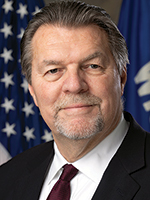
Photo of Bob Wittke
R Wisconsin Assembly · District 63 On the 2026 ballot

Rep. Bob Wittke

Compare
Total votes
689
all sessions
Attendance
99%
9 missed
Near the chamber average
With party
100%
of cast votes
Near the chamber average
Bipartisan score
0%
crosses aisle rarely
Near the chamber average
Sponsored
314
bills & resolutions
Near the chamber average
Committees
4
assignments
314 bills and resolutions

Sponsored bills

Total
314
Primary
314
Co-sponsor
0
This page
314
matching current filters
Primary AB 279
Passed · Wisconsin Assembly · Lead sponsor
Relating to: talent recruitment grants. (FE)

Maddy summaryAB 279 creates a state grant program to help municipalities and eligible nonprofits recruit new residents from outside the state. The program provides grants (capped at $500,000 per municipality annually) to cover costs of talent recruitment initiatives, with half the funds paid upfront and the second half released only if half the target number of relocating households is met. Households must earn at least $55,000 annually, live outside the state when applying, and commit to relocating to qualify for incentives. Recipients must submit detailed semiannual reports tracking applications, approved households, costs, incomes, and economic impacts like tax revenue.

Passed Mar 23, 2026 0 co-sponsors
Primary AB 190
Failed · Wisconsin Assembly · Lead sponsor
Relating to: obtaining attorney fees and costs under the state’s public records law when an authority voluntarily or unilaterally releases a contested record after an action has been filed in court.

Maddy summaryAB 190 modifies state public records law to allow requesters who win partial victories to recover attorney fees. Specifically, it enables fee recovery when a government agency voluntarily releases a contested record *after* a lawsuit is filed, and a court determines the lawsuit was a substantial factor in that release. This directly affects public record requesters who successfully pressure agencies to disclose documents through litigation without a full court judgment. The bill creates a clear mechanism for fee awards in these specific scenarios, avoiding the need for a formal court order on the record's disclosure.

Failed Mar 23, 2026 0 co-sponsors
Primary AB 164
Passed · Wisconsin Assembly · Lead sponsor
Relating to: various changes to the unemployment insurance law and federal Reemployment Services and Eligibility Assessment grants. (FE)

Maddy summaryAB 164 standardizes terminology across Wisconsin's unemployment insurance system, replacing "unemployment insurance" with "reemployment assistance" in state laws to align with federal programs. It creates a new Division of Reemployment Assistance within the Department of Workforce Development and clarifies responsibilities for home care workers, requiring placement agencies to inform consumers about who pays federal social security taxes, state reemployment assistance contributions, and worker compensation insurance. The bill ensures home care consumers aren't unexpectedly liable for these costs if agencies fail to provide required notices, and establishes mechanisms for recovering costs from agencies when they do. These changes primarily affect home care workers, placement agencies, and state agencies administering unemployment benefits.

Passed Mar 23, 2026 0 co-sponsors
Primary AB 284
Failed · Wisconsin Assembly · Lead sponsor
Relating to: enumeration of projects in the Authorized State Building Program, modifications to building program project budgets, selection of project architects and engineers, single prime contracting, agency cooperation with energy conservation contractors, timeline for claims before the Claims Board, and making a transfer to the state building trust fund. (FE)

Maddy summaryAB 284 streamlines the management of state construction projects by raising the cost threshold for mandatory project enumeration from $1 million to $2 million. It requires quarterly budget reports for projects needing increases, sets a 6-month deadline for the Claims Board to resolve certain construction claims, and mandates state agencies to collaborate with energy conservation contractors on pilot projects. The bill also clarifies responsibilities for utility costs in contracts, modifies bidding procedures, and transfers $32 million from the general fund to the state building trust fund for infrastructure. These changes primarily affect state agencies, the building commission, and contractors managing public construction projects.

Failed Mar 23, 2026 0 co-sponsors
Primary AB 92
Failed · Wisconsin Assembly · Lead sponsor
Relating to: spinal cord injury research grants and symposia and making an appropriation. (FE)

Maddy summaryAB 92 creates a Spinal Cord Injury Council in Wisconsin's Department of Health Services to oversee research funding. It allocates $2.5 million biennially for grants supporting research into new treatments for spinal cord injuries, including pharmaceutical, medical device, and rehabilitative approaches. The council - composed of researchers, patients, veterans, and family members - sets grant criteria, reviews applications, and recommends awardees. Grant recipients must present findings at department-hosted symposia (held no more than once every two years) and report annual results to the legislature. This directly affects Wisconsin-based researchers and medical institutions conducting spinal cord injury research.

Failed Mar 23, 2026 0 co-sponsors
Primary AB 214
Failed · Wisconsin Assembly · Lead sponsor
Relating to: town clerk and treasurer appointments, publication requirements for proposed budget summary and notice of public hearing, and discontinuance of highways. (FE)

Maddy summaryAB 214 modifies Wisconsin town government procedures for appointing clerks and treasurers. It allows towns with 2,500+ residents to combine these roles under new rules, including immediate implementation when both positions become vacant or upon vacancy in one role. The bill updates deputy appointment rules (removing residency requirements) and adjusts highway discontinuance timelines. These changes primarily affect municipal officials in Wisconsin towns operating under the specified statutes.

Failed Mar 23, 2026 0 co-sponsors
Primary AB 256
Failed · Wisconsin Assembly · Lead sponsor
Relating to: a special observance day in schools for Armenian Genocide Awareness Day.

Maddy summaryAB 256 designates April 24 as Armenian Genocide Awareness Day in Wisconsin public schools, to be observed annually as part of Genocide Awareness Month. The bill requires schools to recognize this day on their calendars but does not mandate specific curriculum or activities. It directly affects all public K-12 schools in Wisconsin, beginning with the school year after the law takes effect. The legislation creates a new statutory provision (118.02 (7d)) to formalize this observance without altering existing educational requirements.

Failed Mar 23, 2026 0 co-sponsors
Primary AJR 94
Failed · Wisconsin Assembly · Lead sponsor
Relating to: proclaiming January as Human Trafficking Awareness and Prevention Month in the state of Wisconsin.

Maddy summaryAJR 94 is a symbolic resolution that would officially recognize January as "Human Trafficking Awareness and Prevention Month" across Wisconsin. It directly affects all Wisconsin residents by designating a specific month for statewide awareness efforts focused on human trafficking. The resolution has no binding legal requirements but serves as a formal declaration to encourage educational events, community outreach, and resource sharing related to human trafficking prevention during January. It does not create new laws or allocate funding.

Failed Mar 23, 2026 0 co-sponsors
Primary AB 353
Failed · Wisconsin Assembly · Lead sponsor
Relating to: price transparency in hospitals, restricting certain debt collection actions against patients, and providing a penalty. (FE)

Maddy summaryAB 353 requires hospitals to provide clear, upfront pricing for services and restricts certain aggressive debt collection tactics against patients. It directly affects hospitals by mandating transparent cost disclosures and patients by limiting how debt collectors can pursue unpaid medical bills. Key provisions include requiring hospitals to publish standard charges and prohibiting collectors from garnishing wages or threatening lawsuits for small amounts. The bill also establishes penalties for violations of these transparency and debt collection rules. This legislation aims to make healthcare costs more understandable and protect patients from excessive collection practices.

Failed Mar 23, 2026 0 co-sponsors
Primary AB 49
Failed · Wisconsin Assembly · Lead sponsor
Relating to: a minor’s authority to consent to health care.

Maddy summaryAB 49 allows minors aged 14 or older who are unaccompanied youth (homeless youth without parental supervision) to consent to medically necessary health care without parental permission. To qualify, a minor must be verified as unaccompanied by specific professionals like school counselors, shelter staff, or social workers. The bill defines "medically necessary care" as treatment meeting established medical standards, including safety, effectiveness, and cost-efficiency. Healthcare providers following this law are protected from liability for providing such care, though the law does not override existing mandatory reporting requirements or other minor consent rights under Chapter 51.

Failed Mar 23, 2026 0 co-sponsors
Showing 41 to 50 of 314 bills
Previous 1 … 4 5 6 … 32 Next