

Maddy summaryAB 358 requires state agencies and contractors to submit written reports when construction or development projects disturb burial sites. This applies to projects on public or state-owned land, affecting state departments and private entities working on such developments. The bill mandates timely reporting to the designated state office overseeing cultural resources. It establishes a procedural requirement without altering existing laws or creating new regulations.
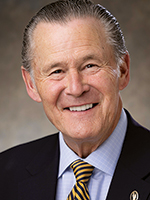
Rep. Bob Donovan
Sponsored bills
Maddy summaryAB 250 allocates $9 million annually from the Veterans Affairs budget to fund war memorials in populous counties. Memorial boards must provide a full matching contribution to request funds, which can cover operations, maintenance, construction, or facility improvements. Boards must report annually to the legislature on fund usage and remaining balances. The bill creates a formal process for memorial boards to access state funding while requiring transparency in how funds are spent.
Maddy summaryAJR 83 is a symbolic resolution designating September 15 to October 15, 2025, as Hispanic Heritage Month in Wisconsin. It formally recognizes the historical contributions and ongoing cultural impact of Hispanic and Latino communities across the state, including their roles in Wisconsin's agricultural economy, public service, and military service. As a recognition resolution, it does not create new policies, alter rights, or affect any specific groups. The resolution serves only to honor these contributions through official state acknowledgment during the designated period.
Maddy summaryAB 369 creates a state tax credit for businesses that provide child care, allowing them to claim a credit equal to the federal employer-provided child care credit (under IRS Section 45F) on their state tax return. The credit applies to taxable years beginning after December 31, 2024, and directly affects businesses that already claim the federal credit. Key provisions require the state credit to match the federal amount claimed, prohibit claims for out-of-state child care expenses, and mandate adjustments if federal tax increases under Section 45F(d). This bill aligns state tax treatment with the federal credit system without changing the federal rules.
Maddy summaryAB 148 allows courts to permit interpreters to provide services remotely via telephone or live video in civil and criminal court proceedings (excluding trials), upon a party's request. This amendment updates statutes to explicitly include remote interpretation as an option for civil cases (via 807.14) and criminal cases (via 967.09), replacing previous restrictions. It directly affects individuals involved in court cases who require language assistance, making it easier to access interpreters without in-person attendance. The bill does not mandate remote interpretation but expands court flexibility in approving it. This change applies to all relevant civil and criminal proceedings where an interpreter is requested.
Maddy summaryThis Wisconsin joint resolution (AJR 101) honors Charlie Kirk, founder of Turning Point USA and a prominent advocate for liberty, following his assassination. It recognizes his work promoting "faith, liberty, and truth," his role as a devoted family man, and his impact on inspiring young Americans. The resolution includes three key parts: honoring his life and legacy, commending his memory to future generations, and joining in prayer for his family and the nation. As a symbolic tribute with no policy changes or funding, it does not affect laws or individuals.
Maddy summaryAB 175 requires owners of parking structures to hire a licensed engineer for a structural safety inspection at least once every five years, starting from the bill's effective date. Owners must submit inspection reports to their local government agency (like a city or county) and face penalties for missing deadlines, including $200 per month in fines and potential closure after 12 months. The law directly affects all parking structure owners statewide, ensuring ongoing safety checks to prevent structural failures. It does not apply to inspections already required under other existing statutes. Violations trigger mandatory reporting to state authorities and may lead to temporary closure of un-inspected structures.
Maddy summaryAB 34 prevents courts from allowing criminal complaints against law enforcement officers in officer-involved deaths when a district attorney has already determined there is no basis for prosecution. The bill requires that courts and judges cannot issue complaints unless "new or unused evidence" is presented, effectively barring judicial override of a district attorney's initial decision. This directly affects law enforcement officers involved in such deaths and the legal process for pursuing criminal charges against them. The law applies to cases defined under statute 175.47 (1) (c), limiting judicial action based on a district attorney's prior assessment.
Maddy summaryAB 278 creates a grant program for law enforcement agencies to purchase data-sharing platforms that integrate real-time data from multiple systems, eliminate duplicate records, and provide secure, customizable search and analytics tools. The bill specifies that platforms must meet 11 detailed requirements, including secure access controls, compatibility with existing systems, compliance with data security standards, and retention of agency data ownership. The Department of Justice will award grants using up to $2 million annually from state funds to support this initiative. This bill directly affects local and state law enforcement agencies seeking to upgrade their data-sharing capabilities.
Maddy summaryAB 198 creates two key programs: (1) grants for technical colleges offering emergency medical services (EMS) training, provided they don't give admission priority based on residency; and (2) a reimbursement program for individuals or their employers who paid tuition/materials for initial EMS certification/licensure as an emergency medical responder or practitioner. Eligible applicants must complete required courses, pass exams, and obtain their license/certification through the Department of Health Services. The bill also establishes a "live 911" pilot program allowing grants for real-time video communication during emergency calls, requiring a performance report by October 2027. This directly affects EMS students, practitioners, their employers, and public safety answering points.