

Maddy summaryAB 801 establishes a mandatory "all-payer claims database" requiring insurers, healthcare administrators, and managed care organizations (including those serving Medicaid recipients) to submit health claims data in machine-readable format. It mandates data submission within six months of the law's effective date, with standardized electronic reporting and annual submission schedules. The data organization must analyze and publicly report on healthcare costs, quality, and effectiveness in plain language, while restricting data sharing to purposes like public health research or policy decisions. The bill repeals prior requirements and creates new provisions to standardize data collection, reporting, and transparency for the Wisconsin Health Information Organization.
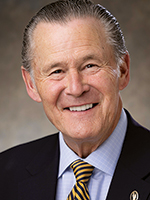
Rep. Bob Donovan
Sponsored bills
Maddy summaryAB 791 makes it illegal to intentionally send false text messages to 911 reporting a non-existent emergency. It directly affects individuals who send such deceptive messages, imposing fines ($100-$600) or up to 90 days in jail for a first offense. For repeat offenses within four years, the penalty escalates to a Class H felony charge. The bill targets misuse of emergency services by adding specific penalties for text-based false reports, which previously lacked clear legal consequences. This law aims to deter non-emergency text spam that wastes critical resources.
Maddy summaryAB 792 modifies how Wisconsin calculates state funding for public school districts by excluding certain costs funded through local voter-approved referenda (like bond elections) from the "shared cost" formula. This directly affects school districts receiving state equalization aid, as it prevents referendum-funded expenses from reducing their state aid eligibility. The bill adds specific rules to exclude referendum-authorized levies and related debt service from the calculation, ensuring districts aren’t penalized for using locally raised funds. These changes aim to align funding formulas with how school districts actually finance projects through voter-approved measures.
Maddy summaryAB 796 creates a $5 million annual grant program to help nonprofit religious organizations improve security. It directly affects religious groups facing bias-motivated threats or crime, prioritizing those at higher risk. Grants can cover physical security upgrades (like surveillance or fencing), staff/volunteer training, or emergency planning. No single organization can receive more than $500,000 per biennium, though umbrella groups may apply for multiple members. The program is administered by the Department of Military Affairs with additional staffing.
Maddy summaryAJR 1 is a constitutional amendment requiring voters to present valid photo identification to cast a ballot in any election. It directly affects all voters in state elections, specifying that acceptable ID must be issued by the state, federal government, a federally recognized tribal entity, or a college/university in the state. The bill mandates the legislature to define acceptable ID types and establish exceptions, while allowing voters without ID on election day to cast a provisional ballot and submit ID later. This proposal, on second consideration after a 2023 rejection, would be submitted to voters in April 2025 if approved.
Maddy summaryAB 3 requires Wisconsin schools to incorporate cursive writing into the state English language arts curriculum standards and mandates that all elementary schools teach cursive writing as a core skill. Specifically, it requires public schools, charter schools, and private schools participating in parental choice programs to ensure students can write legibly in cursive by the end of fifth grade. The law applies to all elementary grades (K-5) and takes effect by July 1, 2026, though it excludes union high school districts. This policy change directly affects elementary school curricula across Wisconsin, requiring a specific skill-based objective in language arts education.
Maddy summaryAB 4 requires all public school boards, independent charter schools, and private schools in parental choice programs to include civics instruction in their curriculum starting in the 2027-28 school year. The instruction must cover U.S. founding principles, civic participation, government advocacy processes, and comparisons of governance systems (including communism, socialism, and totalitarianism). Schools must annually report compliance to the Department of Public Instruction, and high schools must add a half-credit civics requirement to graduation standards, effective for students graduating in 2030-31. This bill amends existing statutes to establish these requirements for K-12 civics education and reporting.
Maddy summaryAJR 16 is a ceremonial resolution designating May 1 of each year as "St. Joseph the Worker Day" in Wisconsin. It honors St. Joseph’s legacy as a working father and recognizes the dignity of all Wisconsin workers, urging the state to hold annual celebrations on this day. The resolution does not create new laws, taxes, or obligations - it is purely symbolic, aiming to publicly appreciate workers’ contributions to families and communities. It directly affects no individuals or entities but seeks to foster statewide recognition of laborers.
Maddy summaryAB 125 designates February 18 as a special observance day in Wisconsin public schools to honor Vel R. Phillips' birthday. The bill adds this date to school calendar requirements, directing schools to recognize Vel R. Phillips' contributions during the school year following the law's effective date. This applies directly to all Wisconsin public schools.
Maddy summaryAB 91 requires first-class city school districts to maintain at least 25 school resource officers (SROs) during school hours, before/after school, and at events starting January 2024, with mandatory 40-hour training for SROs. It mandates a cost-sharing agreement where school districts cover 75% and cities cover 25% of SRO-related expenses. School districts and cities must formally agree on implementation and provide certifications to avoid state funding withholdings of up to 20% for non-compliance. The bill directly affects first-class cities and their school districts, creating specific administrative and financial obligations tied to SRO staffing.