

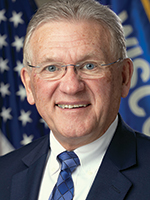
Photo of Jerry O'Connor
R Wisconsin Assembly · District 60

Rep. Jerry O'Connor

Compare
Total votes
420
all sessions
Attendance
99%
6 missed
Near the chamber average
With party
99%
of cast votes
Near the chamber average
Bipartisan score
0%
crosses aisle rarely
Near the chamber average
Sponsored
868
bills & resolutions
Near the chamber average
Committees
6
assignments
868 bills and resolutions

Sponsored bills

Total
868
Primary
868
Co-sponsor
0
This page
868
matching current filters
Primary AB 669
Failed · Wisconsin Assembly · Lead sponsor
Relating to: race-based higher education programs and requirements. (FE)

Maddy summaryAB 669 revises higher education program definitions and requirements in Wisconsin, focusing on how "disadvantaged" students are identified and supported. It prohibits the use of race, ethnicity, gender, or group identity in defining "disadvantaged" students, requiring that eligibility be based solely on economic, familial, geographic, or personal hardship. The bill updates existing programs like graduate aid grants (e.g., "Ben R. Lawton grants") and retention plans to operate without race-based considerations, while maintaining reporting requirements for financial aid distribution by student demographics. It affects public universities, technical colleges, and students applying for state-funded aid programs.

Failed Mar 23, 2026 0 co-sponsors
Primary AB 658
Failed · Wisconsin Assembly · Lead sponsor
Relating to: the maximum compensation for compatibility with elective offices in cities, villages, and towns. (FE)

Maddy summaryAB 658 raises the maximum annual compensation limits for volunteer emergency responders (firefighters, EMTs, and emergency medical responders) who also hold elected local government offices in cities, villages, or towns. It increases the cap to $35,000 for communities with under 5,000 residents and $25,000 for larger communities (over 5,000 residents), up from previous limits of $25,000 and $15,000, respectively. The bill clarifies that holding an elected office is compatible with receiving wages from certain local government positions, such as those under sections 60.37(4) or 61.327. This change directly affects volunteer emergency workers seeking to serve in local elected roles without exceeding compensation thresholds.

Failed Mar 23, 2026 0 co-sponsors
Primary AB 443
Signed into law · Wisconsin Assembly · Lead sponsor
Relating to: increasing the maximum fee for court costs collectible in a municipal court action. (FE)

Maddy summaryAB 443 increases the maximum fee municipal courts can collect for most cases from $38 to $48 per matter, such as traffic violations or other non-traffic offenses. The bill affects municipal courts directly, as they collect these fees for cases not excluded (like certain traffic violations under specific statutes). For each fee collected, $5 goes to the state general fund, while the remainder stays with the municipality. This change applies to all court actions in municipal courts except for financial responsibility violations or certain ordinance violations. The bill does not alter the minimum fee ($15) or the fee structure for excluded cases.

Signed into law Mar 20, 2026 0 co-sponsors
Primary AB 598
Signed into law · Wisconsin Assembly · Lead sponsor
Relating to: consent to admissions to certain health care facilities by patient representatives without requiring a petition for guardianship or protective placement. (FE)

Maddy summaryAB 598 allows patient representatives to consent to health care facility admissions for incapacitated individuals without requiring a court-appointed guardian or protective placement petition. The bill creates a defined "patient representative" role, requiring two medical professionals (e.g., two physicians or one physician plus an advanced practice clinician) to certify incapacity based on medical need - not age, disability, or eccentricity. Patient representatives gain authority to make health care decisions, enroll individuals in Medical Assistance, and authorize health care expenses similar to a guardian, but only for non-developmental disability and non-mental illness cases. This change streamlines admissions for incapacitated patients while mandating 72-hour notifications to county agencies about the certification.

Signed into law Mar 20, 2026 0 co-sponsors
Primary AB 666
Signed into law · Wisconsin Assembly · Lead sponsor
Relating to: fraudulent claims for unclaimed property and providing a penalty. (FE)

Maddy summaryAB 666 creates penalties for individuals who fraudulently claim ownership of another person's unclaimed property without consent. It imposes civil penalties equal to the full value of the property (plus $1,000-$2,500 for non-compliant claims) and criminal penalties of a Class I felony for intentional fraud. The bill requires the state administrator to publicly post names and penalty amounts of offenders online for 12 months. This directly affects claimants who file false claims, not property owners or administrators.

Signed into law Mar 20, 2026 0 co-sponsors
Primary AB 61
Signed into law · Wisconsin Assembly · Lead sponsor
Relating to: injuring or killing a police or fire animal and providing a penalty.

Maddy summaryAB 61 increases penalties for harming police or fire department animals used in official duties. It creates three penalty tiers: a Class A misdemeanor for negligent harm, a Class I H felony for intentional injury, and a Class H G felony for intentional killing. The law applies specifically to animals working for law enforcement or fire departments during their duties. Penalties depend on the perpetrator's intent (intentional vs. negligent) and the outcome (injury vs. death). This bill, enacted as 2025 Wisconsin Act 28, directly affects individuals who intentionally or negligently injure or kill such animals.

Signed into law Mar 19, 2026 0 co-sponsors
Primary AB 45
Signed into law · Wisconsin Assembly · Lead sponsor
Relating to: ratification of the Dietitian Licensure Compact. (FE)

Maddy summaryAB 45 ratifies Wisconsin's participation in the Dietitian Licensure Compact, enabling dietitians licensed in other participating states to practice in Wisconsin with minimal additional requirements. The bill creates a Dietitian Licensure Compact Commission and updates statutes to recognize "compact privilege" as a valid credential for dietitians. Key provisions allow dietitians to practice across state lines without full re-licensing, streamline verification of training hours, and adjust fee structures for compact-related credentials. This directly affects dietitians seeking to practice in Wisconsin while holding a license from another compact state.

Signed into law Mar 19, 2026 0 co-sponsors
Primary AB 78
Signed into law · Wisconsin Assembly · Lead sponsor
Relating to: impoundment of vehicles used in certain reckless driving offenses. (FE)

Maddy summaryAB 78 modifies Wisconsin law regarding vehicle impoundment for reckless driving offenses. It gives law enforcement officers discretion to impound vehicles used in certain reckless driving cases, rather than requiring mandatory impoundment. The bill directly affects drivers convicted of qualifying reckless driving offenses and law enforcement officers who decide whether to impound a vehicle. This change, now part of 2025 Wisconsin Act 46, alters the standard procedure for handling such vehicles.

Signed into law Mar 19, 2026 0 co-sponsors
Primary AB 452
Signed into law · Wisconsin Assembly · Lead sponsor
Relating to: subdivision plat approvals. (FE)

Maddy summaryAB 452 requires local governments (municipalities, towns, or counties) to offer land developers an informal meeting before they submit subdivision development plans (preliminary or final plats). This "conceptual review" lets developers discuss their plans with local officials to get feedback on whether the proposal meets local requirements. The review and any feedback provided are not binding on either the developer or the local government. The bill modifies existing rules about subdivision approvals to add this pre-submission step, while keeping the standard process for reviewing formal plat submissions unchanged.

Signed into law Mar 19, 2026 0 co-sponsors
Primary AB 237
Signed into law · Wisconsin Assembly · Lead sponsor
Relating to: the age at which an infant is covered under the safe haven law.

Maddy summaryAB 237 extends the age limit for infants covered under Wisconsin's safe haven law from 72 hours to 30 days. This means parents can now safely relinquish an infant to a hospital or emergency responder without legal consequences if the child is 30 days old or younger, instead of only 72 hours. The bill modifies three statutes to update references to "72 hours" to "30 days" in the legal definitions for safe haven surrender, court findings of relinquishment, and related procedures. It directly affects parents seeking to surrender newborns and impacts hospitals, law enforcement, and child welfare systems that handle these surrenders. The change provides a longer window for parents to make this decision while maintaining the legal framework for safe relinquishment.

Signed into law Mar 16, 2026 0 co-sponsors
Showing 381 to 390 of 868 bills
Previous 1 … 38 39 40 … 87 Next