

Maddy summaryAB 265 strengthens Wisconsin's penalties for human trafficking by requiring minimum prison terms: 15 years for child trafficking and 10 years for general human trafficking convictions. It creates new felony charges for individuals who profit from trafficking (Class D C felony) or receive compensation from commercial sex acts or debt bondage (Class F E felony). The bill directly affects convicted traffickers, their financial beneficiaries, and those who facilitate trafficking through recruitment or harboring of children for commercial sex. These sentencing changes apply to offenses committed after the bill's effective date.
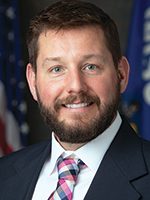
Rep. Elijah Behnke
Sponsored bills
Maddy summaryAB 409 makes it illegal to pass a stopped vehicle on or near a highway without exercising caution, creating a new traffic violation. It directly affects drivers who pass stopped vehicles, such as those involved in accidents or breakdowns, particularly near emergency or maintenance crews. The key provision establishes a specific penalty (fines or citations) for violating this rule, aiming to improve safety in highway stoppages. This bill updates traffic regulations to address unsafe passing behavior near stationary vehicles.
Maddy summaryAB 280 amends Wisconsin tax credit rules to allow businesses to claim up to 15% of qualifying investments in workforce housing (for employees) and childcare programs as tax credits. It directly affects businesses that build, rehab, or establish housing/childcare for their employees, including contributions made to third parties like local revolving loan funds. The bill defines "investments" to include both direct capital expenditures and third-party contributions toward these projects. The tax credit applies to taxable years beginning January 1, 2026, and is administered by the Wisconsin Economic Development Corporation.
Maddy summaryAB 201 modifies Wisconsin law to require sex offender registration for individuals convicted of sexual extortion or certain related offenses. It directs courts to mandate registration under Wisconsin Statute 301.45 if the underlying conduct was "sexually motivated" (as defined in Statute 980.01(5)), including violations of statutes related to sexual extortion (e.g., 942.09, 942.095). The bill affects offenders convicted of sexual extortion or sexually motivated crimes under Chapters 940, 942, 943, 944, or 948. Courts may later release individuals from registration if they meet conditions set by the court. This is a policy change to expand registration requirements for specific sexual offenses, not a new criminal penalty.
Maddy summaryAB 149 (Wisconsin Act 47) requires political parties in Wisconsin to formally nominate presidential electors when they lack a primary candidate for state legislative offices or state officers. Specifically, if a party has no nominee for the state Senate, Assembly, or state officer by October 1st before a presidential election, the party chair must nominate one elector per congressional district and two statewide electors. This replaces the previous requirement for a party convention in such cases and mandates written certification of nominees to the election commission. The bill directly affects Wisconsin political parties that fail to secure primary candidates for state offices in presidential election years.
Maddy summaryAJR 99 is a symbolic resolution recognizing October 14, 2025, as "First Responders Appreciation Day" in Wisconsin. It does not create new laws or policies but formally honors all professional and volunteer first responders, including police, firefighters, and emergency medical personnel. The resolution acknowledges their daily risks and service to the public, specifically noting Wisconsin's over 4,800 career firefighters, 20,600 volunteer firefighters, 14,700 law enforcement officers, and 17,426 EMS personnel. This is a non-binding gesture of appreciation with no direct impact on legislation or funding.
Maddy summaryAJR 59 is a ceremonial resolution proclaiming June as Dairy Month in Wisconsin. It recognizes the state's long-standing dairy heritage, including its role as a national leader in dairy production since the 1800s, the $45.6 billion annual economic contribution of the industry, and the work of over 6,000 dairy farms. The resolution does not create new laws or regulations but formally honors Wisconsin's dairy farmers and industry as a key part of the state's identity. It directly affects Wisconsin residents by highlighting the industry's historical and economic significance during June. This resolution was passed by the legislature in June 2025.
Maddy summaryThis symbolic resolution designates May 2025 and May 2026 as Mental Health Awareness Months in Wisconsin. It recognizes the importance of mental well-being and aims to raise public awareness about mental health challenges across all age groups and communities. The resolution does not create new policies or funding but serves as a formal acknowledgment by the legislature to support ongoing efforts addressing mental health needs.
Maddy summaryAB 257 expands the authority of advanced practice registered nurses (APRNs) by allowing them to complete medical forms and verify physical disabilities that previously required a physician's signature. The bill updates specific laws to include certified APRNs as authorized providers who can sign disability assessments for permit applications, such as those for physical disability permits. It also adjusts review procedures for permit denials, making APRNs one of the qualified professionals who can verify medical conditions. This change directly affects APRNs, patients seeking disability permits, and state agencies processing these applications.
Maddy summaryAB 242 amends Wisconsin law to strengthen penalties for tampering with utility infrastructure. It makes it illegal to intentionally remove, damage, or interfere with telecommunication, broadband, electric power, or related wires or equipment without first giving the utility company 24 hours' notice. Violations are punishable as Class B misdemeanors (for removing structures) or Class A misdemeanors/felony (for breaking lines or making unauthorized connections). The law directly affects individuals and contractors working near utility lines, including construction crews, landscapers, and anyone modifying property where wires are attached. It includes an exception allowing work with explicit permission from the utility company.