

Maddy summaryAB 188 requires courts to reduce the 26% penalty surcharge proportionally when a fine or forfeiture is reduced or suspended. It applies to most state and local fines (excluding specific traffic violations, financial responsibility cases, and safety belt offenses). This ensures individuals with reduced fines pay a lower surcharge based on the adjusted amount. The bill directly affects people who have their fines lowered by courts, making the surcharge calculation automatic and fairer.
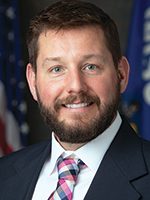
Rep. Elijah Behnke
Sponsored bills
Maddy summaryAB 394 requires all California public school driver education programs to include specific instruction on school bus safety. This directly affects students enrolled in driver education courses, ensuring they learn about bus stopping procedures and blind spots. The bill mandates that curricula cover how to safely approach stopped school buses and recognize hazards around them. These changes aim to improve student awareness and safety when near school buses.
Maddy summaryAB 523 bans the sale, installation, or distribution of counterfeit airbags (fake parts with misleading marks) and nonfunctional airbags (previously deployed, damaged, or falsely labeled as working). It directly affects auto parts sellers, installers, and repair shops by prohibiting these practices, with limited exceptions for police vehicles, dealers without knowledge of issues, and insurance-related vehicle transfers. Violations carry fines up to $5,000 or up to one year in jail per offense, escalating to felony charges for repeat offenses or if harm or death results. The bill creates specific definitions for these airbag types and establishes penalties under existing statute 347.50.
Maddy summaryAB 573 clarifies which costs related to sexual assault forensic examinations are covered under compensation programs for victims. It specifically defines "examination costs" to include evidence-gathering procedures, STI testing/prevention, HIV prophylaxis (medication to prevent HIV exposure), and STI treatment medications provided during the exam. The bill explicitly excludes administrative fees, attorney costs, and other non-medical expenses from coverage. Additionally, it requires applicants to submit only medical records directly related to the covered services, such as examinations, treatments, or preventive medications, and prohibits submitting unrelated documentation. This bill adjusts eligibility criteria for compensation without creating new benefits or funding.
Maddy summaryAB 548 creates a new special vehicle registration plate category for Wisconsin veterans awarded the Global War on Terrorism Service Medal. The bill establishes a $15 fee for issuing or reissuing these plates, with excess funds deposited into the veterans trust fund. It adds this category to Wisconsin's existing system of special plates, which require specific design elements like identifying words, symbols, or colors as outlined in state statutes. This is a procedural change that expands plate options for a specific veteran group without altering existing plate designs or funding mechanisms.
Maddy summaryAB 635 requires the state environmental department to notify county health departments, tribal health departments, and county land conservation departments within 7 business days whenever groundwater protection standards or PFAS standards are exceeded. The bill creates a formal notification system to alert affected local governments and adjacent counties that might face negative impacts, with notices available for public review under state law. This law directly affects local health and land management agencies in counties where water contamination breaches are confirmed, ensuring timely public awareness of groundwater safety issues.
Maddy summaryAB 422 extends the time limit for prosecuting crimes involving hidden bodies. It allows prosecutors to file charges within the standard statute of limitations period or within 6 years after the corpse is discovered or identified, whichever date is later. This directly affects homicide cases where bodies are concealed and discovered years after the crime, giving prosecutors additional time to pursue charges. The bill creates a new provision in state law that applies to cases where the original time limit had not expired when the law took effect.
Maddy summaryAB 207 requires clear, plain-language disclosure notices for all statewide referenda and constitutional amendments on ballots. It mandates that each notice include the full ballot text, a plain-language summary of current law, and specific explanations of how "yes" and "no" votes would affect voters - all limited to one page. These notices must be posted online 30 days before voting, included with sample ballots and absentee ballots, and published by county clerks. The bill directly affects voters by improving their access to understandable information and election officials who must implement these disclosure requirements.
Maddy summaryAB 306 sets a 60-day limit on emergency proclamations issued by local government leaders (such as mayors, county executives, or town board chairs) during crises when their governing body cannot meet promptly. It requires these proclamations to be ratified, modified, or extended only by the full governing body once they reconvene, with extensions permitted only by that body. The bill defines "chief executive officer" to include specific roles like mayors, county administrators, and village presidents. This directly affects local officials who declare emergencies, ensuring temporary emergency powers remain subject to elected oversight. The law does not create new policy but clarifies time limits for existing emergency authority.
Maddy summaryThis bill (AB 354) addresses the timing of state equalization aid payments to public school districts. It does not specify new funding amounts or eligibility but focuses on adjusting when these payments are distributed. The bill was recently passed by the State Affairs Committee with unanimous support (10-0) after an amendment was adopted. As a procedural fiscal bill, it directly affects school districts receiving state funding by changing payment schedules. The exact timing changes are not detailed in the provided context.