

Maddy summaryThis bill designates a specific overpass on I-39 over STH 82 in Oxford, Marquette County as the "Greg Quinn and Larry Millard Memorial Bridge" to honor two firefighters who died in the line of duty. The state must install signs identifying the bridge, but only using private donations - no state funds may be used for the signs or their maintenance. The bill is purely commemorative and does not create new policy or affect public services.
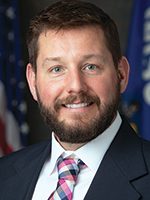
Rep. Elijah Behnke
Sponsored bills
Maddy summaryAB 179 standardizes lighting requirements for police vehicles in Wisconsin. It mandates that on marked police vehicles, blue lights must be mounted on the passenger side (roof or interior) and red lights on the driver side, with all lights designed to be clearly visible from 500 feet in daylight or darkness. The bill also restricts use of warning lights to specific scenarios like emergency response, pursuits, or hazardous parking, prohibiting general use otherwise. This directly affects all law enforcement agencies operating marked or unmarked police vehicles statewide.
Maddy summaryAB 449 requires local governments to allow at least one accessory dwelling unit (ADU) - a separate living space on a single-family property - as a standard permitted use, meaning homeowners can build one without special approvals. Local rules may still limit ADU size (to match the main home's square footage), height, or yard space requirements, but cannot block ADUs entirely. The bill also prohibits using newly created ADUs as short-term rentals (like Airbnb) after a specific date. This directly affects homeowners in single-family zones and local governments that set zoning rules.
Maddy summaryAB 353 requires hospitals to provide clear, upfront pricing for services and restricts certain aggressive debt collection tactics against patients. It directly affects hospitals by mandating transparent cost disclosures and patients by limiting how debt collectors can pursue unpaid medical bills. Key provisions include requiring hospitals to publish standard charges and prohibiting collectors from garnishing wages or threatening lawsuits for small amounts. The bill also establishes penalties for violations of these transparency and debt collection rules. This legislation aims to make healthcare costs more understandable and protect patients from excessive collection practices.
Maddy summaryAJR 87 is a Wisconsin legislative resolution designating August and October 2025 as "Agent Orange Awareness Months" in the state. It aims to raise public awareness about the health impacts of Agent Orange exposure on Vietnam War veterans and their families, including conditions like cancer, diabetes, and genetic issues. The resolution does not create new laws or funding but formally recognizes this issue through symbolic designation. It was introduced by multiple legislators and referred to committee, pending further action.
Maddy summaryAB 309 creates legal immunity for Wisconsin 911 call centers and dispatchers who transfer callers to the national 988 Suicide and Crisis Lifeline (or its successor number). The bill shields these entities from civil lawsuits related to outcomes of such transfers, unless the injury resulted from the dispatcher's gross negligence or willful misconduct. This directly affects public safety answering points statewide by reducing liability risks when connecting individuals in crisis to the 988 service. The law defines "national crisis hotline" as 988 or its successor under federal program 42 USC 290bb-36c.
Maddy summaryAB 561 allows school buses to install and monitor cameras to record vehicles illegally passing them, and permits school bus operators or third-party vendors to submit photo or video evidence of these violations to local traffic authorities. Traffic officers can then issue citations based on this evidence, imposing fines of $30 to $500 on the vehicle owner. The bill specifies that these fines do not result in license suspension or demerit points. This law directly affects drivers who illegally pass school buses and the school bus operators or vendors reporting violations.
Maddy summaryAB 486 limits how Wisconsin public colleges and technical schools can reduce their own gift aid (like institutional scholarships) when students receive small private scholarships ($5,000 or less from Wisconsin-based groups). Schools must first attempt to adjust loans or work-study before cutting gift aid, and must inform students they can request a cost-of-attendance reassessment. This applies to all public universities and technical colleges in Wisconsin, ensuring students aren’t automatically penalized for external scholarships while preventing aid from exceeding financial need.
Maddy summaryAB 128 requires specific first responders - including firefighters, law enforcement officers, emergency medical personnel, correctional officers, and conservation wardens - to complete training on recognizing severe allergic reactions (anaphylaxis), safely storing and administering epinephrine delivery systems, and following up after use. The bill mandates that all qualifying first responders must have an epinephrine delivery system available during duty and be trained on all required subjects. The state department must compile and maintain a list of approved training organizations and may distribute epinephrine systems using existing funds. This legislation directly affects over 30,000 first responders across multiple agencies who respond to medical emergencies.
Maddy summaryAB 398 requires schools, child care centers, and nursery schools to include specific information about immunization waiver processes in their enrollment or admission materials. This means parents and guardians would see clear details on how to request waivers when signing up their children, rather than learning about it later. The bill standardizes this information across all covered institutions to improve transparency. It directly affects families during enrollment and the institutions managing those applications.