

Maddy summaryAB 244 requires school boards, certain charter schools, and private schools participating in specific programs to post signs in their buildings. These signs must display the telephone number for the local agency responsible for receiving and investigating child abuse and neglect reports. The bill mandates that these signs be placed in a conspicuous, public location within each school building. This aims to make the child abuse and neglect reporting hotline easily accessible to those who need it.
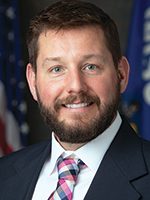
Rep. Elijah Behnke
Sponsored bills
Maddy summaryAB 159 creates a grant program to support rural creative economy development in Wisconsin. It provides competitive grants of up to $50,000 to eligible applicants - including rural cities, tribes, nonprofits, and economic development organizations - for projects like renovating public spaces, supporting public arts, and promoting local creative businesses. Applicants must secure matching funds from nonstate sources (with no more than 25% in-kind), and grants must directly benefit rural areas defined as populations under 10,000 or non-urbanized regions. The Wisconsin Economic Development Corporation must report on the program's effectiveness by May 2027.
Maddy summaryAB 36 allows retired law enforcement officers and firefighters in Wisconsin to opt out of rejoining the state retirement system if they return to work for a local government employer. It specifically applies to those who retire and later get rehired by a participating employer (like a city or county fire department). The bill requires three conditions: the retiree must not have a prior agreement to return to that employer, must not have a pending employment contract, and must actively choose not to rejoin the retirement system using a department-provided form. This prevents automatic re-enrollment in the retirement system for these specific retirees who choose to opt out.
Maddy summaryAB 124 prohibits individuals convicted of a violent crime from changing their name, with violations punishable as a Class H felony. The bill amends existing state laws to explicitly block all name change requests - whether through court orders or vital records updates - for people with such convictions. This applies to all name change processes, including those for birth records, marriage records, or court-ordered changes. The law does not affect name changes for individuals without violent crime convictions.
Maddy summaryAB 292 allows courts to use artificial intelligence or machine-assisted translation services instead of or alongside human interpreters in both civil and criminal court proceedings. It also updates rules to permit telephone or live audiovisual interpretation in criminal trials (beyond just non-trial stages) and clarifies that using AI translation does not require a waiver that would normally be needed for alternative interpretation methods. This bill directly affects court proceedings involving language barriers, expanding options for language assistance without mandating AI use. The law amends specific statutes to implement these changes, focusing on procedural flexibility for courts.
Maddy summaryAB 177 exempts diapers and feminine hygiene products from state sales tax. The bill defines "diapers" as absorbent garments for people with incontinence and "feminine hygiene products" to include tampons, pads, menstrual cups, and similar items (excluding grooming products like soap or toothpaste). It adds these categories to the list of tax-exempt items under Wisconsin’s sales tax code (77.54(75)), directly affecting consumers who purchase these essential products. The exemption applies to both retail sales and use of these items, removing a tax burden on these daily necessities.
Maddy summaryAB 93 modifies the labeling and distribution requirements for fertilizers and soil or plant additives created from animal or vegetable manure, specifically compost and vermicompost. The bill allows producers of these manure-based products to use a "typical analysis" of their contents on labels and invoices, instead of a "guaranteed analysis" or "grade," if the claims are scientifically validated. It also exempts mixed fertilizers made from manure-based compost or vermicompost from minimum nutrient content requirements. Additionally, the bill prohibits the state department from requiring controlled experimental field tests for compost-based soil or plant additives when substantiating claims for permits.
Maddy summaryAB 66 restricts prosecutors from dismissing or amending certain criminal charges without court approval. It applies to specific "covered crimes," including domestic abuse violations, certain violent offenses (like those under s. 940.198 or 941.29), and crimes listed in Chapter 948. Prosecutors must seek court approval for any dismissal or amendment, and courts can only approve if the action aligns with deterring these crimes. The bill also prohibits deferred prosecution agreements for individuals charged with covered crimes. This policy change directly affects prosecutors, courts, and defendants facing charges for the listed offenses.
Maddy summaryAB 40 establishes a competitive grant program to fund school safety improvements and security training for school personnel. It allocates $30 million for the 2025-26 fiscal year to public, private, and tribal schools, with a maximum grant of $20,000 per school. The program prioritizes schools that have not previously received similar grants under Section 165.88 and requires annual reports to the Joint Committee on Finance. Grants must be awarded by June 30, 2027, after which no new funding will be issued.
Maddy summaryAB 230 requires physical retail stores to accept cash payments during face-to-face transactions with customers. It directly affects brick-and-mortar businesses selling goods or services in person, unless other laws prohibit cash acceptance. Retailers violating this rule face fines of $200 to $5,000 per violation, or court-ordered injunctions to stop the violation. The law does not apply to online sales or situations where cash acceptance is legally restricted.