

Maddy summaryAB 211 creates a new exemption in Wisconsin law allowing "tobacco bars" to operate without adhering to the state's public smoking ban. To qualify, these establishments must have opened after June 4, 2009, allow only cigar and pipe smoking (not cigarettes), not be classified as food establishments, display clear signage about smoking, prohibit minors under 21 from entering, require employee acknowledgment of secondhand smoke exposure, and demonstrate adequate air filtration in licensing applications. The bill directly affects tobacco bars meeting these specific criteria, enabling them to operate with smoking permitted while imposing strict operational requirements. It does not change the general public smoking ban but establishes a defined exception for this narrow category of businesses.
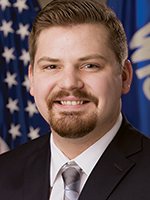
Rep. Gus Gustafson
Sponsored bills
Maddy summaryAB 602 requires the state department to annually submit a list of qualifying scholarship granting organizations (SGOs) to the U.S. Treasury and certify the state's authority to participate in the federal tax credit program for donations to these organizations. It mandates that the governor must decide by July 1, 2026, whether to join this federal program, which would allow residents to claim tax credits for contributions to SGOs starting in 2027. The bill directly affects state administrative processes, scholarship organizations, and donors who may qualify for federal tax benefits. It does not create new tax credits but establishes the state's procedural framework for eligibility under existing federal law (26 USC 25F).
Maddy summaryAB 614 clarifies teachers' authority to manage classrooms and addresses student behavior incidents. It defines key terms like "disruptive behavior" and "violent incident," requiring teachers to immediately notify school principals when removing a student for safety concerns or classroom disruptions. The bill mandates that students can only return to a classroom after removal if a behavior intervention plan is in place for serious incidents, and it prohibits school districts from retaliating against teachers who enforce classroom rules or report disruptive behavior. This directly affects teachers (by protecting their actions), students (through new placement rules), and school administrators (by requiring specific procedures for student removals). The bill passed the Assembly on November 19, 2025, with 54 votes in favor.
Maddy summaryAB 454 establishes a statewide "workforce home loan" revolving loan program to help low-to-moderate income workers purchase homes. It creates a new fund that will provide loans to first-time homebuyers whose household income is at or below 100% of the local area median income, with requirements including no prior residential property ownership in the past three years and meeting specific debt-to-income and credit score standards (minimum 580 FICO score for deferred payment options). The program uses repayments from existing loans to replenish the fund, allowing it to serve more borrowers over time. This directly affects eligible workforce households in housing markets across the state who qualify under the defined income and underwriting criteria.
Maddy summaryAB 601 amends the statute to exclude certain sports wagers from the legal definition of "bet." Specifically, it exempts wagers made by people physically in the state using mobile devices if the server is on tribal lands and the wager follows an Indian gaming compact entered before April 1, 1993. This directly affects tribal gaming operations that operate under pre-1993 compacts. The bill clarifies that such wagers - conducted via tribal servers under existing agreements - are not considered "bets" under state gambling laws. This is a technical definition change, not a new policy or tax.
Maddy summaryAB 219 creates a 50% tax credit for eligible rail infrastructure spending in Wisconsin. It directly affects Class II/III railroads operating in the state and owners/lessees of rail sidings or industrial spurs, covering both new track construction (like spurs and sidings) and track maintenance (such as rail, ties, and safety systems). The credit applies to expenditures made after December 2024, with annual limits of $5,000 per mile of track owned and $2 million per project. Unused credits can be carried forward for up to five years, and credits may be transferred to other businesses subject to Wisconsin taxes.
Maddy summaryThis bill addresses three main areas of electric utility regulation. First, it prevents electric companies from charging customers for the profits they made on power plants that have already been retired. Second, it creates a public online dashboard to track the status of applications for permits needed to build large electric generating facilities. Third, it adds requirements for new large power facilities to show they will use at least 70% of their electricity for manufacturing or mining at the same location, and to agree to pay for connecting to the public power grid. These changes directly affect electric utilities, customers who pay utility rates, and developers seeking to build new power generation projects.
Maddy summaryAB 619 creates a $150 million grant program to fund aviation biofuel manufacturing projects in Wisconsin, funded through state public debt issuance. The bill requires grantees to use facilities exclusively for aviation biofuel production (with limited exceptions for other biofuels if 80% of output is aviation fuel), source 80% of biomass locally, and invest at least $1.5 billion in aviation biofuel manufacturing within five years. It directly affects companies building such facilities and the Department of Natural Resources, which administers the grants. The program aims to support the state's forest products industry and create jobs, with strict repayment terms if grantees fail to meet requirements.
Maddy summaryAB 657 exempts sales and use taxes for specific equipment and materials used exclusively in qualified nuclear fusion technology projects. It covers over 70 listed items, including plasma heating systems, superconductors, diagnostic tools, specialized materials like lithium and tungsten, and safety equipment. The exemption applies to businesses conducting fusion projects focused on energy generation, medical isotope production, research, or other fusion-related applications as defined in the bill. This policy directly reduces costs for companies developing nuclear fusion technology by eliminating taxes on qualifying purchases.
Maddy summaryAB 446 requires all state agencies and local governments (including cities, counties, and school districts) to use the International Holocaust Remembrance Alliance's 2016 definition of antisemitism when evaluating evidence in discrimination cases based on race, religion, color, or national origin. This applies to both civil policies prohibiting discrimination and criminal cases where bias against a victim's identity is a factor for enhanced penalties. The bill explicitly states it does not affect First Amendment rights or conflict with existing federal or state antidiscrimination laws.