

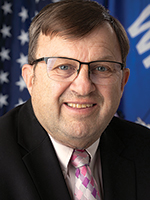
Photo of Dean Kaufert
R Wisconsin Assembly · District 53

Rep. Dean Kaufert

Compare
Total votes
245
all sessions
Attendance
100%
of floor votes
Near the chamber average
With party
100%
of cast votes
Near the chamber average
Bipartisan score
0%
crosses aisle rarely
Near the chamber average
Sponsored
170
bills & resolutions
Near the chamber average
Committees
4
assignments
170 bills and resolutions

Sponsored bills

Total
170
Primary
170
Co-sponsor
0
This page
170
matching current filters
Primary AJR 44
Failed · Wisconsin Assembly · Lead sponsor
Relating to: honoring the life and public service of Representative Frederick P. Kessler.

Maddy summaryAssembly Joint Resolution 44 honors the distinguished life and public service of the late Representative Frederick P. Kessler, recognizing his extensive career as an assemblyman and judge in Wisconsin. The resolution details his contributions, including his work on language immersion schools and redistricting reform, and directs that a copy be provided to his family.

Failed Mar 23, 2026 0 co-sponsors
Primary AB 292
Failed · Wisconsin Assembly · Lead sponsor
Relating to: the use of artificial intelligence or other machine assisted translation in court proceedings and of telephone or live audiovisual interpretation in criminal trials. (FE)

Maddy summaryAB 292 allows courts to use artificial intelligence or machine-assisted translation services instead of or alongside human interpreters in both civil and criminal court proceedings. It also updates rules to permit telephone or live audiovisual interpretation in criminal trials (beyond just non-trial stages) and clarifies that using AI translation does not require a waiver that would normally be needed for alternative interpretation methods. This bill directly affects court proceedings involving language barriers, expanding options for language assistance without mandating AI use. The law amends specific statutes to implement these changes, focusing on procedural flexibility for courts.

Failed Mar 23, 2026 0 co-sponsors
Primary AB 300
Failed · Wisconsin Assembly · Lead sponsor
Relating to: a grant program for the purchase of automated registration plate reader systems. (FE)

Maddy summaryAB 300 creates a state grant program to help local law enforcement agencies purchase automated license plate reader systems (high-speed cameras that scan plates and convert data for law enforcement use). The program requires at least half of the grant funds to go to agencies in rural areas (defined as cities/towns under 20,000 population, at least 15 miles from larger cities). Agencies must submit a spending plan to the Department of Justice for review before receiving grants, which are limited to public safety and crime prevention purposes. The bill does not apply to state-level agencies or require specific outcomes, focusing solely on funding access for local rural and urban law enforcement.

Failed Mar 23, 2026 0 co-sponsors
Primary AB 286
Failed · Wisconsin Assembly · Lead sponsor
Relating to: interest earned on coronavirus state and local fiscal recovery funds. (FE)

Maddy summaryAB 286 redirects $172 million in interest earned from unused coronavirus state and local fiscal recovery funds to the general state fund. It applies to funds held under specific state appropriations (section 20.505(1)(mb)) that were not spent by the deadline. The bill transfers this interest directly to the general fund on its effective date, rather than allowing it to remain in the recovery fund. This is a procedural adjustment to reallocate existing interest earnings, not a new funding program.

Failed Mar 23, 2026 0 co-sponsors
Primary AB 297
Failed · Wisconsin Assembly · Lead sponsor
Relating to: performance grants based on improving employment rates for individuals on probation, parole, or extended supervision. (FE)

Maddy summaryAB 297 creates performance grants for regional probation and parole offices based on improving employment rates for individuals on supervision (probation, parole, or extended supervision). Offices earn grants by increasing employment rates above a 2021-2024 baseline, with "eligible employment" defined as 130+ wage-earning hours monthly. Funds must be used for employee bonuses, and the department tracks outcomes like employment duration, recidivism rates, and cost savings tied to reduced incarceration. Offices are disqualified from grants if their region saw increased revocations for new crimes in the prior year. Annual reports will detail regional employment trends and program impacts for public transparency.

Failed Mar 23, 2026 0 co-sponsors
Primary AB 298
Failed · Wisconsin Assembly · Lead sponsor
Relating to: grants for technical colleges to provide mapping data to law enforcement. (FE)

Maddy summaryAB 298 creates grants for technical colleges to develop and share digital maps of their buildings with local law enforcement. It requires these "interactive critical mapping data" systems to include specific details like building numbers, floors, and room locations - without needing additional software purchases by first responders. The grants, administered by the Office of School Safety, aim to improve emergency response coordination during incidents. This directly affects technical colleges (via district boards) and law enforcement agencies that receive the mapping data.

Failed Mar 23, 2026 0 co-sponsors
Primary AB 299
Failed · Wisconsin Assembly · Lead sponsor
Relating to: provision of virtual mental health services for students at certain UW System institutions. (FE)

Maddy summaryAB 299 requires the University of Wisconsin (UW) System Board to contract with a mental health service provider for virtual counseling and support for students at UW institutions with 30,000 or fewer full-time undergraduate students (as counted April 1 annually). The services must work alongside existing campus mental health programs, operate beyond standard business hours, and include proven clinical support and licensed professionals experienced with college students. Vendors must have at least five years of higher education mental health experience and provide software enabling collaboration with campus staff. The board must annually report student usage statistics system-wide and by institution to the legislature.

Failed Mar 23, 2026 0 co-sponsors
Primary AB 176
Failed · Wisconsin Assembly · Lead sponsor
Relating to: financial eligibility for the Alzheimer’s family and caregiver support program. (FE)

Maddy summaryAB 176 repeals the financial eligibility requirement (section 46.87(5m)) for Wisconsin's Alzheimer's family and caregiver support program. It updates two sections of the law to remove references to this repealed requirement, clarifying that eligibility now depends on meeting the financial criteria previously defined under the repealed section. The bill directly affects Alzheimer's patients and their caregivers in residential facilities who previously needed to satisfy these financial standards to receive program services. The key change is eliminating the specific financial threshold that determined program access, streamlining eligibility without creating new benefits or funding. This is a technical adjustment to existing statutes, not a substantive policy change.

Failed Mar 23, 2026 0 co-sponsors
Primary AB 187
Passed · Wisconsin Assembly · Lead sponsor
Relating to: training completion awards for volunteer firefighters. (FE)

Maddy summaryAB 187 creates a program providing a one-time $250 completion service award to volunteer firefighters after they complete 60 hours of training. Municipalities must match this award with their own payments, and the state will provide a 2:1 match for municipal contributions toward length-of-service awards (up to $390 annually), which are tax-deferred benefits based on service years. The bill requires a 10-year vesting period for length-of-service benefits and sets rules for closing inactive accounts after 12 months of inactivity. It directly affects volunteer firefighters, emergency medical responders, and emergency medical services practitioners in municipalities operating volunteer departments or contracting with volunteer fire companies.

Passed Mar 23, 2026 0 co-sponsors
Primary AB 348
Failed · Wisconsin Assembly · Lead sponsor
Relating to: the minimum age of assistant child care teachers.

Maddy summaryAB 348 lowers the minimum age for assistant child care teachers in Wisconsin from 17 or 18 to 16 years old, directly affecting licensed child care centers hiring these staff. To qualify, individuals must complete early childhood education training (e.g., two college credits, a department-approved course, or an approved program) within six months. The bill maintains current rules that assistant teachers may only provide sole supervision during specific times (like opening/closing hours or naptime) if a qualified child care teacher is present on-site. It does not change requirements for child care teachers themselves.

Failed Mar 23, 2026 0 co-sponsors
Showing 71 to 80 of 170 bills
Previous 1 … 7 8 9 … 17 Next