

Maddy summaryAB 601 amends the statute to exclude certain sports wagers from the legal definition of "bet." Specifically, it exempts wagers made by people physically in the state using mobile devices if the server is on tribal lands and the wager follows an Indian gaming compact entered before April 1, 1993. This directly affects tribal gaming operations that operate under pre-1993 compacts. The bill clarifies that such wagers - conducted via tribal servers under existing agreements - are not considered "bets" under state gambling laws. This is a technical definition change, not a new policy or tax.
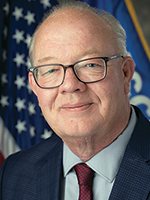
Rep. Todd Novak
Sponsored bills
Maddy summaryAB 219 creates a 50% tax credit for eligible rail infrastructure spending in Wisconsin. It directly affects Class II/III railroads operating in the state and owners/lessees of rail sidings or industrial spurs, covering both new track construction (like spurs and sidings) and track maintenance (such as rail, ties, and safety systems). The credit applies to expenditures made after December 2024, with annual limits of $5,000 per mile of track owned and $2 million per project. Unused credits can be carried forward for up to five years, and credits may be transferred to other businesses subject to Wisconsin taxes.
Maddy summaryAB 604 would require Wisconsin's Department of Health Services to request a federal Medicaid waiver to provide pre-release medical coverage for incarcerated individuals eligible for Medicaid. It specifically covers case management, medication-assisted treatment for substance use disorders, and a 30-day supply of prescription medications for up to 90 days before release. This bill directly affects incarcerated people who qualify for Medicaid, aiming to improve continuity of care upon reentry. The waiver request must be submitted by January 1, 2027, to allow state and federal reimbursement for these services. The bill focuses on concrete policy changes to expand healthcare access during a critical transition period.
Maddy summaryAB 131 establishes a municipal grant program to test for PFAS (perfluoroalkyl and polyfluoroalkyl substances) in public water systems and fund source reduction measures. It allows water utilities to use customer service fees to cover up to half the cost of PFAS source reduction for connected customers, if cheaper than facility upgrades. The bill also creates eligibility rules for disadvantaged communities extending service due to PFAS contamination and directs PFAS contamination claims to an existing landowner grant program. These provisions directly affect municipal water systems, public utilities, and communities addressing PFAS in drinking water.
Maddy summaryAB 130 exempts specific groups from certain PFAS enforcement actions under Wisconsin's spills law if they allow the state to clean up contaminated land at no cost to them. It directly affects landowners, fire departments, airports, wastewater spreaders, and waste facilities that handled PFAS-contaminated materials legally. The bill creates exemptions for those who spread permitted biosolids, owned land where such spreading occurred, used PFAS in emergency response (per federal rules), accepted PFAS waste, or own property not responsible for the contamination origin. This applies only to enforcement sections related to PFAS contamination under the spills law, not all PFAS regulations.
Maddy summaryAB 866 revises rules for county sheriff offices and undersheriff appointments across the state. It creates new requirements for appointing an undersheriff (who must be a certified law enforcement officer and county resident), clarifies succession rules when the sheriff is absent or incapacitated, and ensures deputies returning from undersheriff roles retain their prior pay and seniority. The bill directly affects county sheriffs, undersheriffs, county clerks handling vacancy procedures, and deputy sheriffs. Key provisions include mandating written appointment records, defining when an undersheriff acts as sheriff, and requiring counties to return deputies to their previous positions after undersheriff service.
Maddy summaryAB 905 creates a new penalty for threatening healthcare providers, staff, or their family members when the threat is related to their work. It specifically targets threats made knowing the victim is a healthcare worker (current or former) or a family member, and the threat occurs in response to actions taken at a healthcare facility or by a provider acting in their official capacity. The bill defines "health care facility" and "health care provider" using existing statutory terms to clarify the scope of protection. This law directly affects healthcare workers and their families by establishing criminal penalties for targeted threats connected to their professional roles.
Maddy summaryAB 768 restricts drone operations near critical utility facilities by prohibiting flights below 300 feet within 500 feet of water reclamation plants, power plants/substations, telecom facilities, or public water systems. Exceptions allow facility owners, local governments, and commercial operators (complying with FAA rules) to operate drones for maintenance, inspections, or official business. The bill also requires law enforcement to seize drone footage during violations and transfer it to relevant local agencies for enforcement. This directly affects drone operators near these infrastructure sites while aiming to protect public safety and facility security.
Maddy summaryAB 217 raises competitive bidding thresholds for local government contracts in the state. It increases the general public work bidding threshold from $25,000 to $50,000 and the notice threshold from $5,000 to $10,000. For highway contracts specifically, it sets a $25,000 bidding threshold and $5,000 notice threshold. The bill also requires these thresholds to automatically adjust every five years based on inflation, using the U.S. Consumer Price Index. This directly affects towns and local governments when contracting for public projects above these new dollar amounts.
Maddy summaryAB 713 requires battery producers (like manufacturers or brands selling batteries) to fund and manage collection and recycling programs starting in 2027. It bans disposal of covered batteries (portable/medium-sized batteries excluding medical devices, lead-acid, or alkaline types) in landfills after January 1, 2028, mandating they be returned through designated collection sites instead. Producers must also mark batteries with their identity by 2027 and indicate battery chemistry for proper recycling by 2029. This law directly affects battery sellers and manufacturers, shifting responsibility for recycling programs from consumers or local governments to the producers themselves.