

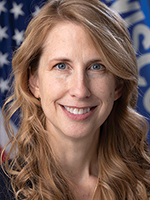
Photo of Joy Goeben
R Wisconsin Assembly · District 5 On the 2026 ballot

Rep. Joy Goeben

Compare
Total votes
425
all sessions
Attendance
100%
1 missed
Near the chamber average
With party
95%
of cast votes
Near the chamber average
Bipartisan score
2%
crosses aisle rarely
Near the chamber average
Sponsored
401
bills & resolutions
Near the chamber average
Committees
7
assignments
401 bills and resolutions

Sponsored bills

Total
401
Primary
401
Co-sponsor
0
This page
401
matching current filters
Primary AB 323
Failed · Wisconsin Assembly · Lead sponsor
Relating to: ratification of the Cosmetology Licensure Compact. (FE)

Maddy summaryAB 323 ratifies the Cosmetology Licensure Compact, an agreement between states to recognize each other's licenses. It allows cosmetologists, aestheticians, and manicurists licensed in another participating state to practice in this state without obtaining a new license, provided they hold a valid "multistate license" from a compact member. The bill amends licensing laws to explicitly permit using such out-of-state licenses (e.g., in sections 454.04(1)(a)2, 454.04(2)(a)) and defines key terms like "multistate license" and "compact." This directly affects licensed professionals seeking to work across state lines within the compact.

Failed Mar 23, 2026 0 co-sponsors
Primary AB 330
Failed · Wisconsin Assembly · Lead sponsor
Relating to: enforcement of the federal Help America Vote Act.

Maddy summaryAB 330 establishes clear deadlines and transparency requirements for handling complaints about voting system compliance with the federal Help America Vote Act (HAVA). It requires Wisconsin's Election Commission to acknowledge complaints within 5 business days, make final decisions within 89 days, and hold public hearings with recorded proceedings. The bill mandates that the Commission must take corrective action for valid complaints and publish dismissal details online and to the legislature. It directly affects the Commission's administrative process for resolving voting-related complaints, ensuring timely, public, and uniform enforcement of HAVA requirements.

Failed Mar 23, 2026 0 co-sponsors
Primary AB 348
Failed · Wisconsin Assembly · Lead sponsor
Relating to: the minimum age of assistant child care teachers.

Maddy summaryAB 348 lowers the minimum age for assistant child care teachers in Wisconsin from 17 or 18 to 16 years old, directly affecting licensed child care centers hiring these staff. To qualify, individuals must complete early childhood education training (e.g., two college credits, a department-approved course, or an approved program) within six months. The bill maintains current rules that assistant teachers may only provide sole supervision during specific times (like opening/closing hours or naptime) if a qualified child care teacher is present on-site. It does not change requirements for child care teachers themselves.

Failed Mar 23, 2026 0 co-sponsors
Primary AB 350
Failed · Wisconsin Assembly · Lead sponsor
Relating to: the regulation of family and group child care centers. (FE)

Maddy summaryAB 350, introduced on July 8, 2025, by multiple state representatives and senators, aims to establish new regulations for family and group child care centers. It directly affects child care providers operating under these models by setting standards for safety, staffing, and facility requirements. The bill is currently referred to the Committee on Children and Families for further review. As introduced, it focuses on creating specific regulatory frameworks for these centers without detailing exact provisions in the provided context.

Failed Mar 23, 2026 0 co-sponsors
Primary AB 349
Failed · Wisconsin Assembly · Lead sponsor
Relating to: allowing certified child care operators to provide care to up to six children. (FE)

Maddy summaryAB 349 would allow certified child care operators to provide care for up to six children, changing the current capacity limit for licensed providers. This directly affects licensed child care facilities operating under state certification. The bill amends regulatory standards to establish six as the new maximum number of children per certified operator. It applies specifically to certified settings and does not alter requirements for unlicensed care.

Failed Mar 23, 2026 0 co-sponsors
Primary AB 190
Failed · Wisconsin Assembly · Lead sponsor
Relating to: obtaining attorney fees and costs under the state’s public records law when an authority voluntarily or unilaterally releases a contested record after an action has been filed in court.

Maddy summaryAB 190 modifies state public records law to allow requesters who win partial victories to recover attorney fees. Specifically, it enables fee recovery when a government agency voluntarily releases a contested record *after* a lawsuit is filed, and a court determines the lawsuit was a substantial factor in that release. This directly affects public record requesters who successfully pressure agencies to disclose documents through litigation without a full court judgment. The bill creates a clear mechanism for fee awards in these specific scenarios, avoiding the need for a formal court order on the record's disclosure.

Failed Mar 23, 2026 0 co-sponsors
Primary AB 258
Failed · Wisconsin Assembly · Lead sponsor
Relating to: license eligibility and restriction extensions relating to ignition interlock devices.

Maddy summaryAB 258 modifies Wisconsin's license restrictions for drivers required to use ignition interlock devices after DUI convictions. It extends license revocation periods by 180 days for specific violations detected by the device, including three or more violations within 60 days, tampering, or unauthorized removal. The bill also creates a process for drivers to dispute violations using documentation (e.g., device malfunctions) and requires electronic reporting from interlock providers to the department. This directly affects individuals subject to ignition interlock orders under existing DUI-related license restrictions.

Failed Mar 23, 2026 0 co-sponsors
Primary AB 360
Failed · Wisconsin Assembly · Lead sponsor
Relating to: small law enforcement agency grant pilot program. (FE)

Maddy summaryAB 360 creates a grant program to help small law enforcement agencies (those with 25 or fewer full-time officers) address staffing shortages. Agencies can apply for grants to cover costs of preparatory training for future officers and up to six months of on-the-job training for new recruits, provided they have high vacancy rates (20%+) or upcoming retirements. Recipients must commit to working at the agency for one year after training, and agencies may exclude new recruits from staffing maintenance requirements for six months. The program runs for 18 months after all funds are distributed, with repayment required if commitments aren't met.

Failed Mar 23, 2026 0 co-sponsors
Primary AB 382
Failed · Wisconsin Assembly · Lead sponsor
Relating to: requirements for children born alive following abortion or attempted abortion and providing a penalty.

Maddy summaryAB 382 requires health care providers to provide the same medical care to a child born alive during or after an abortion or attempted abortion as they would to any other newborn at that gestational age, including immediate hospital transport. It mandates reporting failures to comply with these requirements to law enforcement and imposes a Class H felony penalty for violations (excluding prosecution of the mother). The bill also allows affected individuals to sue for civil damages equal to three times the abortion cost plus emotional distress, while guaranteeing confidentiality for the woman involved and prohibiting contracts from being used as a defense in such lawsuits. This legislation directly affects abortion providers and hospitals performing such procedures, focusing on post-procedure medical obligations rather than restricting abortion access.

Failed Mar 23, 2026 0 co-sponsors
Primary AB 17
Passed · Wisconsin Assembly · Lead sponsor
Relating to: creating an employee ownership conversion costs tax credit, a deduction for capital gains from the transfer of a business to employee ownership, and an employee ownership education and outreach program. (FE)

Maddy summaryAB 17 creates tax incentives to encourage business transitions to employee ownership. It provides a credit covering 70% of conversion costs (up to $100,000) for worker-owned cooperatives and 50% (up to $100,000) for employee stock ownership plans (ESOPs), plus a deduction for capital gains tax on business transfers to these models. The bill directly affects business owners in Wisconsin who convert their companies to employee ownership structures, requiring employee ownership to exceed 50% to qualify. It also establishes an education program to support these transitions, aiming to make such conversions more financially accessible.

Passed Mar 23, 2026 0 co-sponsors
Showing 101 to 110 of 401 bills
Previous 1 … 10 11 12 … 41 Next