

Maddy summaryAB 916 creates a state-funded home repair program to address habitability issues and improve energy efficiency in affordable housing. It provides grants of up to $25,000 per unit to eligible homeowners (income ≤100% of area median income who own or occupy their homes) and interest-free loans of up to $25,000 to eligible landlords (owning ≤5 properties/15 units of affordable housing). The program prioritizes repairs for homes with health/safety hazards, energy efficiency upgrades, and accessibility improvements for individuals with disabilities or young children. Properties must be between 10 and 40 years old to qualify, and funds are administered by the state authority or contracted counties/nonprofits with strict reporting requirements.
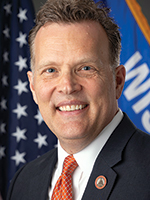
Rep. Andrew Hysell
Sponsored bills
Maddy summaryThis bill establishes a state grant program to help school districts pay student teachers an hourly wage of at least $15 for their teaching hours during the 2026-27 school year and beyond. The funding comes from a state appropriation, with the Department of Public Instruction calculating and distributing payments to school boards based on the number of hours each student teacher worked in their district. The legislation also gives the department authority to create rules for administering the program and defines student teachers as individuals enrolled in approved teacher preparation programs who are completing their student teaching component.
Maddy summaryAB 1075 changes the age threshold for juvenile court jurisdiction by reclassifying 17-year-olds as adults for criminal prosecution purposes. It amends definitions to define "adult" as 17 years or older (instead of 18) for investigating and prosecuting criminal violations, while keeping 17-year-olds under juvenile court jurisdiction for specific cases. The bill also creates a new funding mechanism to reimburse counties for costs related to 17-year-olds accused of crimes starting in 2026. This directly affects 17-year-olds facing criminal charges and county juvenile justice systems managing their cases.
Maddy summaryThis bill proposes to increase state funding for passenger rail operations by $10 million and allocate an additional $5.2 million for feasibility studies on rail expansion projects. The funds would be directed to the department of transportation for fiscal year 2026-27 to support existing rail services and evaluate potential new routes. The legislation affects state transportation budgets and rail service providers by authorizing these specific appropriations. The bill is currently in the early stages of the legislative process and has not yet been enacted into law.
Maddy summaryThis bill would add a nonvoting teacher representative to school boards in Wisconsin's common and union high school districts. The teacher representative would be selected through a secret ballot vote by teaching staff members and would serve a three-year term, attending all board meetings including closed sessions but without voting rights. The legislation also updates procedures for school board reorganization and special meetings to include notification requirements for the teacher representative.
Maddy summaryThis bill establishes minimum salary requirements for full-time public school teachers in Wisconsin. It mandates that all full-time teachers receive an annual salary at least equal to the higher of the state senator or representative salary for that fiscal year. Teachers with at least 10 years of experience must be paid no less than the legislator salary plus $15,000, while those with 20 years or more must earn at least $100,000 annually. The law applies to teachers whose contracts expire or are renewed after the bill takes effect and cannot be negotiated away through collective bargaining agreements.
Maddy summaryThis bill would exempt over-the-counter drugs from state sales and use taxes. It directly affects consumers purchasing non-prescription medications and retailers selling these products. The legislation defines over-the-counter drugs as those with specific labeling requirements, including a drug facts panel or a list of active ingredients. By removing the tax burden, the bill aims to lower costs for buyers of these common health products. The change would take effect on the first day of the third month after the bill is published.
Maddy summaryThis bill creates a new grant program called "Grow Your Own" to help Wisconsin schools recruit and train new teachers. The program would provide up to $5 million annually starting in the 2026-27 school year to school districts and charter schools for costs related to teacher development initiatives. These initiatives could include high school clubs that encourage teaching careers, paying for current staff to earn licensure, supporting dual enrollment pathways, and offering incentives for paraprofessionals to become licensed teachers. The Department of Public Instruction would administer the grants and establish rules for how schools apply for and use the funding.
Maddy summaryAB 1061 legalizes recreational cannabis possession and establishes a regulatory framework for cannabis production, sales, and medical use in Wisconsin. It directly affects individuals with past marijuana-related convictions (by creating a review unit to expunge these records), cannabis businesses (through new licensing and regulations), and state agencies (by creating a Division of Cannabis Regulation under the Department of Agriculture). Key provisions include allocating $30 million annually for regulatory operations, establishing medical cannabis registry fees, creating a $5 million fund for conviction reviews, and repealing outdated marijuana criminal penalties. The bill also introduces new taxes on cannabis sales to fund these programs and public health research.
Maddy summaryThis bill requires employers in Wisconsin to provide reasonable break time and specific accommodations for breastfeeding employees with children under one year of age. Employers must offer a private space shielded from view and free from intrusion, along with access to electrical outlets, running water, and a refrigerator for storing breast milk. The law applies to all employers, including state and local government agencies, but includes an exception for small businesses with fewer than 50 employees if compliance would cause undue hardship. Employees cannot be discriminated against or retaliated against for taking these breaks, and violations can be reported to the department for enforcement. The bill also clarifies how unpaid break time affects health care coverage eligibility and when it counts as paid work time.