

Maddy summaryAB 431 creates a "special motion to strike" process to quickly dismiss lawsuits that target individuals or groups for speaking out on public issues, such as criticizing government actions or participating in public debates. If a plaintiff sues for speech protected under free speech or petition rights, the defendant can file this motion; the court will dismiss the case unless the plaintiff proves they are likely to win. If the motion succeeds, the winning defendant typically recovers attorney fees, unless the motion was frivolous or delayed the case. This bill directly affects people engaging in public discourse, including activists, journalists, and community members, by making it harder for opponents to use lawsuits to silence them.
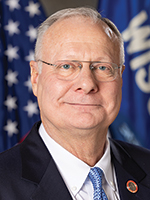
Rep. Randy Udell
Sponsored bills
Maddy summaryAB 378 requires all state agencies to mask or anonymize personally identifiable information (PII) before sharing it with the federal government, directly affecting state agencies handling sensitive data like health records or social services. The bill allows limited exceptions for sharing unmasked data when required by law, for legislative constituent services, or for court operations. It also creates a civil lawsuit option for individuals harmed by negligent violations, allowing recovery of actual damages, up to $1,000 in punitive damages, and attorney fees. The law aims to strengthen data privacy protections by limiting federal access to identifiable state records without explicit safeguards.
Maddy summaryAB 37 eliminates fees for Gold Star families who maintain or reissue special license plates displaying the Gold Star family symbol. It specifically removes the $15 annual or $30 biennial maintenance fees and $15 annual or $30 reissuance fees that would otherwise apply to these plates. The bill directly affects families of military members who died in service, ensuring they pay no additional costs for these plates beyond the initial application. This policy change modifies existing fee structures under Wisconsin statute 341.145(3) to provide fee-free plate maintenance and reissuance for this designated group.
Maddy summaryAJR 86 is a commemorative resolution honoring the late Representative Jim Rooney, a former Wisconsin State Assembly member (1972-1985) and lifelong public servant from Racine County. The resolution expresses the legislature's condolences to his family and recognizes his career, including chairing the Wisconsin Waterways Commission and contributing to Racine's lakefront revitalization. As a procedural resolution (not a policy bill), it contains no new laws or funding but formally commemorates his service and legacy. It was adopted by the legislature on October 7, 2025.
Maddy summaryAB 490 creates a statewide suicide prevention program funded by an annual $250,000 appropriation. The program requires the Department of Health Services to implement public awareness campaigns, coordinate with community groups, and provide training for law enforcement, healthcare providers, schools, and others who interact with people at risk of suicide. It specifically targets at-risk groups including youth, elderly individuals, Native Americans, and rural residents through county-level initiatives, crisis service enhancements, and a centralized resource website. The bill also mandates annual reports to the legislature on program activities starting in 2027.
Maddy summaryAB 475 creates a state grant program to fund immigration-related civil legal services for individuals and families. It allocates $300,000 for the 2025-26 fiscal year to award grants to community-based organizations (including for-profit groups) that provide legal assistance in immigration matters, with requirements that applicants have a history of such services and offer them without regard to immigration status. The bill also enables counties to fund similar services through existing county budgeting mechanisms. This directly supports immigrants facing legal challenges and expands access to civil legal aid in immigration cases.
Maddy summaryAB 489 creates a voluntary program allowing individuals to prohibit themselves from purchasing handguns for specific periods (1, 5, or 20 years, with the first year irrevocable). Individuals submit forms to the Department of Justice for verification, entering their details into a new database. This database is now checked by firearms dealers during background checks under existing law (s. 175.35), which will block sales if a person is listed. The program directly affects individuals seeking to restrict their own firearm access, with the state appropriating $150,000 annually to administer it.
Maddy summaryAB 480 requires most employers to include a salary range (minimum and maximum) and details about benefits like health insurance or retirement plans in all public job postings. Employers must also retain these posting records for two years and allow department or employee review. Penalties include $300-$600 for small businesses (under 50 employees) and $1,000-$2,000 for larger businesses for repeated violations. Third parties (e.g., staffing agencies) posting jobs on behalf of employers must follow the same rules.
Maddy summaryAB 484 modifies requirements for concealed carry license applicants and renewals in this state. It allows applicants to use copies of previous licenses (from this state, another state, or a local jurisdiction) as proof of training, instead of requiring separate documentation. The bill also mandates specific training topics for renewals, including live ammunition practice, firearm safety and storage, suicide prevention, and de-escalation techniques. License holders must submit proof of completing such training when renewing their licenses.
Maddy summaryAB 479 reduces costs for individuals seeking trade licenses by creating a funding mechanism to offset fees for third-party-administered examinations. It allocates $181,900 annually (for 2025-26 and 2026-27) from the General Purpose Revenue fund to lower exam costs required for occupations like electricians or plumbers. The bill directly affects license applicants who must pay these third-party exams, as the funding lowers their out-of-pocket expenses. This is a straightforward appropriation bill with no new regulatory requirements, solely focused on reducing financial barriers for license seekers.