

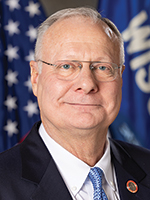
Photo of Randy Udell
D Wisconsin Assembly · District 47 On the 2026 ballot

Rep. Randy Udell

Compare
Total votes
245
all sessions
Attendance
100%
of floor votes
Near the chamber average
With party
97%
of cast votes
Near the chamber average
Bipartisan score
1%
crosses aisle rarely
Near the chamber average
Sponsored
396
bills & resolutions
Near the chamber average
Committees
3
assignments
396 bills and resolutions

Sponsored bills

Total
396
Primary
396
Co-sponsor
0
This page
396
matching current filters
Primary AJR 123
Failed · Wisconsin Assembly · Lead sponsor
Relating to: proclaiming November 20 in 2025 and 2026 as Wisconsin’s Transgender Day of Remembrance.

Maddy summaryThis is a symbolic resolution (not a law) that formally recognizes November 20, 2025, and 2026, as Wisconsin’s Transgender Day of Remembrance. It does not create new policies or affect any specific group directly - it simply asks the Wisconsin Legislature to acknowledge the day through a formal proclamation. The resolution cites the purpose of memorializing transgender and nonbinary people killed due to transphobic violence and aligns with the established international observance. As a procedural resolution, it has no legal force but serves to affirm the state’s recognition of this day.

Failed Mar 23, 2026 0 co-sponsors
Primary AB 783
Failed · Wisconsin Assembly · Lead sponsor
Relating to: local regulation of certain containers.

Maddy summaryAB 783 repeals statute 66.0419, which previously governed local regulations on certain containers. This bill removes an existing legal provision but does not create new regulations or directly affect residents, businesses, or local governments. It is a procedural repeal with no new policy changes or implementation mechanisms.

Failed Mar 23, 2026 0 co-sponsors
Primary AB 710
Failed · Wisconsin Assembly · Lead sponsor
Relating to: Wisconsin Shares payments to tribal-regulated child care providers. (FE)

Maddy summaryAB 710 expands Wisconsin's child care subsidy program (Wisconsin Shares) to include tribal-regulated child care providers operating under tribal authority in Indian country. It creates a new eligibility category for providers who meet federal child care standards, have a tribal regulatory attestation, and have an agreement with the state. This change allows families to choose these tribal providers when accessing state-funded child care assistance, directly affecting tribal child care programs and families seeking subsidized care. The bill modifies existing statutes to ensure these providers can receive state payments under the same terms as other licensed providers.

Failed Mar 23, 2026 0 co-sponsors
Primary AB 708
Failed · Wisconsin Assembly · Lead sponsor
Relating to: extension of tax incremental district lifespan for purposes of housing stock improvement. (FE)

Maddy summaryAB 708 extends the lifespan of tax incremental districts (TIDs) used for housing improvements by up to three years after a city pays off project costs. It directly affects cities that have established TIDs for housing development, allowing them to continue using tax increment financing beyond the district's original expiration. The bill requires cities to submit extension resolutions to the Department of Revenue and obtain joint review board approval for extensions longer than one year. This change aims to provide more flexibility for cities to complete housing projects without losing access to dedicated funding streams.

Failed Mar 23, 2026 0 co-sponsors
Primary AB 721
Failed · Wisconsin Assembly · Lead sponsor
Relating to: income tax credits for beginning farmers and owners of farm assets and making an appropriation. (FE)

Maddy summaryAB 721 creates a new income tax credit for beginning farmers and owners of farm assets in Wisconsin. Beginning farmers who lease or purchase agricultural assets (like land, equipment, or livestock) and asset owners who lease those assets to them can claim a credit equal to 5% of the lease or sales price paid each year. The credit is capped at $75,000 annually and only applies to the first three years of a lease. To qualify, claimants must provide eligibility certification and meet residency requirements, with partnerships and LLCs passing credit amounts to individual members.

Failed Mar 23, 2026 0 co-sponsors
Primary AB 706
Failed · Wisconsin Assembly · Lead sponsor
Relating to: equalized value calculations, project costs, and local levy limits relating to tax incremental districts. (FE)

Maddy summaryAB 706 modifies Wisconsin's tax increment district (TID) rules by reducing the local tax base limit from 18% to 12% of a city's total taxable value for certain districts. It restricts residential use in mixed-use TID projects to 35% of the district area and expands allowable TID spending to include park development costs. These changes directly affect cities and towns operating TIDs by altering how they calculate tax base limits and fund eligible projects. The bill aims to clarify TID management while controlling tax impacts on non-district areas.

Failed Mar 23, 2026 0 co-sponsors
Primary AB 735
Failed · Wisconsin Assembly · Lead sponsor
Relating to: online clearinghouse of information for small businesses in Wisconsin. (FE)

Maddy summaryAB 735 creates a centralized online clearinghouse for Wisconsin small businesses, requiring the state Department to compile and publish key information on a single website. The clearinghouse will include details on government contract bidding opportunities, economic development programs, business training/events, licensing/permit requirements, and tax/fee obligations from state and local agencies. This bill directly affects Wisconsin small businesses by making it easier to access government resources and compliance information in one place. The clearinghouse will be coordinated with agencies like the Wisconsin Economic Development Corporation and the Department of Revenue.

Failed Mar 23, 2026 0 co-sponsors
Primary AB 809
Failed · Wisconsin Assembly · Lead sponsor
Relating to: investigation of any pregnancy outcome and civil and criminal liability exemptions relating to pregnancy outcome.

Maddy summaryAB 809 prohibits state and local government funding for investigations into pregnancy outcomes (like miscarriage or stillbirth) when treating the person as a crime suspect. It bans law enforcement from investigating individuals as suspects solely due to their own pregnancy outcomes, requiring consent before investigating cases involving others' pregnancy outcomes. The bill exempts women from civil or criminal liability for pregnancy outcomes (including miscarriage, abortion, or stillbirth) and amends statutes to clarify that abortion-related legal protections apply. It directly affects women experiencing pregnancy outcomes, law enforcement agencies, and health services (with limited exceptions for health investigations). The bill creates new legal protections by restricting investigations and eliminating liability for pregnancy-related events.

Failed Mar 23, 2026 0 co-sponsors
Primary AB 805
Failed · Wisconsin Assembly · Lead sponsor
Relating to: sandhill crane damage abatement assistance for corn producers, granting rule-making authority, and making an appropriation. (FE)

Maddy summaryAB 805 creates a program to reimburse corn farmers for seed coating that deters sandhill cranes from eating corn seeds. Eligible farmers must have produced at least $6,000 in gross farm revenue the previous year and plant corn on agricultural land. The program covers up to 50% of seed coating costs (max $6,250 per farmer per planting season), prioritizing farmers with prior crane permits, recent reimbursement, or documented vulnerability to crane damage. It is funded by a $1.875 million annual appropriation for two years to cover reimbursements and administrative costs.

Failed Mar 23, 2026 0 co-sponsors
Primary AB 811
Failed · Wisconsin Assembly · Lead sponsor
Relating to: main street bounceback grants and making an appropriation. (FE)

Maddy summaryAB 811 creates a $25 million annual grant program for businesses opening new locations or expanding into vacant commercial spaces, administered by the Wisconsin Economic Development Corporation (WEDC). It directly affects eligible businesses in commercial districts, continuing a similar program from June 2023 while explicitly excluding nonprofit organizations from receiving grants. The bill allocates $25 million for the 2025-26 and 2026-27 fiscal years to fund these "Main Street Bounceback Grants" through WEDC's existing grant framework. Key provisions require WEDC to follow eligibility rules nearly identical to the prior "Wisconsin Tomorrow" program, focusing on revitalizing underutilized commercial properties.

Failed Mar 23, 2026 0 co-sponsors
Showing 171 to 180 of 396 bills
Previous 1 … 17 18 19 … 40 Next