

Maddy summaryAB 1077 updates Wisconsin's firearms laws by requiring courts to notify the Department of Justice when ordering firearm restrictions, ensuring accurate background checks for buyers. It creates new funding for firearm dealer permits and mandates law enforcement agencies to submit recovered firearms for tracing via the eTrace system within 48 hours. The bill directly affects firearms dealers (through permit fees), courts (in handling firearm restriction orders), and law enforcement (in firearm tracing procedures). Key provisions include standardized court notifications to the DOJ for firearm restrictions and new requirements for law enforcement to trace recovered weapons.
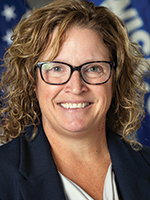
Rep. Joan Fitzgerald
Sponsored bills
Maddy summaryAB 1043 requires adult family homes and residential care apartment complexes to implement fall prevention and recovery training for staff and residents. It mandates that facilities maintain at least one certified CPR provider, one certified first aid provider, and one staff member trained in fall recovery and safe lifting techniques on-site at all times. Facilities must provide fall prevention training to new residents within 30 days of move-in (unless a healthcare provider certifies they cannot participate) and require staff to complete related training. The bill also establishes a duty for facilities to administer CPR or first aid during emergencies before emergency services arrive, unless a do-not-resuscitate order exists, and prohibits policies that prevent staff from providing immediate aid.
Maddy summaryAB 1065 establishes requirements for state broadband expansion grants to connect unserved areas. It defines "broadband infrastructure" as requiring minimum speeds of 100 Mbps download/20 Mbps upload (or federal standards), and mandates grantees to report construction progress and final service speeds. If grantees fail to build the specified infrastructure or meet speed standards, they must reimburse the state. The bill also requires biennial audits of the grant program starting in 2027 to assess performance.
Maddy summaryAB 1067 requires broadband providers to advertise and sell services based on consistent, verifiable speeds - minimum 100 Mbps download and 20 Mbps upload - matching federal standards. It mandates standardized broadband labels using FCC templates for all consumers before sale, preventing misleading speed claims. Providers violating these rules face consumer refunds if they fail to correct misrepresentations within a month of written notice. The bill directly affects broadband companies and protects consumers by ensuring accurate speed disclosures.
Maddy summaryAB 1048 repeals statute 66.0104, which governed local regulations of landlords. This procedural bill removes an existing legal provision without creating new rules or directly affecting landlords, tenants, or local governments. It was introduced by multiple legislators and referred to the Housing Committee. The bill's sole action is eliminating the referenced statute from the code.
Maddy summaryAB 836 increases funding to hire two additional full-time equivalent staff positions within the Department of Agriculture, Trade and Consumer Protection specifically for regional farmer support services. The bill allocates $150,400 for fiscal year 2025-26 to authorize these positions and $200,500 for fiscal year 2026-27 to fund them. These positions will directly assist farmers through regional support services provided by the department. The bill makes no changes to existing programs but expands staffing capacity for targeted agricultural assistance.
Maddy summaryAB 823 creates a program to provide electronic benefit transfer (EBT) and credit/debit card processing equipment and services to farmers' markets and farmers who sell directly to consumers. It allocates $367,500 biennially for this payment processing program and increases funding by $1 million annually for the healthy food incentive program. The bill requires participating vendors to process local purchasing incentives (even if funded by third parties) and adds 0.625 FTE positions to administer the program. This directly affects farmers' markets and farmers selling directly to consumers who participate in EBT or incentive programs.
Maddy summaryAB 875 creates a new funding line for county conservation staff focused on climate change resiliency. It directly affects counties that have approved land and water conservation plans and choose to allocate matching funds. The bill adds "climate change personnel" as a specific budget item under soil and water management, requiring counties to specifically request funding for these roles in their annual grant applications to the Department of Agriculture. This changes how counties can use state grants by mandating explicit requests for climate-focused staff positions within their conservation planning process. The bill appropriates $1.8 million for the 2026-27 fiscal year for this purpose.
Maddy summaryAB 859 adjusts the state reimbursement rate for special education and school-age parent program costs. It sets the reimbursement rate at 42% of eligible costs for the 2025-26 school year, increasing to 45% for the 2026-27 school year and all subsequent years. The bill applies to costs covered under sections 115.88(1m)-(3), (6), (8), 115.93, and 118.255(4), which include services for students in hospitals, convalescent homes, and school programs. This change directly affects school districts and programs providing these services by altering the state's financial contribution toward their expenses. The bill amends statutes to ensure state funds are distributed according to these revised percentages.
Maddy summaryAB 872 creates a new Energy Innovation Grant Program to fund projects advancing clean energy technologies. It allocates $10 million annually for the 2025-26 and 2026-27 fiscal years, directly supporting the Office of Energy Innovation within the Public Service Commission. The program allows the agency to distribute grants for innovative energy solutions, with no specific project types or recipient criteria detailed in the bill. This is a funding measure with no voting record yet, as the bill was introduced on January 16, 2026.