

Maddy summaryThis bill establishes a comprehensive clean energy framework requiring Wisconsin to achieve 100 percent clean electricity production and net-zero carbon emissions by 2050. It creates a new Office of Sustainability and Clean Energy within the Department of Administration to develop and update an economy-wide decarbonization roadmap using sector-based modeling. The legislation sets specific interim targets for carbon-free electricity, including 50 percent by 2030, 65 percent by 2035, 80 percent by 2040, 90 percent by 2045, and full carbon-free status by 2050. State agencies must consider purchasing renewable energy from providers with long-term contracts, though the requirements do not apply if generation is not technically feasible or cost-effective. The bill also provides funding for technology implementation and defines carbon-free resources to include hydroelectric power alongside other renewable sources.
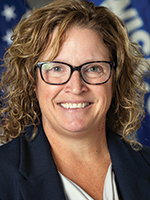
Rep. Joan Fitzgerald
Sponsored bills
Maddy summaryThis bill establishes a state assistance program to help smaller municipalities, specifically 3rd and 4th class cities, villages, and towns, upgrade their water infrastructure to meet federal water quality standards. The program would provide grants covering up to 50 percent of project costs, with the Department of Natural Resources responsible for administering applications, setting eligibility criteria, and prioritizing projects based on established rules. An appropriation of $10 million is included for the 2025-26 fiscal year to fund these assistance payments, and the department must approve all project plans and specifications before funds are released.
Maddy summaryAB 966 requires the Department of Justice to create and run a public awareness campaign focused on children's online safety. The campaign must use digital platforms (like the department’s website and social media) and print materials to educate families about internet risks and prevention steps for children. It specifically mandates that the Department provide free educational materials to schools (as defined in statute 118.257(1)(d)) upon request. The bill directly affects children and schools by promoting accessible resources to help prevent exposure to harmful online content.
Maddy summaryAB 957 increases funding by $400,000 for each of the 2025-26 and 2026-27 fiscal years to support internet crimes against children law enforcement within the Department of Justice. This is a budget adjustment that directly affects the Department of Justice's resources for investigating and prosecuting online crimes targeting minors. The bill does not create new laws or change existing legal standards - it solely allocates additional state funds for enforcement efforts.
Maddy summaryAB 958 authorizes the Department of Justice to add three new positions specifically for its Internet Crimes Against Children (ICAC) unit: two criminal analyst roles, one outreach specialist, and one digital evidence examiner. These positions are funded through existing appropriations under section 20.455(2)(a). The bill directly affects the ICAC unit’s staffing capacity to investigate and respond to online crimes involving children. It does not create new laws or policies but adjusts personnel authorizations to support existing law enforcement efforts. The bill was introduced in the 2026 Legislature and referred to the Criminal Justice and Public Safety Committee.
Maddy summaryAB 968 would require virtual currency kiosks (machines exchanging cash for digital currency or vice versa) to obtain state licenses, display mandatory fraud warnings, and verify customer identities using government ID and photos. It sets a $500 daily transaction limit, caps fees at 3% or $5 per transaction, and mandates detailed receipts showing all transaction details. The bill directly affects kiosk operators and customers, aiming to prevent fraud through identity checks and clear transaction records. Currently under review in the Financial Institutions committee.
Maddy summaryAB 964 clarifies that online sexual extortion targeting children falls under existing law by specifying it as a violation of Section 942.095 when the victim is a child (as defined in Section 948.01). This bill directly affects law enforcement agencies investigating internet crimes against children, enabling them to issue administrative subpoenas to internet companies for relevant data without a court order. The key provision streamlines the process for obtaining evidence from online platforms in cases where children are victims of sexual extortion. It does not create new penalties but ensures these cases are explicitly covered under current statutes for investigative efficiency.
Maddy summaryAB 969 creates a formal drug donation program to redistribute unused medications to eligible patients. It defines key terms like "donor" (including pharmacies, hospitals, and individuals), "eligible patient" (indigent, uninsured, or underinsured individuals), and "recipient" (medical facilities or pharmacies that can receive donations). The bill allows donors to contribute drugs to participating facilities, with recipients permitted to charge a handling fee covering actual costs (e.g., storage, shipping), while prohibiting donations of certain FDA-regulated drugs requiring patient enrollment. This program aims to provide access to medications for underserved patients through a structured, safe, and cost-transparent system.
Maddy summaryAB 445 updates procedures for county registers of deeds regarding property records and transportation project maps (plats). It revises how documents are numbered, indexed, and recorded - requiring unique sequential numbers for each document and clarifying "legal description" definitions for property records. These changes directly affect county offices handling property deeds, mortgages, and transportation project plats, streamlining administrative processes without altering fees or substantive rights. The bill focuses on procedural consistency in record-keeping across statutes.
Maddy summaryAB 916 creates a state-funded home repair program to address habitability issues and improve energy efficiency in affordable housing. It provides grants of up to $25,000 per unit to eligible homeowners (income ≤100% of area median income who own or occupy their homes) and interest-free loans of up to $25,000 to eligible landlords (owning ≤5 properties/15 units of affordable housing). The program prioritizes repairs for homes with health/safety hazards, energy efficiency upgrades, and accessibility improvements for individuals with disabilities or young children. Properties must be between 10 and 40 years old to qualify, and funds are administered by the state authority or contracted counties/nonprofits with strict reporting requirements.