

Maddy summaryThis joint resolution commemorates the 250th anniversary of the 1776 Boston siege victory (where British forces withdrew on Saint Patrick's Day) and recognizes Irish Americans' contributions to the Revolutionary War. It specifically highlights figures like General John Sullivan (son of Irish immigrants), eight Irish American Declaration of Independence signatories, and historical connections such as John Dunlap’s printing of the Declaration. The resolution directs the legislature to formally acknowledge these events and send copies to Irish officials, including Senator Mark Daly and the American Irish State Legislators Caucus. As a commemorative resolution, it has no legal effect or direct impact on policy or constituents.
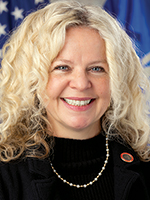
Rep. Brienne Brown
Sponsored bills
Maddy summaryAB 1015 adjusts Wisconsin Shares child care assistance copayment rules and increases funding. It limits copayments to no more than 7% of a family’s gross income (49.155 (5) (ag)) and waives copayments entirely for families earning below 150% of the federal poverty line (49.155 (5) (ar)). The bill also increases annual funding for child care subsidies by $22.93 million for fiscal years 2025-26 and 2026-27. These changes directly affect low-income families using Wisconsin Shares child care assistance.
Maddy summaryAB 1063 requires state legislators to prove they live in the district they represent by filing sworn statements with proof of residency (like utility bills) at the start of each session and annually. If a legislator moves, they must update this within 10 days. Failure to comply triggers an investigation and potential legal action to remove them from office if residency is disputed. The bill also protects submitted residency records as confidential information. It directly affects all elected state legislators and aims to enforce existing residency requirements for legislative officeholders.
Maddy summaryAB 1077 updates Wisconsin's firearms laws by requiring courts to notify the Department of Justice when ordering firearm restrictions, ensuring accurate background checks for buyers. It creates new funding for firearm dealer permits and mandates law enforcement agencies to submit recovered firearms for tracing via the eTrace system within 48 hours. The bill directly affects firearms dealers (through permit fees), courts (in handling firearm restriction orders), and law enforcement (in firearm tracing procedures). Key provisions include standardized court notifications to the DOJ for firearm restrictions and new requirements for law enforcement to trace recovered weapons.
Maddy summaryAB 1074 creates an Office of the Student Loan Ombudsman within the Department of Financial Institutions to assist borrowers with student loan issues. The office will handle complaints, analyze borrower data, and provide guidance on loan terms, working directly with student loan servicers and educational institutions. It establishes specific duties including resolving disputes, monitoring laws affecting borrowers, and requiring servicers to cooperate with the ombudsman. This bill directly affects student loan borrowers in the state and the student loan servicers who must now engage with this new oversight office.
Maddy summaryAB 1066 would require Wisconsin's broadband expansion grant program to prioritize projects that install fiber optic broadband lines directly to farms. It defines "farm" using existing Wisconsin agricultural definitions (from tax code) to clarify which properties qualify. The bill creates a specific grant priority for fiber projects connecting to these agricultural lands, ensuring farms receive targeted broadband infrastructure support. This policy change would directly affect farmers and agricultural businesses seeking broadband access through state grant programs. The bill is currently pending in the Energy and Utilities Committee after introduction on February 26, 2026.
Maddy summaryAB 1065 establishes requirements for state broadband expansion grants to connect unserved areas. It defines "broadband infrastructure" as requiring minimum speeds of 100 Mbps download/20 Mbps upload (or federal standards), and mandates grantees to report construction progress and final service speeds. If grantees fail to build the specified infrastructure or meet speed standards, they must reimburse the state. The bill also requires biennial audits of the grant program starting in 2027 to assess performance.
Maddy summaryAB 1067 requires broadband providers to advertise and sell services based on consistent, verifiable speeds - minimum 100 Mbps download and 20 Mbps upload - matching federal standards. It mandates standardized broadband labels using FCC templates for all consumers before sale, preventing misleading speed claims. Providers violating these rules face consumer refunds if they fail to correct misrepresentations within a month of written notice. The bill directly affects broadband companies and protects consumers by ensuring accurate speed disclosures.
Maddy summaryAB 1069 establishes a legislative study committee to examine requirements for a "Dig Once Law," which would mandate installing empty underground pipes (conduit) during infrastructure projects to prepare for future fiber-optic internet expansion. The committee will study key details like communication protocols between municipalities and contractors, ownership of unused conduit, maintenance cost responsibilities, conduit sizing for multiple providers, and optimal installation timing (e.g., during road construction). This bill does not enact new law but prepares recommendations for potential future legislation. It directly affects municipalities, construction firms, and future internet service providers by identifying implementation challenges. The committee must submit findings by January 1, 2027.
Maddy summaryAB 1080 establishes new safety regulations for trampoline parks in the state. It requires operators to obtain an annual license, maintain $1 million in liability insurance, and follow specific safety standards - including proper signage, staff certification in first aid/CPR, equipment maintenance, and injury reporting. The bill exempts school playgrounds (if incidental and not fee-based), training facilities (like gymnastics studios with 80% instructional revenue), and inflatable bounce houses used exclusively for exercise. These rules apply directly to commercial trampoline park operators, not to facilities covered by the exemptions.