

Maddy summaryAB 177 exempts diapers and feminine hygiene products from state sales tax. The bill defines "diapers" as absorbent garments for people with incontinence and "feminine hygiene products" to include tampons, pads, menstrual cups, and similar items (excluding grooming products like soap or toothpaste). It adds these categories to the list of tax-exempt items under Wisconsin’s sales tax code (77.54(75)), directly affecting consumers who purchase these essential products. The exemption applies to both retail sales and use of these items, removing a tax burden on these daily necessities.
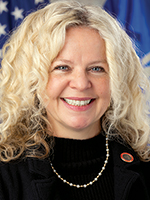
Rep. Brienne Brown
Sponsored bills
Maddy summaryAJR 64 designates June 2025 as Myasthenia Gravis (MG) Awareness Month in Wisconsin. This symbolic resolution recognizes MG, an autoimmune neuromuscular disease causing muscle weakness that affects vision, speech, and breathing, and aligns with the national observance of MG Awareness Month held every June. The bill does not create new laws, funding, or services; it is a formal acknowledgment to raise public awareness about MG, which impacts approximately 10-20 people per 100,000 Americans.
Maddy summaryAB 231 creates a 25% tax credit for film production companies in Wisconsin covering eligible expenses (like wages, equipment, and location costs) and capital investments for accredited productions. It directly affects film production companies operating in Wisconsin that meet minimum spending thresholds ($50,000 or $100,000 depending on production length) and excludes news, sports, or corporate content. The bill establishes a State Film Office to administer the program, requiring accredited productions to include a state acknowledgment in the final film and mandating annual reports on credit allocations. It caps annual tax credits at $10 million statewide and $1 million per company, with strict eligibility rules and third-party audit requirements to ensure compliance.
Maddy summaryAB 305 designates the rusty patched bumble bee (*Bombus affinis*) as Wisconsin's official state native insect. The bill amends Wisconsin statutes to add this designation to the list of state symbols included in the Wisconsin Blue Book. This is a symbolic, non-regulatory change that does not alter any policies or regulations affecting the public or environment. The bill creates a new statutory section (1.10 (3) (w)) and updates a reference in another section to include "native insect" in the Blue Book's listings.
Maddy summaryAB 307 modifies the calculation method for the pupil participation limit in the state parental choice program. It replaces the previous formula with a new one requiring the limit to equal 10% (0.1) of a school district's enrollment from the prior school year. The bill also removes an existing exemption that allowed certain districts to exceed this limit. This change directly affects school districts participating in the program (excluding eligible districts and 1st-class city districts), limiting the number of students who can use the program each year based on the district's prior enrollment.
Maddy summaryAB 27 expands eligibility for state veterans' benefits to include individuals who served in Laos supporting U.S. forces during the Vietnam War and were naturalized under the federal Hmong Veterans Naturalization Act of 2000. The bill updates state statutes to define these veterans as qualifying for property tax exemptions (under 36.27) and other benefit programs (under 38.24 and 45.01). It specifically adds them to eligibility criteria for benefits previously limited to other veteran categories. This change directly affects Hmong veterans residing in the state who meet the federal naturalization requirements. The bill passed committee unanimously and is now pending in the Rules committee.
Maddy summaryAB 227 prohibits offering anything of value exceeding $1 (or $5 for recall and nomination petitions) to influence whether someone signs or refrains from signing specific election-related petitions. The bill defines "election period" as key time frames before spring elections (starting December 1), general elections (starting April 15), and special or recall elections. It specifically targets inducements for petitions about candidate nominations, recall efforts, or ballot measures on political/social issues during these periods. The law applies to all such transactions, including at candidate nomination meetings, to prevent undue influence on voter participation.
Maddy summaryAB 246 requires certain health insurance plans - including those covering government employees (state, county, city, town, village, or school district) and disability insurance - to cover asthma medications and related supplies like inhalers. It limits out-of-pocket costs to $25 per month for each asthma medication and $50 total for all related supplies, with no deductibles applied. The law applies specifically to these government-backed plans and self-insured employer plans, not all health insurance. It ensures asthma treatment remains affordable without requiring patients to meet deductibles first.
Maddy summaryAJR 72 is a ceremonial resolution that officially recognizes June 19, 2025, as Juneteenth Day in Wisconsin. It does not create new laws or policies but formally declares this date to honor the historical significance of Juneteenth, which commemorates the end of slavery in the United States following Union troops' arrival in Galveston, Texas, on June 19, 1865. The resolution acknowledges Wisconsin’s longstanding Juneteenth observance, including Milwaukee’s celebration beginning in 1971. As a symbolic gesture, it has no legal effect beyond promoting awareness of this historical milestone.
Maddy summaryAB 343 increases state funding to help schools hire more mental health staff by reimbursing 50% of new spending on pupil services professionals (like counselors and social workers). It directly affects public school districts, charter schools, and participating private schools that increase their spending on these roles. The bill adds $16.5 million for fiscal year 2025-26 and $18 million for 2026-27 to the existing mental health aid appropriation. This creates a new reimbursement mechanism for schools that expand their mental health staffing beyond prior-year levels.