

Maddy summaryAB 808 creates a "wetland assured delineation program" that allows certified professionals to perform wetland boundary identification work with the same legal effect as government-verified reports. It directly affects environmental consultants and wetland delineators who meet specific qualifications (e.g., associate degree with 8+ years experience or bachelor’s with 5+ years) and apply for certification through the Department of Natural Resources. Key provisions include requiring annual applications, mandating reports by March 15 (with limited 12-month extensions), and allowing certified delineators’ work to bypass department confirmation under certain conditions. The program also establishes department oversight through performance reviews and audits to ensure compliance with wetland delineation standards.
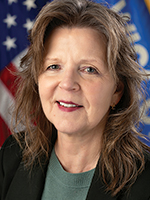
Rep. Maureen McCarville
Sponsored bills
Maddy summaryAB 805 creates a program to reimburse corn farmers for seed coating that deters sandhill cranes from eating corn seeds. Eligible farmers must have produced at least $6,000 in gross farm revenue the previous year and plant corn on agricultural land. The program covers up to 50% of seed coating costs (max $6,250 per farmer per planting season), prioritizing farmers with prior crane permits, recent reimbursement, or documented vulnerability to crane damage. It is funded by a $1.875 million annual appropriation for two years to cover reimbursements and administrative costs.
Maddy summaryAB 811 creates a $25 million annual grant program for businesses opening new locations or expanding into vacant commercial spaces, administered by the Wisconsin Economic Development Corporation (WEDC). It directly affects eligible businesses in commercial districts, continuing a similar program from June 2023 while explicitly excluding nonprofit organizations from receiving grants. The bill allocates $25 million for the 2025-26 and 2026-27 fiscal years to fund these "Main Street Bounceback Grants" through WEDC's existing grant framework. Key provisions require WEDC to follow eligibility rules nearly identical to the prior "Wisconsin Tomorrow" program, focusing on revitalizing underutilized commercial properties.
Maddy summaryAB 797 creates a $2.5 million grant program to help counties, cities, and towns test privately owned wells for water quality and map well locations. It provides up to $10,000 per grant for well testing, groundwater assessment, and geologic studies, plus separate grants for county health departments to offer well-testing education. The bill also requires municipalities with private wells to inform residents about testing importance and exempts the department from standard emergency rule procedures for implementing this program. The law appropriates funds for fiscal years 2025-26 and 2026-27 to support these concrete actions.
Maddy summaryAB 804 establishes two new grant programs: a $200,000 annual "Farm to Fork" grant for non-school entities (like businesses, hospitals, or universities with cafeterias) to connect local farms with food service operations, and a $250,000 annual "Farm to School" grant for school districts to expand local food sourcing. The bill prioritizes innovative proposals, high-need schools (where many students qualify for free/reduced meals), and projects supporting value-added agricultural products. It requires the Agriculture Department to administer the grants, provide annual legislative reports, and create rules for implementation. The legislation also adds one dedicated staff position to manage the Farm to Fork program.
Maddy summaryAB 762 creates the WisKids Savings Account Program, automatically depositing $25 into college savings accounts for Wisconsin children born or adopted in the state who reside there before age 10. The program uses birth records to identify eligible children, with parents able to opt out within 30 days of receiving notice. The state limits total annual deposits to $2 million across all accounts. This new initiative operates separately from existing college savings programs under Wisconsin law.
Maddy summaryAB 776 allocates $5 million in state funds to expand veterans' access to mental health services. It requires the Department of Veterans Affairs to promote community-based mental health care and provide grants to organizations offering these services to veterans, including emergency crisis support. The bill streamlines implementation by allowing the department to issue emergency rules without standard public notice requirements. This directly affects veterans seeking mental health care and the community organizations delivering these services. The legislation creates new statutory provisions (45.49) to formalize this program.
Maddy summaryAB 761 redirects $2 million annually from the college savings program trust fund to the Department of Financial Institutions. It directs the department to deposit funds into college savings accounts for children born or adopted in the state, residing there, and designated as beneficiaries under existing law. These deposits cover qualified higher education expenses for the children. The bill also appropriates additional funds ($446,900 for 2025-26, $317,900 for 2026-27) to administer this program and fund an additional full-time position.
Maddy summaryAJR 3 is a symbolic resolution that officially recognizes January 2025 as "Human Trafficking Awareness and Prevention Month" in Wisconsin. It does not create new laws or allocate funding but aims to raise public awareness about human trafficking, highlighting its prevalence across all 72 Wisconsin counties and its impact on vulnerable groups like youth and individuals with disabilities. The resolution aligns with broader state and national efforts to combat trafficking through education and community engagement. As a procedural resolution, it focuses solely on designation and awareness, with no direct policy changes or obligations for state agencies.
Maddy summaryAB 62 establishes a Prescription Drug Affordability Review Board to address prescription drug costs. The board, with members representing pharmaceutical companies, health insurers, healthcare providers, and the public, must meet quarterly and avoid conflicts of interest. Key provisions include creating a $500,000 annual grant program for healthcare providers to develop tools showing patients the cost of prescriptions (Section 601.415), launching a diabetes medication pilot project (Section 601.41), and repealing a section requiring copayments for certain Medicaid services (Section 7). This bill directly affects insurers, pharmacies, drug manufacturers, and healthcare providers who must disclose drug costs to patients.