

Maddy summaryAB 682 increases fees for nonresident hunting, trapping, and fishing permits and vehicle admissions in Wisconsin. The bill raises specific fee amounts across multiple categories, such as increasing the annual deer license fee from $197.25 to $237.25 and the annual small game license fee from $87.25 to $107.25. These fee increases will take effect on March 1, 2026, and primarily affect nonresidents who wish to engage in hunting, fishing, or trapping activities within Wisconsin. The bill does not introduce new programs but adjusts existing fee structures for nonresident users.
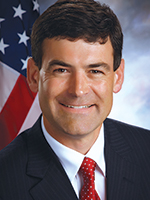
Rep. Tony Kurtz
Sponsored bills
Maddy summaryAB 691 amends Wisconsin's service award program for volunteer emergency responders, including fire fighters and emergency medical personnel. It increases the required service years for full benefits from 15 to 20 years, with eligibility also requiring age 60. For those with 10-20 years of service who are age 53-59 (but under 60), the bill creates a reduced payout option, calculated by the department but less than the full amount. The department must establish rules to implement these changes, affecting how volunteer emergency responders receive retirement benefits.
Maddy summaryAB 683 prohibits telecommunications providers from using equipment manufactured by entities designated as "foreign adversaries" in key network infrastructure (like cell towers or fiber lines). It directly affects telecom companies operating in Wisconsin, requiring them to stop purchasing or leasing such equipment and remove existing installations by following federal removal programs. Providers must annually certify compliance and publicly report locations of affected equipment, including replacement plans, while the state commission will publish a public map and annual report. The bill aligns with federal rules banning equipment from specific foreign entities, focusing on network security without specifying political outcomes.
Maddy summaryAB 514 authorizes new circuit court branches and additional judicial staff in Kenosha, Brown, and Menominee/Shawano counties to address growing caseloads. Specifically, it adds a ninth branch in Kenosha County (effective August 2028), a ninth branch in Brown County (effective August 2027) and a tenth branch (effective August 2028), and a third branch in Menominee/Shawano Counties (effective August 2027). The bill also authorizes new circuit judge and court reporter positions for these branches, plus 30.5 additional assistant district attorney positions across 24 counties. These changes are funded through existing state court appropriations and will take effect on the specified dates.
Maddy summaryAB 598 allows patient representatives to consent to health care facility admissions for incapacitated individuals without requiring a court-appointed guardian or protective placement petition. The bill creates a defined "patient representative" role, requiring two medical professionals (e.g., two physicians or one physician plus an advanced practice clinician) to certify incapacity based on medical need - not age, disability, or eccentricity. Patient representatives gain authority to make health care decisions, enroll individuals in Medical Assistance, and authorize health care expenses similar to a guardian, but only for non-developmental disability and non-mental illness cases. This change streamlines admissions for incapacitated patients while mandating 72-hour notifications to county agencies about the certification.
Maddy summaryAJR 97 designates October 2025 as "Careers in Construction Month" in Wisconsin. The resolution highlights construction as a major industry employing nearly 6% of Wisconsin's workforce and emphasizes career pathways through apprenticeships without student debt. It encourages employers, schools, and communities to host job fairs and events during that month to promote construction careers. The bill does not create new laws or affect specific individuals - it is a symbolic recognition of the industry’s role in building homes, schools, and infrastructure.
Maddy summaryAJR 91 is a ceremonial joint resolution recognizing the U.S. Navy's 250th birthday on October 13, 2025, marking the anniversary of the Continental Congress vote to establish the Navy on October 13, 1775. It expresses the Wisconsin Legislature's appreciation for the Navy's historical service and its legacy of defending U.S. freedoms, values, and interests over 250 years. The resolution has no binding effect or policy changes; it solely serves to honor the Navy's history and its connections to Wisconsin through shipbuilding, named vessels, and military contributions.
Maddy summaryAJR 92 is a ceremonial resolution recognizing the U.S. Marine Corps' 250th birthday on November 10, 2025. It formally celebrates the Marine Corps' history, beginning with its founding by the Continental Congress on November 10, 1775, and acknowledges its ongoing service, including active-duty personnel and training at Fort McCoy in Wisconsin. The resolution contains no new policies, funding, or legal requirements - it solely expresses the Wisconsin Legislature's symbolic appreciation for the Marine Corps' 250 years of service. As a procedural resolution, it does not directly affect any individuals or change existing laws.
Maddy summaryAJR 99 is a symbolic resolution recognizing October 14, 2025, as "First Responders Appreciation Day" in Wisconsin. It does not create new laws or policies but formally honors all professional and volunteer first responders, including police, firefighters, and emergency medical personnel. The resolution acknowledges their daily risks and service to the public, specifically noting Wisconsin's over 4,800 career firefighters, 20,600 volunteer firefighters, 14,700 law enforcement officers, and 17,426 EMS personnel. This is a non-binding gesture of appreciation with no direct impact on legislation or funding.
Maddy summaryAJR 50 is a ceremonial resolution recognizing the U.S. Army's 250th anniversary on June 14, 2025. It formally celebrates the Army's history of service and sacrifice since its founding in 1775, highlighting its role in defending the nation. The resolution specifically acknowledges Wisconsin's connection to the Army, including over 10,000 soldiers and civilians stationed in the state and Fort McCoy's economic impact. As a symbolic gesture with no policy changes, it does not affect any laws or groups beyond expressing legislative appreciation.