

Maddy summaryAB 912 amends Wisconsin law to allow audiovisual recordings of children's statements as evidence in court for children aged 12 to 18 (previously 12-16). The bill requires recordings to begin before the child's statement is made and directs courts to consider factors like the child's age and the interests of justice when admitting such evidence. It specifically raises the upper age limit for admissibility from 16 to 18 years old. This change directly affects children involved in legal cases where their recorded statements might be used as evidence. The bill does not alter how recordings are made but adjusts the eligibility criteria and court considerations.
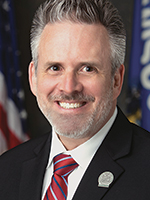
Rep. David Steffen
Sponsored bills
Maddy summaryAB 817 increases the state reimbursement for certified veteran organizations providing military funeral honors from $50 to $100 per funeral. It directly affects local veteran groups certified by the department to perform these honors. The bill amends statute 45.60(2) to allow this higher reimbursement amount from a specific state fund, covering costs incurred by these organizations. The change applies to all military funerals in the state where honors are provided.
Maddy summaryAB 715 regulates "nonrecourse civil litigation advances," where companies provide cash to people with pending lawsuits in exchange for a share of settlement proceeds. It directly affects consumers (individuals with legal disputes) and companies offering these advances by setting strict limits: maximum $100,000 per advance, finance charges capped at the weekly prime rate plus 10%, and repayment must occur within 36 months. The bill requires clear contract disclosures (in bold, 12-point font) about costs, the right to cancel within 5 days, and prohibits companies from controlling lawsuits or paying referral fees to attorneys. Violations incur fines of $25-$5,000 per offense, with additional penalties for willful violations.
Maddy summaryAB 714 requires health insurers, administrators, and pharmacy benefit managers to provide large employers (those with 50+ employees) full access to their health claims data. The bill states that employers (as "plan sponsors") own this data, including detailed records of high-cost claims (exceeding $25,000 for medical, $10,000 for pharmacy), billing statements, payment histories, and rebate information. Insurers and pharmacy managers must deliver this data within 7 business days of a written request, in electronic format, and cannot sell the data without employer and individual permission. The law aims to give employers greater transparency into their health plan costs and administration.
Maddy summaryAB 752 makes it a Class H felony to use an absentee ballot drop box, U.S. mail, or commercial carrier while committing election fraud under existing law (s. 12.13). The bill directly affects individuals who attempt to fraudulently submit absentee ballots through these specific methods. Its key provision increases penalties for this type of fraud by classifying it as a felony rather than a lesser offense. The law focuses solely on the method of submission during fraudulent activity, not on the act of voting itself.
Maddy summaryAB 711 increases funding for the Family Foundations home visitation program by $1.2 million in fiscal year 2026-27. This appropriation directly supports the Department of Children and Families' program under section 48.983, which provides home visits to families with young children. The bill modifies the existing budget allocation without changing program eligibility or requirements. It was introduced in December 2025 with multiple co-authors and is currently under review by the Committee on State Affairs.
Maddy summaryAB 808 creates a "wetland assured delineation program" that allows certified professionals to perform wetland boundary identification work with the same legal effect as government-verified reports. It directly affects environmental consultants and wetland delineators who meet specific qualifications (e.g., associate degree with 8+ years experience or bachelor’s with 5+ years) and apply for certification through the Department of Natural Resources. Key provisions include requiring annual applications, mandating reports by March 15 (with limited 12-month extensions), and allowing certified delineators’ work to bypass department confirmation under certain conditions. The program also establishes department oversight through performance reviews and audits to ensure compliance with wetland delineation standards.
Maddy summaryAB 794 clarifies that healthcare workers using digital platforms to book shifts at facilities remain independent contractors - not employees - under specific conditions. The bill requires platforms to meet 15 criteria, such as allowing workers to freely accept/reject shifts, set their own rates, avoid mandatory availability, and not restrict other work. It directly affects healthcare workers and platforms connecting them to facilities, ensuring they retain contractor status if all conditions are met. The law explicitly excludes these workers from employee protections under certain statutes, focusing solely on shifts booked through compliant platforms.
Maddy summaryAJR 1 is a constitutional amendment requiring voters to present valid photo identification to cast a ballot in any election. It directly affects all voters in state elections, specifying that acceptable ID must be issued by the state, federal government, a federally recognized tribal entity, or a college/university in the state. The bill mandates the legislature to define acceptable ID types and establish exceptions, while allowing voters without ID on election day to cast a provisional ballot and submit ID later. This proposal, on second consideration after a 2023 rejection, would be submitted to voters in April 2025 if approved.
Maddy summaryAJR 3 is a symbolic resolution that officially recognizes January 2025 as "Human Trafficking Awareness and Prevention Month" in Wisconsin. It does not create new laws or allocate funding but aims to raise public awareness about human trafficking, highlighting its prevalence across all 72 Wisconsin counties and its impact on vulnerable groups like youth and individuals with disabilities. The resolution aligns with broader state and national efforts to combat trafficking through education and community engagement. As a procedural resolution, it focuses solely on designation and awareness, with no direct policy changes or obligations for state agencies.