

Maddy summaryAB 460 changes eligibility rules for parental choice education programs (like school vouchers or education savings accounts). It allows a student to qualify for such a program if a sibling or dependent child of their parent/guardian is already enrolled in the program. This directly affects families with multiple children, making it easier for additional children in the same household to access these programs once one child qualifies. The bill is currently under review by the Rules Committee after passing the Education Committee.
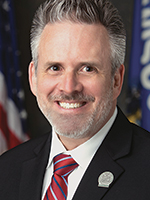
Rep. David Steffen
Sponsored bills
Maddy summaryAB 308 prohibits Wisconsin state and local government funds from being used to pay for health services for individuals without legal immigration status. The bill directly affects undocumented residents by blocking state/local funding for their healthcare. Key provisions ban state/local funds for such services (except where federal law requires payment or where applying the ban would cause loss of federal funds). The law does not restrict federal healthcare programs or funding. This is a policy change affecting state budget allocations, not a procedural measure.
Maddy summaryAB 602 requires the state department to annually submit a list of qualifying scholarship granting organizations (SGOs) to the U.S. Treasury and certify the state's authority to participate in the federal tax credit program for donations to these organizations. It mandates that the governor must decide by July 1, 2026, whether to join this federal program, which would allow residents to claim tax credits for contributions to SGOs starting in 2027. The bill directly affects state administrative processes, scholarship organizations, and donors who may qualify for federal tax benefits. It does not create new tax credits but establishes the state's procedural framework for eligibility under existing federal law (26 USC 25F).
Maddy summaryAB 248 creates a new statutory section (17.03(10m)) clarifying how vacancies are handled in appointive state offices with fixed terms. It defines "appointive state office" to include positions in state departments, agencies, boards, commissions, and authorities (but excludes the legislature and courts). The bill specifies that when an appointee's fixed term expires, the vacancy is filled under existing procedures - without changing current rules. This is a procedural clarification, not a policy change, affecting state government appointees but not altering how vacancies are currently managed.
Maddy summaryAB 595 updates Wisconsin's voter registration system to better comply with federal voting laws. It requires the Elections Commission to verify U.S. citizenship for all voters by matching registration data with state databases from the Department of Transportation, State Registrar, and Department of Corrections. Municipal clerks must report monthly on voter status changes, including removals due to citizenship issues, and share audit results with election officials. The bill directly affects election administrators, state agencies handling voter data, and voters whose eligibility is verified through these new processes.
Maddy summaryAB 604 would require Wisconsin's Department of Health Services to request a federal Medicaid waiver to provide pre-release medical coverage for incarcerated individuals eligible for Medicaid. It specifically covers case management, medication-assisted treatment for substance use disorders, and a 30-day supply of prescription medications for up to 90 days before release. This bill directly affects incarcerated people who qualify for Medicaid, aiming to improve continuity of care upon reentry. The waiver request must be submitted by January 1, 2027, to allow state and federal reimbursement for these services. The bill focuses on concrete policy changes to expand healthcare access during a critical transition period.
Maddy summaryAB 131 establishes a municipal grant program to test for PFAS (perfluoroalkyl and polyfluoroalkyl substances) in public water systems and fund source reduction measures. It allows water utilities to use customer service fees to cover up to half the cost of PFAS source reduction for connected customers, if cheaper than facility upgrades. The bill also creates eligibility rules for disadvantaged communities extending service due to PFAS contamination and directs PFAS contamination claims to an existing landowner grant program. These provisions directly affect municipal water systems, public utilities, and communities addressing PFAS in drinking water.
Maddy summaryAB 130 exempts specific groups from certain PFAS enforcement actions under Wisconsin's spills law if they allow the state to clean up contaminated land at no cost to them. It directly affects landowners, fire departments, airports, wastewater spreaders, and waste facilities that handled PFAS-contaminated materials legally. The bill creates exemptions for those who spread permitted biosolids, owned land where such spreading occurred, used PFAS in emergency response (per federal rules), accepted PFAS waste, or own property not responsible for the contamination origin. This applies only to enforcement sections related to PFAS contamination under the spills law, not all PFAS regulations.
Maddy summaryThis bill updates Wisconsin's licensing requirements for speech-language pathologists working in public schools by allowing the Department of Public Instruction to issue licenses to individuals who already hold valid licenses from the state's hearing and speech examining board or possess a valid compact privilege. The legislation modifies existing statutes and administrative rules to streamline the licensing process, ensuring that qualified professionals can transition from clinical practice to school employment without redundant certification steps. Additionally, the bill includes broader changes to teacher licensing standards, such as requiring full semester student teaching for all teacher preparation programs, including those outside the state. These provisions aim to align school-based speech-language pathology credentials with established professional standards while maintaining oversight through the state superintendent.
Maddy summaryAB 907 updates state lottery drawing procedures by requiring all drawings to use random selection methods (via mechanical, electrical, or computerized systems) and mandating annual independent audits. The bill repeals outdated rules and creates new requirements for the lottery department to ensure drawing randomness and security. These changes directly affect the state lottery operations, requiring them to verify processes through external audits each year. The law focuses on transparency and technical safeguards without altering lottery prizes or participation rules.