

Maddy summaryAB 923 creates a civil legal pathway for victims of sexual extortion (defined under statute 942.095) to sue for physical injury, emotional distress, or property loss. It allows victims, their parents/guardians (if minors), or estate representatives (in cases involving suicide linked to the extortion) to file lawsuits regardless of any criminal case outcome. The bill includes strong privacy protections, permitting plaintiffs to use initials instead of full names in court documents and allowing courts to issue orders shielding victims from public disclosure or unnecessary examinations. If successful, plaintiffs can recover damages for emotional distress, punitive damages, attorney fees, and other litigation costs.
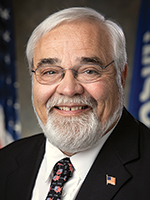
Rep. Jeff Mursau
Sponsored bills
Maddy summaryAB 968 would require virtual currency kiosks (machines exchanging cash for digital currency or vice versa) to obtain state licenses, display mandatory fraud warnings, and verify customer identities using government ID and photos. It sets a $500 daily transaction limit, caps fees at 3% or $5 per transaction, and mandates detailed receipts showing all transaction details. The bill directly affects kiosk operators and customers, aiming to prevent fraud through identity checks and clear transaction records. Currently under review in the Financial Institutions committee.
Maddy summaryAB 969 creates a formal drug donation program to redistribute unused medications to eligible patients. It defines key terms like "donor" (including pharmacies, hospitals, and individuals), "eligible patient" (indigent, uninsured, or underinsured individuals), and "recipient" (medical facilities or pharmacies that can receive donations). The bill allows donors to contribute drugs to participating facilities, with recipients permitted to charge a handling fee covering actual costs (e.g., storage, shipping), while prohibiting donations of certain FDA-regulated drugs requiring patient enrollment. This program aims to provide access to medications for underserved patients through a structured, safe, and cost-transparent system.
Maddy summaryAB 759 allows individuals with deferred action under the federal DACA program to obtain state occupational licenses (like nursing or cosmetology credentials) if they have valid federal work permits. It requires state licensing agencies to verify DACA recipients' federal work authorization through official systems before issuing licenses. Licenses issued under this law expire when the federal work permit expires, and recipients must renew both simultaneously. The bill explicitly states it does not grant eligibility for public benefits beyond occupational credentials.
Maddy summaryThis bill creates "independence accounts" allowing individuals to save up to $15,000 annually from their gross earnings without that money counting toward Medicaid asset limits. It specifically excludes assets acquired through inheritance when determining eligibility for benefits. The department must seek federal approval to implement this change, though the program would take effect if federal authorities approve. The bill directly affects people applying for or receiving Medicaid benefits in the state.
Maddy summaryAB 194 modifies Wisconsin's housing programs under the Wisconsin Housing and Economic Development Authority. It redefines "developer" to include tribal housing authorities (Section 3) and clarifies "residential housing" to include tax-exempt reservation or trust lands (Section 4). The bill reduces maximum loan limits for housing projects from 33% to 20% of development costs (Section 10) and from 25% to 10% (Section 11). It also requires local governments to submit cost-reduction analyses showing how zoning or fee changes lowered housing costs (Section 7), directly affecting developers, tribal entities, and local governments administering housing programs.
Maddy summaryAB 454 establishes a statewide "workforce home loan" revolving loan program to help low-to-moderate income workers purchase homes. It creates a new fund that will provide loans to first-time homebuyers whose household income is at or below 100% of the local area median income, with requirements including no prior residential property ownership in the past three years and meeting specific debt-to-income and credit score standards (minimum 580 FICO score for deferred payment options). The program uses repayments from existing loans to replenish the fund, allowing it to serve more borrowers over time. This directly affects eligible workforce households in housing markets across the state who qualify under the defined income and underwriting criteria.
Maddy summaryAB 445 updates procedures for county registers of deeds regarding property records and transportation project maps (plats). It revises how documents are numbered, indexed, and recorded - requiring unique sequential numbers for each document and clarifying "legal description" definitions for property records. These changes directly affect county offices handling property deeds, mortgages, and transportation project plats, streamlining administrative processes without altering fees or substantive rights. The bill focuses on procedural consistency in record-keeping across statutes.
Maddy summaryAB 373 creates a refundable $2,000 individual income tax credit for parents who experience a stillbirth in the state, as documented by a fetal death report. The credit is refundable, meaning parents who owe less in income tax than the credit amount will receive the difference as a cash payment from state funds. Eligibility requires the stillbirth to meet state reporting criteria (per §69.18), and rules specify $2,000 for joint filers per stillbirth or $1,000 each for unmarried parents or separate filers. The credit must be claimed within the standard tax filing deadline and cannot be used by nonresidents or for partial tax years.
Maddy summaryAB 601 amends the statute to exclude certain sports wagers from the legal definition of "bet." Specifically, it exempts wagers made by people physically in the state using mobile devices if the server is on tribal lands and the wager follows an Indian gaming compact entered before April 1, 1993. This directly affects tribal gaming operations that operate under pre-1993 compacts. The bill clarifies that such wagers - conducted via tribal servers under existing agreements - are not considered "bets" under state gambling laws. This is a technical definition change, not a new policy or tax.