

Maddy summaryAJR 17 proclaims the week of April 14, 2025, as "Two Lights for Tomorrow Week" in the state of Wisconsin. It encourages government buildings, public spaces, and citizens to display two lights during that week to commemorate the 250th anniversary of the nation's founding and reflect on shared history and values.
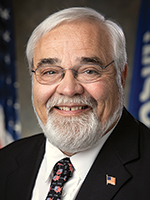
Rep. Jeff Mursau
Sponsored bills
Maddy summaryThis bill would have modified Wisconsin's farmland preservation tax credit rules to exclude land used for non-accessory photovoltaic solar energy systems from eligibility. Specifically, it aimed to prevent landowners from receiving tax credits for acres occupied by solar installations that are not considered secondary uses of the property. The legislation sought to apply these changes to taxable years beginning after December 31, 2023. Although the bill passed the legislature, it was vetoed by the Governor and did not become law.
Maddy summaryThis bill updates Wisconsin laws regarding when deer baiting is prohibited in counties where chronic wasting disease or bovine tuberculosis has been found. It requires that bans on baiting be based only on confirmed cases in free-roaming animals and limits how long these bans can last. Specifically, baiting restrictions cannot extend more than three years after a positive test in a county where the disease was found, or more than two years in counties within 10 miles of such a case. These changes aim to clarify the criteria for enforcing deer baiting rules while setting specific time limits on those restrictions.
Maddy summaryThis bill would have exempted private individuals who sell their own cars from legal liability for accidents or violations that occur after the buyer takes possession of the vehicle. Under the proposed rules, a seller would be protected from civil and criminal claims if they properly signed over the title and both parties intended to transfer ownership, even if the official registration paperwork was not yet completed. The exemption specifically applies to private sales and excludes licensed dealers or wholesalers, while still holding sellers accountable if death or injury resulted from willful or reckless behavior. Although the legislation was passed by the legislature, it was vetoed by the Governor and did not become law.
Maddy summaryThis bill modifies the Wisconsin married persons credit by increasing the maximum benefit amount for spouses with lower earned income. Specifically, it raises the credit limit from $480 to $870 for taxable years beginning after December 31, 2023. The change applies to married couples filing joint state tax returns where one spouse has earned income. The legislation was ultimately vetoed by the Governor and did not become law.
Maddy summaryThis bill establishes specific rules for election observers in Wisconsin, ensuring they have uniform and non-discriminatory access to all stages of the election process, including voting, tabulation, and recounts. It mandates that officials designate observation areas within a set distance from voter registration and name announcement tables to allow clear visibility of public election activities. The legislation also requires that all recount steps be conducted publicly and grants candidates and their representatives the right to view and identify ballots and materials during these proceedings. Additionally, it sets penalties for election officials who fail to provide proper access or violate the public nature of recounts, including potential jail time or fines.
Maddy summaryThis Wisconsin bill proposes to lower individual income tax rates for residents in the third tax bracket while simultaneously expanding the retirement income subtraction available to retirees. The legislation would allow more retirees to exclude a larger portion of their pension and retirement account withdrawals from state taxable income, with specific provisions added for those who are permanently and totally disabled. Although the bill passed the legislature, it was vetoed by the Governor and ultimately failed to become law.
Maddy summaryThis Wisconsin bill redefines the geographic boundaries of several state assembly districts to reflect population changes. It directly affects residents in counties such as Brown, Door, Kewaunee, and Outagamie by specifying which towns, cities, and census tracts belong to each district. The legislation uses precise legal descriptions, including census tract numbers and block identifiers, to map out the new district lines. Although the bill passed the legislature, the Governor vetoed it, and it did not become law.
Maddy summaryThis bill removes specific rules that currently ban hunting wild animals with dogs in northern Wisconsin between May 1 and June 30. It also lifts restrictions on training dogs to hunt and on competitive dog trials in that same area and time frame. The changes apply to hunters, dog trainers, and participants in dog sports who operate in the region north of certain east-west highways. By repealing these administrative code sections, the legislation allows these activities to proceed year-round instead of limiting them to the summer months.
Maddy summaryThis Wisconsin bill expands the state tax deduction for retirement income, allowing more people to exclude certain pension and savings withdrawals from their taxable income. It specifically increases the annual deduction limit and adds new categories of eligible payments, including those from the U.S. Coast Guard, the National Oceanic and Atmospheric Administration, and the Public Health Service. The legislation also clarifies the definition of disability for individuals under 65 who receive disability payments from non-retirement plans. Although the bill passed the legislature, the Governor vetoed it, and the state legislature did not override that veto, meaning the proposed changes did not become law.