

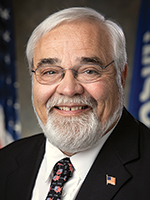
Photo of Jeff Mursau
R Wisconsin Assembly · District 36 On the 2026 ballot

Rep. Jeff Mursau

Compare
Total votes
811
all sessions
Attendance
99%
7 missed
Near the chamber average
With party
99%
of cast votes
Near the chamber average
Bipartisan score
0%
crosses aisle rarely
Near the chamber average
Sponsored
1,656
bills & resolutions
Near the chamber average
Committees
5
assignments
1,656 bills and resolutions

Sponsored bills

Total
1,656
Primary
1,656
Co-sponsor
0
This page
1,656
matching current filters
Primary AB 154
Failed · Wisconsin Assembly · Lead sponsor
Relating to: use of certified seed potatoes in planting potatoes and providing a penalty. (FE)

Maddy summaryAB 154 requires potato farmers planting 5 or more acres in Wisconsin to use officially certified seed potatoes, directly affecting commercial potato growers. The bill allows the department to waive this requirement for specific potato varieties if certified seed is unavailable and poses no serious disease risk, with conditions like geographic restrictions. Violations trigger a 72-hour order to remove and destroy non-compliant seed potatoes, with penalties of up to $5,000 plus $5,000 per acre planted in violation. The bill also permits penalty waivers if violations are corrected by destroying affected potatoes per department orders.

Failed Mar 23, 2026 0 co-sponsors
Primary AB 33
Failed · Wisconsin Assembly · Lead sponsor
Relating to: representations depicting nudity and providing a penalty.

Maddy summaryAB 33 creates new laws prohibiting the non-consensual creation and distribution of technology-generated intimate images (like deepfakes) using someone's recognizable likeness. It specifically bans posting, sharing, or exhibiting such "synthetic intimate representations" with intent to coerce, harass, or intimidate the person depicted. The bill also prohibits reproducing private intimate images without the depicted person's consent. These provisions directly protect individuals whose likenesses could be used in non-consensual intimate content, targeting harmful uses of AI and digital tools. The law defines "synthetic intimate representation" as technology-generated content using identifiable features to depict intimate scenes, regardless of artificial elements.

Failed Mar 23, 2026 0 co-sponsors
Primary AJR 80
Failed · Wisconsin Assembly · Lead sponsor
Relating to: declaring May 2025 and May 2026 as Amyotrophic Lateral Sclerosis Awareness Months.

Maddy summaryAJR 80 is a symbolic resolution declaring May 2025 and May 2026 as Amyotrophic Lateral Sclerosis (ALS) Awareness Months in Wisconsin. It does not create new laws or policies but formally recognizes the impact of ALS on patients and families while promoting public awareness of the disease. The resolution highlights ALS as a progressive, fatal neurodegenerative condition with no known cure, emphasizing the importance of research and support for those affected. It directly affects Wisconsin residents by designating these months for community education and advocacy efforts focused on ALS.

Failed Mar 23, 2026 0 co-sponsors
Primary AB 369
Failed · Wisconsin Assembly · Lead sponsor
Relating to: a tax credit for employer-provided child care. (FE)

Maddy summaryAB 369 creates a state tax credit for businesses that provide child care, allowing them to claim a credit equal to the federal employer-provided child care credit (under IRS Section 45F) on their state tax return. The credit applies to taxable years beginning after December 31, 2024, and directly affects businesses that already claim the federal credit. Key provisions require the state credit to match the federal amount claimed, prohibit claims for out-of-state child care expenses, and mandate adjustments if federal tax increases under Section 45F(d). This bill aligns state tax treatment with the federal credit system without changing the federal rules.

Failed Mar 23, 2026 0 co-sponsors
Primary AB 255
Failed · Wisconsin Assembly · Lead sponsor
Relating to: assisted living facility referral agencies and providing a penalty.

Maddy summaryAB 255 requires referral agencies that connect prospective residents to assisted living facilities to disclose key financial details to those residents before making referrals. Specifically, agencies must reveal any business relationships with facilities, the exact fixed referral fee paid by the facility, and that they only list facilities with which they have contracts. Prospective residents can also terminate an agency's services at any time, including stopping the use of their personal information. Violations carry penalties of up to $1,000 per violation, enforced by the state attorney general or local district attorneys. The bill directly affects referral agencies and prospective residents in Wisconsin assisted living facilities.

Failed Mar 23, 2026 0 co-sponsors
Primary AB 92
Failed · Wisconsin Assembly · Lead sponsor
Relating to: spinal cord injury research grants and symposia and making an appropriation. (FE)

Maddy summaryAB 92 creates a Spinal Cord Injury Council in Wisconsin's Department of Health Services to oversee research funding. It allocates $2.5 million biennially for grants supporting research into new treatments for spinal cord injuries, including pharmaceutical, medical device, and rehabilitative approaches. The council - composed of researchers, patients, veterans, and family members - sets grant criteria, reviews applications, and recommends awardees. Grant recipients must present findings at department-hosted symposia (held no more than once every two years) and report annual results to the legislature. This directly affects Wisconsin-based researchers and medical institutions conducting spinal cord injury research.

Failed Mar 23, 2026 0 co-sponsors
Primary AB 235
Failed · Wisconsin Assembly · Lead sponsor
Relating to: workforce literacy grant program. (FE)

Maddy summaryAB 235 establishes a state-funded grant program to support workforce literacy initiatives. It provides annual grants to nonprofit organizations located in the state that serve adult literacy programs across more than half of the state's counties. Grant funds can be used for workforce readiness training, GED exam preparation, digital literacy skills, and supporting other job-related literacy services. The bill is currently pending passage after a committee recommended approval with a 7-2 vote. This program directly affects nonprofits delivering statewide adult education services and aims to strengthen workforce skills through targeted funding.

Failed Mar 23, 2026 0 co-sponsors
Primary AB 448
Failed · Wisconsin Assembly · Lead sponsor
Relating to: nonprofit agricultural organization health benefit coverage.

Maddy summaryAB 448 allows eligible nonprofit agricultural organizations (specifically, long-standing, member-directed cooperatives established before 1922 and meeting IRS 501(c)(5) requirements) to provide health benefit coverage exclusively to their members and members' families. Key provisions require these organizations to offer coverage in all state counties, provide written notice clarifying this is not health insurance, cover all physician services without preexisting condition exclusions beyond six months, and maintain sufficient financial reserves via annual actuarial reviews. The bill also mandates reinsurance with state-authorized companies and establishes complaint resolution processes mirroring those for standard health insurance. This framework directly affects qualifying agricultural co-ops and their members, creating a regulated pathway for member-only health benefits while ensuring basic consumer protections.

Failed Mar 23, 2026 0 co-sponsors
Primary AB 209
Failed · Wisconsin Assembly · Lead sponsor
Relating to: creating a hazard mitigation revolving loan program, creating a Great Lakes erosion control revolving loan program, providing an exemption from emergency rule procedures, granting rule-making authority, and making an appropriation. (FE)

Maddy summaryAB 209 creates two revolving loan programs: one for Great Lakes shoreline erosion control and another for hazard mitigation projects. It directly affects municipalities and homeowners threatened by erosion along Lake Michigan or Lake Superior, as well as local governments seeking funds for hazard mitigation. The bill establishes a $5 million appropriation from the environmental fund for the Great Lakes program and a separate hazard mitigation revolving loan fund using federal funds, state transfers, and loan repayments. All repaid loan principal and interest are recycled into the programs, creating a self-sustaining funding mechanism.

Failed Mar 23, 2026 0 co-sponsors
Primary AB 178
Failed · Wisconsin Assembly · Lead sponsor
Relating to: expanding the treatment alternatives and diversion programs. (FE)

Maddy summaryAB 178 creates a new state grant program to fund county and tribal programs that offer treatment alternatives to jail for people facing criminal charges related to substance use or mental health issues. It requires these programs to use evidence-based treatment, integrate mental health services, and include graduated incentives for participants. The bill directly affects criminal defendants with substance use disorders or mental illness who qualify for these programs, as well as counties and tribes receiving grants. Key provisions include mandating collaboration between courts, prosecutors, public defenders, and health agencies to develop and oversee the programs, while exempting participants in approved programs from losing good time credit in jail.

Failed Mar 23, 2026 0 co-sponsors
Showing 181 to 190 of 1,656 bills
Previous 1 … 18 19 20 … 166 Next