

Maddy summaryAB 176 repeals the financial eligibility requirement (section 46.87(5m)) for Wisconsin's Alzheimer's family and caregiver support program. It updates two sections of the law to remove references to this repealed requirement, clarifying that eligibility now depends on meeting the financial criteria previously defined under the repealed section. The bill directly affects Alzheimer's patients and their caregivers in residential facilities who previously needed to satisfy these financial standards to receive program services. The key change is eliminating the specific financial threshold that determined program access, streamlining eligibility without creating new benefits or funding. This is a technical adjustment to existing statutes, not a substantive policy change.
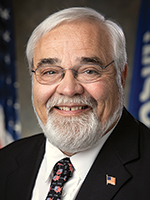
Rep. Jeff Mursau
Sponsored bills
Maddy summaryAJR 6 is a symbolic resolution passed by the Wisconsin State Legislature declaring support for nuclear and fusion energy as critical clean energy sources. It states the legislature's commitment to advancing nuclear power, fusion technology, and related innovations to meet energy demands, reduce carbon emissions, and create high-paying jobs - citing current nuclear plants powering 1.2 million homes and avoiding 6.4 million tons of carbon emissions annually. The resolution does not create new laws or allocate funding but formally endorses expanding nuclear energy development. The bill was introduced in February 2025, referred to committees, and ultimately laid on the table in June 2025 without further action.
Maddy summaryAB 26 corrects a misleading title and focuses on background check procedures, not juror protection. The bill requires agencies (like child welfare departments) to verify final court dispositions for certain serious crimes within 5 years by contacting courts, if background checks indicate potential violations. It specifically targets offenses including battery (e.g., sections 940.20, 940.202) and threats listed in statutes. This affects agencies conducting background checks for employment or services, ensuring they confirm pending or recent convictions before making decisions.
Maddy summaryAB 233 amends Wisconsin law to expand funding for child advocacy centers by adding two new recipients: the Lakeshore Regional Child Advocacy Center in Sheboygan County and a statewide "Child Advocacy Centers of Wisconsin" entity. It authorizes $17,000 annually per center for education, training, and quality assurance activities related to child maltreatment response. The bill directly affects existing centers (like those in Milwaukee, Kenosha, and Racine Counties) and the newly added entities by securing their grant funding from the Department of Justice’s existing appropriation. The policy change specifies concrete funding recipients and mechanisms without altering eligibility criteria for current centers.
Maddy summaryAB 108 requires the Public Service Commission to conduct a study identifying potential sites for nuclear power and fusion energy facilities, including advanced reactors, by a specific deadline. It also mandates that the Commission must make a final decision on applications for large nuclear facilities within 150 days of the application being deemed complete, or automatically approve the project. This directly affects applicants seeking permits for advanced nuclear power plants and the Commission's approval process. The bill aims to streamline approvals for new nuclear energy projects while establishing a formal study to identify suitable locations.
Maddy summaryAB 187 creates a program providing a one-time $250 completion service award to volunteer firefighters after they complete 60 hours of training. Municipalities must match this award with their own payments, and the state will provide a 2:1 match for municipal contributions toward length-of-service awards (up to $390 annually), which are tax-deferred benefits based on service years. The bill requires a 10-year vesting period for length-of-service benefits and sets rules for closing inactive accounts after 12 months of inactivity. It directly affects volunteer firefighters, emergency medical responders, and emergency medical services practitioners in municipalities operating volunteer departments or contracting with volunteer fire companies.
Maddy summaryAB 279 creates a state grant program to help municipalities and eligible nonprofits recruit new residents from outside the state. The program provides grants (capped at $500,000 per municipality annually) to cover costs of talent recruitment initiatives, with half the funds paid upfront and the second half released only if half the target number of relocating households is met. Households must earn at least $55,000 annually, live outside the state when applying, and commit to relocating to qualify for incentives. Recipients must submit detailed semiannual reports tracking applications, approved households, costs, incomes, and economic impacts like tax revenue.
Maddy summaryAB 53 amends Wisconsin law to classify intentionally causing bodily harm or threatening harm to a community service officer (or their family) as a Class H felony under specific conditions. It directly affects community service officers and their families by creating a new felony charge when the harm occurs in response to the officer's official duties. The bill requires that the perpetrator knew the victim was a community service officer (or family member) and that the act was retaliation for an official action taken by the officer. This policy change strengthens criminal penalties for attacks targeting these officers during their work, without altering existing protections for other law enforcement roles.
Maddy summaryThis joint resolution (AJR 71) is a ceremonial honor recognizing Jerry Apps for his decades-long contributions to Wisconsin's heritage. It specifically acknowledges his work as a 4-H advocate, UW-Madison professor, author of over 50 books on Wisconsin history and rural life, and recipient of numerous awards. The resolution has no legal effect or policy changes - it solely serves to formally honor his legacy through legislative recognition. It was introduced by multiple legislators and referred to the Rules Committee.
Maddy summaryAB 318 requires fair organizations (like county fairs, agricultural societies, or associations) seeking state aid to submit two annual reports. Within 30 days after each fair, they must file a detailed report verifying that gambling devices, most alcohol sales (except fermented malt beverages and wine), and "immoral" exhibitions were prohibited at the event. By January 31st each year, they must also submit a finance report covering receipts, disbursements, attendance, and other required details. State aid payments are tied to submitting these reports on time, ensuring compliance before funds are released.