

Maddy summaryAB 598 allows patient representatives to consent to health care facility admissions for incapacitated individuals without requiring a court-appointed guardian or protective placement petition. The bill creates a defined "patient representative" role, requiring two medical professionals (e.g., two physicians or one physician plus an advanced practice clinician) to certify incapacity based on medical need - not age, disability, or eccentricity. Patient representatives gain authority to make health care decisions, enroll individuals in Medical Assistance, and authorize health care expenses similar to a guardian, but only for non-developmental disability and non-mental illness cases. This change streamlines admissions for incapacitated patients while mandating 72-hour notifications to county agencies about the certification.
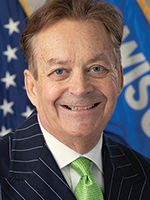
Rep. Rob Kreibich
Sponsored bills
Maddy summaryAB 666 creates penalties for individuals who fraudulently claim ownership of another person's unclaimed property without consent. It imposes civil penalties equal to the full value of the property (plus $1,000-$2,500 for non-compliant claims) and criminal penalties of a Class I felony for intentional fraud. The bill requires the state administrator to publicly post names and penalty amounts of offenders online for 12 months. This directly affects claimants who file false claims, not property owners or administrators.
Maddy summaryAB 61 increases penalties for harming police or fire department animals used in official duties. It creates three penalty tiers: a Class A misdemeanor for negligent harm, a Class I H felony for intentional injury, and a Class H G felony for intentional killing. The law applies specifically to animals working for law enforcement or fire departments during their duties. Penalties depend on the perpetrator's intent (intentional vs. negligent) and the outcome (injury vs. death). This bill, enacted as 2025 Wisconsin Act 28, directly affects individuals who intentionally or negligently injure or kill such animals.
Maddy summaryAB 136 makes it a Class A misdemeanor to intentionally impersonate a peace officer, firefighter, emergency medical services practitioner, or emergency medical responder with the intent to mislead others into believing the person is actually an emergency personnel member. The bill directly affects individuals who falsely claim these roles to deceive others, such as by wearing uniforms or using official equipment. Key provisions define specific penalties for each type of impersonation, clarifying that the offense applies when someone acts with deceptive intent. This legislation updates Wisconsin law to explicitly classify these impersonations as criminal acts with standardized misdemeanor penalties.
Maddy summaryAB 452 requires local governments (municipalities, towns, or counties) to offer land developers an informal meeting before they submit subdivision development plans (preliminary or final plats). This "conceptual review" lets developers discuss their plans with local officials to get feedback on whether the proposal meets local requirements. The review and any feedback provided are not binding on either the developer or the local government. The bill modifies existing rules about subdivision approvals to add this pre-submission step, while keeping the standard process for reviewing formal plat submissions unchanged.
Maddy summaryAB 237 extends the age limit for infants covered under Wisconsin's safe haven law from 72 hours to 30 days. This means parents can now safely relinquish an infant to a hospital or emergency responder without legal consequences if the child is 30 days old or younger, instead of only 72 hours. The bill modifies three statutes to update references to "72 hours" to "30 days" in the legal definitions for safe haven surrender, court findings of relinquishment, and related procedures. It directly affects parents seeking to surrender newborns and impacts hospitals, law enforcement, and child welfare systems that handle these surrenders. The change provides a longer window for parents to make this decision while maintaining the legal framework for safe relinquishment.
Maddy summaryAB 677 creates a new criminal offense for "grooming a child for sexual activity," defined as manipulating a child to facilitate sexual abuse. This law directly affects individuals convicted of such grooming behavior, adding it as a punishable offense under Wisconsin statutes like 948.02 (sexual exploitation of a child) and 948.072 (grooming). Key provisions amend multiple laws to include grooming as a disqualifying factor for home placements, licensing for childcare, and reporting requirements, while defining it as a "serious crime" for entities serving minors. The bill does not change existing penalties for actual sexual abuse but establishes grooming itself as a distinct criminal violation with specific legal consequences.
Maddy summaryAJR 95 designates October as Domestic Violence Awareness Month in Wisconsin. This symbolic resolution does not create new laws or funding but formally recognizes the importance of addressing domestic violence. It aims to honor survivors, remember those lost to domestic violence, and acknowledge the work of advocates and service providers across the state. The bill passed unanimously and is now official, aligning Wisconsin with national observances to promote awareness.
Maddy summaryAJR 96 is a symbolic resolution designating October 2025 and October 2026 as "Breast Cancer Awareness Months" in Wisconsin. It does not create new laws, funding, or obligations; it is a ceremonial proclamation to promote public awareness of breast cancer. The resolution cites Wisconsin-specific breast cancer statistics and screening recommendations to justify the designation. As a procedural joint resolution, it has no direct policy impact but serves to highlight this public health issue.
Maddy summaryAJR 97 designates October 2025 as "Careers in Construction Month" in Wisconsin. The resolution highlights construction as a major industry employing nearly 6% of Wisconsin's workforce and emphasizes career pathways through apprenticeships without student debt. It encourages employers, schools, and communities to host job fairs and events during that month to promote construction careers. The bill does not create new laws or affect specific individuals - it is a symbolic recognition of the industry’s role in building homes, schools, and infrastructure.