

Maddy summaryAB 132 creates a "nuclear power summit board" to organize, promote, and host a Wisconsin nuclear power summit in Madison, requiring the event to occur within one month after a specific university academic term begins. The board includes appointed legislators (two senators, two assembly members), the Wisconsin Economic Development Corporation CEO, a governor-appointed member, and nonvoting industry/faculty representatives. It is funded through a dedicated appropriation from the Wisconsin Economic Development Corporation, with the summit allowing free attendance for Wisconsin residents and varying registration fees for others. The board must disband 180 days after the summit concludes, returning remaining assets to the University of Wisconsin-Madison's nuclear engineering program.
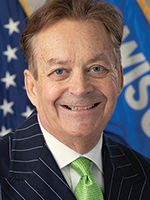
Rep. Rob Kreibich
Sponsored bills
Maddy summaryAB 176 repeals the financial eligibility requirement (section 46.87(5m)) for Wisconsin's Alzheimer's family and caregiver support program. It updates two sections of the law to remove references to this repealed requirement, clarifying that eligibility now depends on meeting the financial criteria previously defined under the repealed section. The bill directly affects Alzheimer's patients and their caregivers in residential facilities who previously needed to satisfy these financial standards to receive program services. The key change is eliminating the specific financial threshold that determined program access, streamlining eligibility without creating new benefits or funding. This is a technical adjustment to existing statutes, not a substantive policy change.
Maddy summaryAB 107 establishes a legal process for nonprofit cooperative health care associations (organized under §185.981) to convert into service insurance corporations. It requires the cooperative’s board to create a detailed conversion plan (including reasons, terms, and new name), which must be approved by the state insurance commissioner before member voting. If approved by both the commissioner and members, the cooperative files articles of conversion with the Department of Financial Institutions, becoming a new service insurance corporation that inherits all assets and obligations. This bill directly affects health care co-ops seeking to operate under a different corporate structure, with no financial compensation allowed for conversion-related work beyond regular salaries.
Maddy summaryAB 83 prohibits state and local governments from restricting the sale or use of motor vehicles based on their energy source (e.g., gasoline, electric, or hydrogen). It also extends this rule to other energy-powered devices, such as power tools or generators, if their significant functions rely on that energy source. The law explicitly allows government agencies to prioritize electric vehicles for their own fleets when purchasing. This ensures public policies do not discriminate against specific vehicle or device types based on energy use.
Maddy summaryAB 187 creates a program providing a one-time $250 completion service award to volunteer firefighters after they complete 60 hours of training. Municipalities must match this award with their own payments, and the state will provide a 2:1 match for municipal contributions toward length-of-service awards (up to $390 annually), which are tax-deferred benefits based on service years. The bill requires a 10-year vesting period for length-of-service benefits and sets rules for closing inactive accounts after 12 months of inactivity. It directly affects volunteer firefighters, emergency medical responders, and emergency medical services practitioners in municipalities operating volunteer departments or contracting with volunteer fire companies.
Maddy summaryAB 63 authorizes the Wisconsin Health and Educational Facilities Authority (WHEFA) to provide working capital loans to participating health, educational, and nonprofit institutions for operating expenses. It expands WHEFA's ability to make loans for facility projects, requiring security like mortgages and limiting loan amounts to project costs or approved working capital. The bill permits out-of-state projects only if they include a substantial Wisconsin component, as determined by WHEFA. It also sets salary caps for WHEFA's executive staff based on state pay scales for specific leadership roles.
Maddy summaryAB 279 creates a state grant program to help municipalities and eligible nonprofits recruit new residents from outside the state. The program provides grants (capped at $500,000 per municipality annually) to cover costs of talent recruitment initiatives, with half the funds paid upfront and the second half released only if half the target number of relocating households is met. Households must earn at least $55,000 annually, live outside the state when applying, and commit to relocating to qualify for incentives. Recipients must submit detailed semiannual reports tracking applications, approved households, costs, incomes, and economic impacts like tax revenue.
Maddy summaryThis joint resolution (AJR 71) is a ceremonial honor recognizing Jerry Apps for his decades-long contributions to Wisconsin's heritage. It specifically acknowledges his work as a 4-H advocate, UW-Madison professor, author of over 50 books on Wisconsin history and rural life, and recipient of numerous awards. The resolution has no legal effect or policy changes - it solely serves to formally honor his legacy through legislative recognition. It was introduced by multiple legislators and referred to the Rules Committee.
Maddy summaryAB 323 ratifies the Cosmetology Licensure Compact, an agreement between states to recognize each other's licenses. It allows cosmetologists, aestheticians, and manicurists licensed in another participating state to practice in this state without obtaining a new license, provided they hold a valid "multistate license" from a compact member. The bill amends licensing laws to explicitly permit using such out-of-state licenses (e.g., in sections 454.04(1)(a)2, 454.04(2)(a)) and defines key terms like "multistate license" and "compact." This directly affects licensed professionals seeking to work across state lines within the compact.
Maddy summaryAB 330 establishes clear deadlines and transparency requirements for handling complaints about voting system compliance with the federal Help America Vote Act (HAVA). It requires Wisconsin's Election Commission to acknowledge complaints within 5 business days, make final decisions within 89 days, and hold public hearings with recorded proceedings. The bill mandates that the Commission must take corrective action for valid complaints and publish dismissal details online and to the legislature. It directly affects the Commission's administrative process for resolving voting-related complaints, ensuring timely, public, and uniform enforcement of HAVA requirements.