

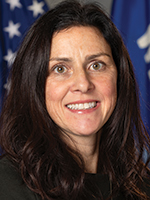
Photo of Lindee Brill
R Wisconsin House · District 27 On the 2026 ballot

Rep. Lindee Brill

Compare
Total votes
244
all sessions
Attendance
100%
1 missed
Lower than 100% of chamber peers
With party
98%
of cast votes
Near the chamber average
Bipartisan score
1%
crosses aisle rarely
Near the chamber average
Sponsored
176
bills & resolutions
Near the chamber average
Committees
7
assignments
176 bills and resolutions

Sponsored bills

Total
176
Primary
176
Co-sponsor
0
This page
176
matching current filters
Primary AB 1039
Failed · Wisconsin House · Lead sponsor
Relating to: penalty for the terrorist crimes against the occupants of a church and providing a penalty.

Maddy summaryThis bill increases penalties for individuals convicted of felony crimes targeting church occupants with intent to terrorize or intimidate them. It mandates a minimum one-year prison sentence (with no probation allowed) for such offenses and requires prosecutors to seek court approval before dismissing or amending charges. Additionally, it prohibits deferred prosecution programs for these cases and directs courts to verify the specific intent element during trials. The law applies to any felony where the defendant intended to terrorize two or more people inside a church.

Failed Mar 23, 2026 0 co-sponsors
Primary AB 1054
Failed · Wisconsin House · Lead sponsor
Relating to: public affairs network request for proposals.

Maddy summaryAB 1054 requires the state Department of Administration to create a public affairs network providing free, unedited live video and audio coverage of state government proceedings. This includes live streaming all public legislative sessions, prioritizing senate/assembly floor sessions, committee meetings, court proceedings, and related events, with permanent online archives maintained. The network must remain strictly nonpartisan, prohibit charging for access to key sessions (like assembly floor sessions), and ban using coverage for campaign purposes. It directly affects how the public accesses government transparency, ensuring free, real-time access to official proceedings without partisan editing or fees.

Failed Mar 23, 2026 0 co-sponsors
Primary AB 1062
Failed · Wisconsin House · Lead sponsor
Relating to: prohibited employment for former members of the Public Service Commission.

Maddy summaryAB 1062 prohibits former members of the Public Service Commission from working for 36 months with investor-owned public utilities or transmission companies in roles involving policy-making, executive decisions, operations management, or government relations. It directly affects former commissioners who seek employment in these specific high-level positions within utility companies. The law applies retroactively to those who left the Commission within the 12 months before the bill's effective date. This restriction aims to prevent potential conflicts of interest by limiting immediate post-Commission employment in regulated utility sectors.

Failed Mar 23, 2026 0 co-sponsors
Primary AB 897
Failed · Wisconsin House · Lead sponsor
Relating to: elimination of a jury trial in a child in need of protection or services (CHIPS) proceeding and substitution of judge in a proceeding for the termination of parental rights.

Maddy summaryAB 897 removes the right to a jury trial in Child in Need of Protection or Services (CHIPS) proceedings for non-Indian children. It also restricts requests to substitute judges in parental rights termination cases to only the parent and petitioner, limiting such requests to one per case and requiring them within 10 days of a new judge's assignment. The bill affects parents and children in these specific child welfare cases, directly changing court procedures for CHIPS petitions and termination hearings. These changes apply only to cases filed after the bill's effective date, with Indian children’s cases remaining exempt under federal law.

Failed Mar 23, 2026 0 co-sponsors
Primary AB 898
Failed · Wisconsin House · Lead sponsor
Relating to: registration of births by surrogate mother.

Maddy summaryAB 898 modifies birth registration rules for children born through surrogacy. It requires that birth records include the surrogate mother's information while omitting the father's details. The bill also mandates that courts can only establish parental rights for these children through adoption proceedings - unless at least one petitioner seeking parental rights is biologically related to the child. This affects how surrogacy-related birth records are processed and how courts determine parental rights.

Failed Mar 23, 2026 0 co-sponsors
Primary AB 948
Passed · Wisconsin House · Lead sponsor
Relating to: policies to prohibit the use of wireless communication devices during the school day in public schools.

Maddy summaryAB 948 requires Wisconsin public school boards to adopt policies by July 1, 2027, prohibiting students from using personal wireless devices (like cell phones, tablets, and laptops) during the entire school day - including instruction, recess, transitions, and lunch - except for specific exceptions. These exceptions include emergencies, health management, accommodations under IEPs or 504 plans, and teacher-approved educational use. Schools must annually provide students with a copy of the policy and submit it to the Department of Justice by October 1, 2027, with annual updates thereafter. The bill affects all public school students and boards in Wisconsin, taking effect July 1, 2027.

Passed Mar 23, 2026 0 co-sponsors
Primary AB 959
Failed · Wisconsin House · Lead sponsor
Relating to: the legal status of artificial intelligence.

Maddy summaryThis bill defines artificial intelligence and explicitly states that AI systems are not considered legal persons under Wisconsin law. It prevents AI from being granted rights such as marriage, holding property, serving in corporate roles, or facing legal liability, while assigning ownership of any assets generated by AI to its developers, manufacturers, or owners. The legislation clarifies that any attempt to grant AI legal personhood would be void and unenforceable.

Failed Mar 23, 2026 0 co-sponsors
Primary AB 961
Passed · Wisconsin House · Lead sponsor
Relating to: warning labels for explicit content, creating an explicit content label warning surcharge, making an appropriation, and providing a penalty. (FE)

Maddy summaryAB 961 requires distributors of explicit content (such as publishers and digital platforms) to display specific warning labels on all adult-oriented material. For print publications, labels must appear on the cover in 20-point bold Arial font; for digital content, labels must appear before access, remain visible for 10 seconds, and occupy two-thirds of the screen. The labels must include standardized language warning: "WARNING: This material contains explicit content that may be harmful or offensive. Viewer discretion is advised. Not intended for minors." Violations incur fines, with 50% of fines funding a state appropriation via a surcharge.

Passed Mar 23, 2026 0 co-sponsors
Primary AB 962
Passed · Wisconsin House · Lead sponsor
Relating to: app stores and app developers and providing a penalty.

Maddy summaryAB 962 requires app store providers to verify the age of users creating accounts in the state and link accounts of minors (under 18) to parent accounts. Before minors can purchase apps, make in-app purchases, or download apps, providers must obtain explicit parental consent after disclosing age ratings, content descriptions, and data practices. The bill also mandates that providers notify parents of significant app changes (like new in-app purchases or privacy shifts) affecting apps downloaded by minors. This directly affects minors using app stores, their parents, and app store operators like Apple or Google.

Passed Mar 23, 2026 0 co-sponsors
Primary AB 967
Failed · Wisconsin House · Lead sponsor
Relating to: funding for the Family Foundations home visitation program for social media education and making an appropriation. (FE)

Maddy summaryAB 967 increases funding by $500,000 for Wisconsin's Family Foundations home visitation program to provide parental education about social media's effects on children and healthy social media practices. It directly affects parents eligible for Medical Assistance who are assessed as at-risk for child abuse or neglect under the existing program. The bill modifies the Department of Children and Families' budget to allocate these funds specifically for social media education components within home visitation services. This is a concrete policy change expanding an existing program's educational focus, not a new initiative.

Failed Mar 23, 2026 0 co-sponsors
Showing 41 to 50 of 176 bills
Previous 1 4 5 6 18 Next