

Maddy summaryAB 385 requires political committees and parties to collect a credit card's verification code and a U.S. billing address when accepting online credit card donations. It allows exceptions for U.S. citizens living abroad, who must instead provide their U.S. voter registration address. Financial institutions processing such payments without these verifications face fines equal to the total amount of the unverified contributions. The bill directly affects political groups and payment processors handling campaign donations.
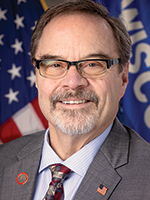
Rep. Paul Tittl
Sponsored bills
Maddy summaryAB 595 updates Wisconsin's voter registration system to better comply with federal voting laws. It requires the Elections Commission to verify U.S. citizenship for all voters by matching registration data with state databases from the Department of Transportation, State Registrar, and Department of Corrections. Municipal clerks must report monthly on voter status changes, including removals due to citizenship issues, and share audit results with election officials. The bill directly affects election administrators, state agencies handling voter data, and voters whose eligibility is verified through these new processes.
Maddy summaryAB 923 creates a civil legal pathway for victims of sexual extortion (defined under statute 942.095) to sue for physical injury, emotional distress, or property loss. It allows victims, their parents/guardians (if minors), or estate representatives (in cases involving suicide linked to the extortion) to file lawsuits regardless of any criminal case outcome. The bill includes strong privacy protections, permitting plaintiffs to use initials instead of full names in court documents and allowing courts to issue orders shielding victims from public disclosure or unnecessary examinations. If successful, plaintiffs can recover damages for emotional distress, punitive damages, attorney fees, and other litigation costs.
Maddy summaryAB 445 updates procedures for county registers of deeds regarding property records and transportation project maps (plats). It revises how documents are numbered, indexed, and recorded - requiring unique sequential numbers for each document and clarifying "legal description" definitions for property records. These changes directly affect county offices handling property deeds, mortgages, and transportation project plats, streamlining administrative processes without altering fees or substantive rights. The bill focuses on procedural consistency in record-keeping across statutes.
Maddy summaryAB 375 modifies Wisconsin's historic rehabilitation tax credit program. It extends the credit to cover rehabilitation work completed after 2025, maintaining a 20% credit on qualified rehabilitation costs (minimum $50,000) for certified historic structures and qualified rehabilitated buildings. The bill adds new certification requirements through the Wisconsin Economic Development Corporation and allows taxpayers to transfer unused credits to other entities subject to state taxes. This directly affects property owners and developers who rehabilitate historic buildings in Wisconsin, providing them with a tax incentive for such projects. The changes align Wisconsin's credit with federal rules while updating eligibility and claim procedures.
Maddy summaryAB 768 restricts drone operations near critical utility facilities by prohibiting flights below 300 feet within 500 feet of water reclamation plants, power plants/substations, telecom facilities, or public water systems. Exceptions allow facility owners, local governments, and commercial operators (complying with FAA rules) to operate drones for maintenance, inspections, or official business. The bill also requires law enforcement to seize drone footage during violations and transfer it to relevant local agencies for enforcement. This directly affects drone operators near these infrastructure sites while aiming to protect public safety and facility security.
Maddy summaryAB 605 allows municipal solid waste facilities that received loans under Wisconsin's clean water fund program (for wastewater infrastructure) to retain a portion of environmental repair fees collected from waste disposal. Specifically, these facilities may keep fees equal to their outstanding loan principal and interest while repaying the loan, instead of paying all collected fees to the state department. The bill directly affects municipal waste facilities that have secured such loans, modifying how they handle environmental fees. This change streamlines loan repayment by redirecting fees that would otherwise go to the state. The bill amends existing statutes to create this exception without altering general fee collection requirements.
Maddy summaryThis resolution formally recognizes the life and leadership of Bob Harlan, a longtime Green Bay resident and former president of the Green Bay Packers. It highlights his achievements, including transforming the team into one of the NFL's most successful franchises, winning Super Bowl XXXI, and leading the redevelopment of Lambeau Field. The measure serves as a commemorative tribute rather than establishing new laws or policies.
Maddy summaryAssembly Resolution 12 designates February 28, 2026, as Rare Disease Day in Wisconsin to raise awareness about rare diseases, which affect millions of Americans including Wisconsin residents. The resolution acknowledges challenges like delayed diagnosis and limited treatment access for conditions impacting fewer than 200,000 people. It aligns with a national observance organized by the National Organization for Rare Disorders (NORD) and serves as a symbolic gesture without creating new laws or funding.
Maddy summaryAJR 135 is a commemorative resolution honoring Wisconsin's Polish community for 180 years of residence and contributions. It formally recognizes the historical significance of Polish immigrants who arrived seeking freedom after Poland's partition, and acknowledges their cultural enrichment of Wisconsin. The resolution pays tribute to the community's enduring legacy, including figures like Polish-American heroes and refugees from historical events like the January Uprising and the Września Children's Strike. This non-binding resolution does not create new laws or policies but serves as a symbolic acknowledgment of the community's historical impact.