

Maddy summaryAB 180 requires the state Department of Health Services to request a federal waiver from the USDA to prohibit the use of FoodShare benefits (the state's name for SNAP) for purchasing candy or sugary drinks. The bill mandates that if the waiver is granted, candy and sugary drinks would be excluded from eligible items; if denied, the state must reapply annually. This applies directly to FoodShare recipients who currently can use benefits for these items. The bill creates a procedural requirement for the state to seek this change but does not immediately ban the purchases.
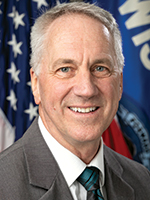
Rep. Dan Knodl
Sponsored bills
Maddy summaryThis bill establishes a process for automatically assigning child support payments and past-due amounts to the state when a child enters foster care, ensuring funds go directly to support the child's care rather than remaining with local agencies. It requires county social services departments and juvenile courts to refer parents of children in foster care to state child support enforcement if the parents earn above 400% of the poverty line or receive adoption assistance. The legislation also mandates that courts determine child support liability for parents of children placed in residential facilities and clarifies that support orders automatically assign income sources like wages and pensions to the state for children receiving state aid.
Maddy summaryAssembly Resolution 12 designates February 28, 2026, as Rare Disease Day in Wisconsin to raise awareness about rare diseases, which affect millions of Americans including Wisconsin residents. The resolution acknowledges challenges like delayed diagnosis and limited treatment access for conditions impacting fewer than 200,000 people. It aligns with a national observance organized by the National Organization for Rare Disorders (NORD) and serves as a symbolic gesture without creating new laws or funding.
Maddy summaryAB 1026 updates interest rate calculations for tax payments and refunds in Wisconsin. It sets a 1% monthly interest rate (12% annually) on underpaid estimated taxes due between June 15 and payment date, and requires 12% annual interest during tax filing extensions for corporations and pass-through entities. The bill also mandates that the Department of Revenue (DOR) pays 3% annual interest on tax overpayments. These changes affect taxpayers filing returns, including corporations, pass-through entities, and individuals who use federal tax extension periods. The bill clarifies existing interest rate provisions across multiple tax statutes without altering tax obligations.
Maddy summaryAB 1014 ratifies Wisconsin's participation in the Interstate Massage Compact (IMpact), allowing massage therapists licensed in other participating states to practice in Wisconsin with a multistate license. This directly affects licensed massage therapists and the state's massage therapy credentialing board, which will manage the new licensing system. The bill creates a commission to oversee the compact and updates licensing definitions to recognize "multistate licenses" granted under the compact, replacing some single-state licensing requirements. It also clarifies that the licensing board may not deny licenses based on certain criminal convictions when evaluating multistate applicants.
Maddy summaryAB 1020 designates specific highway segments in Wisconsin as "Memorial Highways" honoring eight fallen state troopers, naming each route after a trooper (e.g., STH 23 near Green Lake for Trooper Donald C. Pederson). The bill requires the state transportation department to install commemorative signs on these routes only if sufficient private contributions cover all costs - no state funds may be used. This is a purely commemorative measure with no policy changes to transportation or law enforcement, directly affecting the named highways and the troopers' families.
Maddy summaryAB 1019 allows vehicle owners to purchase an annual state park admission receipt when registering or renewing their vehicle license. It adds a line on vehicle registration forms where owners can choose to pay an additional fee (with discounts for seniors or those with existing park passes). The collected fees are deposited quarterly into the conservation fund, specifically for state parks, recreation areas, and forest lands. This affects all vehicle owners in the state during registration, streamlining park access without requiring separate purchases.
Maddy summaryAB 1007 amends the definition of "veteran at risk" in Wisconsin law to explicitly include active-duty members of the U.S. armed forces, National Guard, or military reserves who have service-related physical or mental health conditions. The bill clarifies that a person qualifies as "at risk" based on information provided in a report about such conditions. This change directly affects military service members and veterans who may be identified through the existing veterans at risk alert system. The amendment refines the eligibility criteria for the system without creating new programs or funding.
Maddy summaryAB 1006 amends Wisconsin law to create a new definition of "veteran" specifically for state veterans benefits eligibility. It defines a veteran as a current or former National Guard member who completed their initial obligated service term and received an honorable or general discharge under honorable conditions. This change directly expands eligibility for state veterans benefits to include qualifying National Guard members who previously might not have met the existing definition. The bill does not alter benefit amounts or other eligibility criteria beyond this definition update.
Maddy summaryAJR 138 designates February 2026 as "Career and Technical Education Month" in Wisconsin to raise awareness about the value of these programs. It does not create new laws or funding but symbolically recognizes how career and technical education prepares students for jobs, citing that 92% of 2024 Wisconsin Technical College graduates were employed within six months and earned median salaries of $55,636 (for certificates) or $60,030 (for associate degrees). The resolution aims to encourage state residents to learn about CTE opportunities and their role in supporting Wisconsin's workforce. This is a ceremonial designation, not a policy change.