

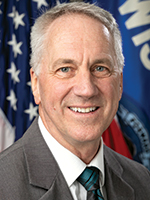
Photo of Dan Knodl
R Wisconsin Assembly · District 24 On the 2026 ballot

Rep. Dan Knodl

Compare
Total votes
876
all sessions
Attendance
100%
of floor votes
Near the chamber average
With party
99%
of cast votes
Near the chamber average
Bipartisan score
1%
crosses aisle rarely
Near the chamber average
Sponsored
1,110
bills & resolutions
Near the chamber average
Committees
5
assignments
1,110 bills and resolutions

Sponsored bills

Total
1,110
Primary
1,110
Co-sponsor
0
This page
1,110
matching current filters
Primary AB 907
Signed into law · Wisconsin Assembly · Lead sponsor
Relating to: requirements for state lottery drawings. (FE)

Maddy summaryAB 907 updates state lottery drawing procedures by requiring all drawings to use random selection methods (via mechanical, electrical, or computerized systems) and mandating annual independent audits. The bill repeals outdated rules and creates new requirements for the lottery department to ensure drawing randomness and security. These changes directly affect the state lottery operations, requiring them to verify processes through external audits each year. The law focuses on transparency and technical safeguards without altering lottery prizes or participation rules.

Signed into law Apr 3, 2026 0 co-sponsors
Primary AB 905
Signed into law · Wisconsin Assembly · Lead sponsor
Relating to: threats to health care providers and providing a penalty.

Maddy summaryAB 905 creates a new penalty for threatening healthcare providers, staff, or their family members when the threat is related to their work. It specifically targets threats made knowing the victim is a healthcare worker (current or former) or a family member, and the threat occurs in response to actions taken at a healthcare facility or by a provider acting in their official capacity. The bill defines "health care facility" and "health care provider" using existing statutory terms to clarify the scope of protection. This law directly affects healthcare workers and their families by establishing criminal penalties for targeted threats connected to their professional roles.

Signed into law Apr 3, 2026 0 co-sponsors
Primary AB 768
Signed into law · Wisconsin Assembly · Lead sponsor
Relating to: operation of drones over certain utility facilities and providing a penalty.

Maddy summaryAB 768 restricts drone operations near critical utility facilities by prohibiting flights below 300 feet within 500 feet of water reclamation plants, power plants/substations, telecom facilities, or public water systems. Exceptions allow facility owners, local governments, and commercial operators (complying with FAA rules) to operate drones for maintenance, inspections, or official business. The bill also requires law enforcement to seize drone footage during violations and transfer it to relevant local agencies for enforcement. This directly affects drone operators near these infrastructure sites while aiming to protect public safety and facility security.

Signed into law Apr 3, 2026 0 co-sponsors
Primary AB 86
Signed into law · Wisconsin Assembly · Lead sponsor
Relating to: imposing the penalty of life imprisonment for the crime of child trafficking and providing a penalty. (FE)

Maddy summaryAB 86 amends Wisconsin law to impose a life sentence without parole for individuals convicted of child trafficking involving three or more child victims. It specifically upgrades penalties under statutes 948.051(1)(b) and 948.051(2)(b), defining child trafficking as recruiting, transporting, or exploiting children for commercial sex acts. The bill requires courts to sentence offenders to life imprisonment without parole eligibility when three or more child victims are involved, affecting both traffickers and those who benefit from such crimes. This change applies to offenses committed on or after the bill’s effective date.

Signed into law Apr 3, 2026 0 co-sponsors
Primary AB 217
Signed into law · Wisconsin Assembly · Lead sponsor
Relating to: local government competitive bidding thresholds. (FE)

Maddy summaryAB 217 raises competitive bidding thresholds for local government contracts in the state. It increases the general public work bidding threshold from $25,000 to $50,000 and the notice threshold from $5,000 to $10,000. For highway contracts specifically, it sets a $25,000 bidding threshold and $5,000 notice threshold. The bill also requires these thresholds to automatically adjust every five years based on inflation, using the U.S. Consumer Price Index. This directly affects towns and local governments when contracting for public projects above these new dollar amounts.

Signed into law Apr 3, 2026 0 co-sponsors
Primary AB 530
Signed into law · Wisconsin Assembly · Lead sponsor
Relating to: the operation of drones over school property and providing a penalty.

Maddy summaryAB 530 restricts drone operations over school properties, directly affecting anyone flying drones near public, private, or tribal schools. The bill prohibits drones over school grounds without authorization, except for specific law enforcement or emergency purposes like search/rescue, locating escaped prisoners, or preventing imminent danger. Violations carry a maximum $5,000 penalty, and evidence from drone recordings related to violations must be handled by law enforcement or correctional authorities. The law clarifies definitions for "school" and "public protective services agency" to ensure consistent application.

Signed into law Apr 3, 2026 0 co-sponsors
Primary AB 1167
Failed · Wisconsin Assembly · Lead sponsor
Relating to: prohibiting recovery of a rate of return on retired electric generating facilities; an exemption from certificate requirements for constructing a large electric generating facility; and a permit dashboard for applications for certificates of public convenience and necessity. (FE)

Maddy summaryThis bill addresses three main areas of electric utility regulation. First, it prevents electric companies from charging customers for the profits they made on power plants that have already been retired. Second, it creates a public online dashboard to track the status of applications for permits needed to build large electric generating facilities. Third, it adds requirements for new large power facilities to show they will use at least 70% of their electricity for manufacturing or mining at the same location, and to agree to pay for connecting to the public power grid. These changes directly affect electric utilities, customers who pay utility rates, and developers seeking to build new power generation projects.

Failed Apr 2, 2026 0 co-sponsors
Primary AB 813
Signed into law · Wisconsin Assembly · Lead sponsor
Relating to: the opportunity attraction and promotion program administered by the Wisconsin Economic Development Corporation.

Maddy summaryAB 813 amends Wisconsin's Opportunity Attraction and Promotion Program, which provides grants through the Wisconsin Economic Development Corporation (WEDC), to allow funding for non-public events that attract national exposure or boost economic growth - such as private conferences or industry gatherings - under specific conditions. The bill creates a new provision (3)(cm) limiting such non-public event funding to 25% of annual program funds, requiring WEDC to prioritize events during tourist off-seasons or economic downturns, and banning funding for regularly scheduled events. It also mandates that applicants secure non-state matching funds equal to the grant amount and requires WEDC to submit annual reports detailing all funded projects and their projected economic impact. This directly affects event organizers and businesses applying for WEDC grants to attract major opportunities to Wisconsin.

Signed into law Apr 2, 2026 0 co-sponsors
Primary AB 453
Signed into law · Wisconsin Assembly · Lead sponsor
Relating to: required approvals of rezoning requests related to residential development, contents of and consistency of local ordinances with local comprehensive plans, certain tax incremental district project costs related to residential development, and tax incremental district lifespan extension. (FE)

Maddy summaryAB 453 requires counties and cities to include specific elements in their comprehensive land-use plans, such as 20-year projections of residential development (in 5-year increments) and maps showing current/future land uses, including environmentally sensitive areas. It mandates that local ordinances related to residential development must align with these plans, though density requirements (specifying minimum/maximum residential units per acre) apply only to cities, not towns or counties. The bill affects local governments by standardizing planning processes for residential growth and ensuring consistency between zoning rules and long-term land-use goals. It does not create new taxes or funding but updates existing planning statute requirements.

Signed into law Apr 2, 2026 0 co-sponsors
Primary AB 605
Signed into law · Wisconsin Assembly · Lead sponsor
Relating to: retention of environmental repair fees by certain municipal solid waste facilities. (FE)

Maddy summaryAB 605 allows municipal solid waste facilities that received loans under Wisconsin's clean water fund program (for wastewater infrastructure) to retain a portion of environmental repair fees collected from waste disposal. Specifically, these facilities may keep fees equal to their outstanding loan principal and interest while repaying the loan, instead of paying all collected fees to the state department. The bill directly affects municipal waste facilities that have secured such loans, modifying how they handle environmental fees. This change streamlines loan repayment by redirecting fees that would otherwise go to the state. The bill amends existing statutes to create this exception without altering general fee collection requirements.

Signed into law Apr 2, 2026 0 co-sponsors
Showing 61 to 70 of 1,110 bills
Previous 1 … 6 7 8 … 111 Next