

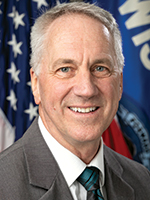
Photo of Dan Knodl
R Wisconsin Assembly · District 24 On the 2026 ballot

Rep. Dan Knodl

Compare
Total votes
876
all sessions
Attendance
100%
of floor votes
Near the chamber average
With party
99%
of cast votes
Near the chamber average
Bipartisan score
1%
crosses aisle rarely
Near the chamber average
Sponsored
1,110
bills & resolutions
Near the chamber average
Committees
5
assignments
1,110 bills and resolutions

Sponsored bills

Total
1,110
Primary
1,110
Co-sponsor
0
This page
1,110
matching current filters
Primary AJR 110
Failed · Wisconsin Assembly · Lead sponsor
Relating to: condemning the actions of the Russian Federation in Ukraine, including the illegal abduction and forcible transfer of Ukrainian children to Russia.

Maddy summaryAJR 110 is a symbolic resolution passed by the Wisconsin Legislature condemning Russia's actions in Ukraine, specifically targeting the abduction and forcible transfer of Ukrainian children to Russia. It declares these actions violate the Genocide Convention and constitute genocide, citing Russia's systematic efforts to separate children from families, facilitate forced adoptions, and re-educate them in occupied territories. The resolution formally holds the Russian government responsible for these acts, which it states aim to destroy Ukraine's cultural identity and future generations. As a joint resolution (not a law), it has no legal effect but serves as a formal statement of condemnation.

Failed Mar 23, 2026 0 co-sponsors
Primary AB 9
Failed · Wisconsin Assembly · Lead sponsor
Relating to: allowing representatives of certain federally chartered youth membership organizations to provide information to pupils on public school property.

Maddy summaryAB 9 allows representatives from specific federally chartered youth organizations (like those in U.S. Code titles 36, chapters 301, 309, 311, 709, or 803) to provide information to students on public school property. It requires school principals to schedule at least one designated time during the start of each school term for these organizations to share details about their educational and civic programs. The bill directly affects public schools (including charter schools) and students, with the goal of encouraging student participation in these youth organizations. It takes effect for the 2026-27 school year and does not alter existing school policies on other activities.

Failed Mar 23, 2026 0 co-sponsors
Primary AB 152
Failed · Wisconsin Assembly · Lead sponsor
Relating to: bid requirement for publication and printing of county board proceedings, notices, and advertisements in counties having a population of 250,000 or more and at least two English newspapers published daily.

Maddy summaryAB 152 requires counties with over 250,000 residents and at least two daily English newspapers to annually invite newspaper proposals for publishing county board proceedings, notices, and advertisements. The county board directs the clerk to collect these bids at the annual meeting, formalizing a process for selecting publications. This applies only to qualifying large counties with sufficient newspaper options. The bill creates a structured bidding requirement for official county publications in specific jurisdictions.

Failed Mar 23, 2026 0 co-sponsors
Primary AB 32
Failed · Wisconsin Assembly · Lead sponsor
Relating to: access to public high schools for military recruiters.

Maddy summaryThis bill requires public school districts to allow military recruiters access to high school common areas and school events during the school day, as mandated by federal law (10 USC 503(c)). It specifically prohibits schools from denying this access based on whether they allow college recruiters or employers, but explicitly states that classrooms during instructional time are excluded. The law applies to all public high schools and takes effect for the 2025-26 school year. It directly affects school districts, which must adjust their policies to comply.

Failed Mar 23, 2026 0 co-sponsors
Primary AB 210
Failed · Wisconsin Assembly · Lead sponsor
Relating to: changes to amount of, and criteria for designating recipients of, academic excellence higher education scholarships. (FE)

Maddy summaryAB 210 amends Wisconsin's academic scholarship program by changing how high school seniors are selected for "academic excellence" higher education scholarships. It sets a minimum 3.800 grade point average for alternates when multiple seniors tie for top rank, requires schools with 80+ students to designate one top scholar annually, and adds rules for schools that close or merge (allowing prior scholars to retain eligibility). The bill directly affects public, private, and tribal high schools in Wisconsin with 80+ students and their graduating seniors who meet academic criteria. Key provisions clarify selection procedures, tie-breaking rules, and continuity for students at closing schools, without changing scholarship funding amounts.

Failed Mar 23, 2026 0 co-sponsors
Primary AB 268
Failed · Wisconsin Assembly · Lead sponsor
Relating to: the right of appeal for complainants aggrieved by decisions of the Elections Commission concerning the conduct of election officials.

Maddy summaryAB 268 allows individuals who filed complaints about election officials' conduct (complainants) to appeal decisions by the Elections Commission to local court. The bill lets complainants appeal within 30 days - regardless of whether they suffered actual harm - to the circuit court in the county where the election official works or the complainant lives. It specifically clarifies that complainants can appeal if their complaint is dismissed or they don’t get the requested relief. The bill does not pause the Commission’s original decision during the appeal unless a court orders it. This bill was recommended for passage in October 2025 but was later laid on the table and did not advance further.

Failed Mar 23, 2026 0 co-sponsors
Primary AB 196
Failed · Wisconsin Assembly · Lead sponsor
Relating to: rehired annuitants in the Wisconsin Retirement System. (FE)

Maddy summaryThis bill changes Wisconsin's retirement system rules for state retirees who return to work. It allows retirees who rejoin state employment (after a 75-day separation) to choose whether to keep their retirement annuity for up to 60 months, instead of having it automatically suspended. If they elect to keep the annuity, their new employer must pay equivalent retirement contributions to the system. The policy directly affects state retirees returning to jobs where they work at least two-thirds full-time, while ensuring retirement fund contributions remain intact.

Failed Mar 23, 2026 0 co-sponsors
Primary AB 296
Failed · Wisconsin Assembly · Lead sponsor
Relating to: eliminating the 13-week limit on the garnishment of earnings of certain debtors.

Maddy summaryAB 296 removes a 13-week waiting period that previously required employers (garnishees) to verify if they would owe wages within 13 weeks before processing wage garnishments. It directly affects debtors with ongoing wage garnishment orders and the employers handling those garnishments. The bill eliminates this waiting period, allowing garnishments to begin immediately upon employer notification. It also maintains existing priority rules, ensuring child support and restitution garnishments take precedence over other wage garnishments, with specific limits on the percentage of disposable earnings that can be garnished.

Failed Mar 23, 2026 0 co-sponsors
Primary AB 525
Failed · Wisconsin Assembly · Lead sponsor
Relating to: repeal of obsolete tax credits and tax provisions. (FE)

Maddy summaryAB 525 repeals 138 outdated tax credit and tax provision sections in the state's tax code. This directly affects taxpayers and state tax administrators by removing obsolete rules that no longer serve their intended purpose. The bill targets specific sections, such as expired credits and redundant requirements, without creating new tax policies. This action simplifies the tax code by eliminating provisions that have been deemed obsolete.

Failed Mar 23, 2026 0 co-sponsors
Primary AB 509
Failed · Wisconsin Assembly · Lead sponsor
Relating to: alternative delivery of projects contracted by the Department of Transportation. (FE)

Maddy summaryAB 509 updates Wisconsin's rules for highway project delivery by creating new definitions for alternative methods like "design-build" and excluding others. It establishes a $300 million annual funding limit for alternative delivery projects (adjusted yearly using the DOT's construction cost index), with a cap of six contracts per year. The bill specifically prohibits using "construction manager-general contractor" or "progressive design-build" methods in the pilot program. This directly affects the Wisconsin Department of Transportation, contractors bidding on highway projects, and state transportation budget allocations.

Failed Mar 23, 2026 0 co-sponsors
Showing 311 to 320 of 1,110 bills
Previous 1 … 31 32 33 … 111 Next